



This webinar explores the difference between copyright and plagiarism and their related to context to genealogy.
This genealogy webinar offers a clear, practical exploration of copyright and plagiarism as they intersect with family history research, equipping genealogists to share, publish, and collaborate with confidence. Presented by Drew Smith for Genealogy Guys Learn, the session demystifies legal and ethical boundaries that often cause uncertainty—from using historical publications to reworking another researcher’s findings—while keeping the focus firmly on everyday genealogical practice. By grounding abstract concepts in concrete examples familiar to family historians, the webinar helps researchers protect their own work, respect the rights of others, and make informed decisions when using historical sources.
Key takeaways from the webinar include:
What copyright does—and does not—protect in genealogy. Facts and standard genealogical formats are not protected, while creative expression and original narrative may be, underscoring the importance of understanding where creativity begins.
How public domain and fair use affect research sharing. The session clarifies how publication dates, renewals, and use cases influence whether materials may be reused, quoted, or shared responsibly.
Why plagiarism is an ethical issue distinct from copyright. Even when legal restrictions no longer apply, proper credit for ideas and interpretations remains essential to scholarly integrity.
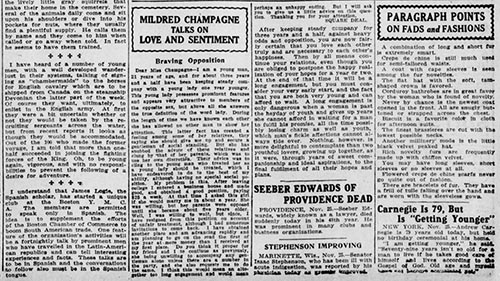
Building on these points, the webinar traces the origins of U.S. copyright law and explains why copyright exists at all: to encourage creation while ultimately benefiting the public. It walks through the evolving timelines that determine when works enter the public domain and highlights common misconceptions, such as assuming ownership of a book equals ownership of its copyright. Particular attention is given to fair use, breaking it down into four balanced factors—purpose, nature, amount, and market effect—so genealogists can better assess risk rather than rely on oversimplified rules.
The discussion then shifts from law to ethics, drawing a crucial distinction between copyright infringement and plagiarism. Through clear scenarios, the webinar illustrates how a researcher might commit one, the other, or both, and offers straightforward guidance for avoiding problems: attribute ideas, quote accurately, and cite consistently. The implications for genealogical writing, databases, and online sharing are made especially clear, reinforcing best practices that strengthen the field as a whole.
For genealogists who publish, teach, blog, or simply share findings with relatives, viewing the full webinar provides a deeper, more nuanced understanding than any brief summary can offer. Exploring the complete presentation—and the additional resources included in the syllabus—can help refine research habits, reduce uncertainty, and support more confident, ethical use of sources in every stage of genealogical work.









 Facebook
 X
X
 Syllabus


Comments
To leave a comment, please tell us who you are
Already a member? Log in