



Applying the Genealogical Proof Standard uncovers Delany DeVine’s true birthplace, challenging initial evidence and showcasing reasonably exhaustive research, analysis, correlation, and resolution of conflicting evidence.
In “Beyond the First Clue: Unraveling a Genealogical Mystery with the GPS,” Gary Ball-Kilbourne illustrates why a single record should never be the final word in family history research. This webinar, presented by the Board for Certification of Genealogists, demonstrates how the Genealogical Proof Standard (GPS) acts as a rigorous roadmap for navigating contradictory evidence. By exploring the case study of Delany DeVine, the presentation highlights a common pitfall: relying on family lore or secondary sources that can lead to decades of misinformation regarding an ancestor’s origins. For researchers seeking to elevate their work from simple data collection to defensible historical proof, understanding these methodologies is essential for ensuring family trees are built on a foundation of accuracy rather than assumption.
The Checklist for Reasonably Exhaustive Research: The session introduces a practical five-point checklist based on the “Genealogy Standards” glossary to help researchers determine when their investigative efforts have been sufficient. This framework demands yielding at least two independent sources that agree on an answer, examining every record type a competent genealogist would consider, and replacing authored narratives with original records whenever possible to ensure the highest level of reliability.
The Weight of Primary Information vs. Secondary Sources: A critical insight involves the hierarchy of evidence, demonstrating how primary information from participants or eyewitnesses holds significantly more weight than secondary information from informants who were not present for the event. Through the case of Delany DeVine, it becomes clear that a parent’s contemporary report in an 1856 state census is far more authoritative than a daughter’s recollection recorded on a death certificate nearly a century later.
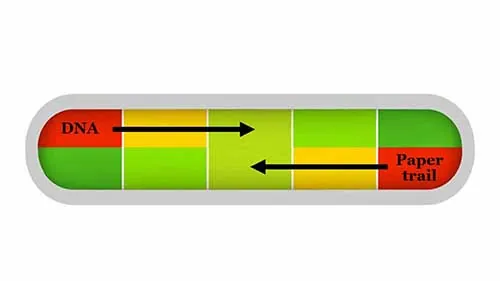
Strategies for Resolving Contradictory Evidence: The webinar provides a step-by-step look at correlating data points to uncover patterns and inconsistencies. By working backwards chronologically through the records, researchers can pinpoint the exact moment where a “genealogical legend”—such as a mistaken birthplace—entered the family record and was subsequently perpetuated by later generations.
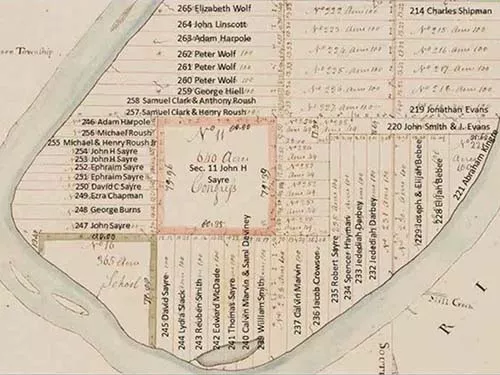
To fully appreciate the intricate “twists and turns” of the research process and to see the GPS in action, viewing the full webinar is highly recommended. Witnessing the systematic evaluation of census schedules, land patents, and marriage affidavits provides a clear blueprint for solving complex genealogical mysteries. Furthermore, genealogists are invited to explore the additional resources included in the syllabus, which feature diagrams of the research workflow and the detailed five-point checklist for achieving reasonably exhaustive research. Engaging with these materials will empower any researcher to move beyond initial clues and achieve a higher standard of defensible proof.















 Facebook
 X
X
 Syllabus


Watching after the fact. Very helpful and well taught. Thank you!
An excellent explanation of not only the GPS but the way to conduct and access reasonable exhaustive research according to the BCG standards. His references to BCG definitions and standards were very helpful.
Felt engaged by the presenter
An amazing webinar thank you Gary. The information was presented clearly and therefore was easy to understand.
It really helped that Gary talked at a reasonable speed and enunciated, as I was trying to take in every single word. But even so I need to watch this again as I’m unfamiliar with some of the terms used.
I am a beginning university student of Family History Research, and this information was so helpful for me to see a professional approach using the GPS. Thank you, Gary for giving such pertinent information.
A great case study to illustrate his topic. Logically developed with his thought process explained clearly.
Very clear and interesting presentation of using the GPS in research.