5
of
2,612 Webinars Clear filters
Sort by
Sort by
1:08:18
5.8K views
CC
Meaningful Tables and Graphs for Correlation in Family History
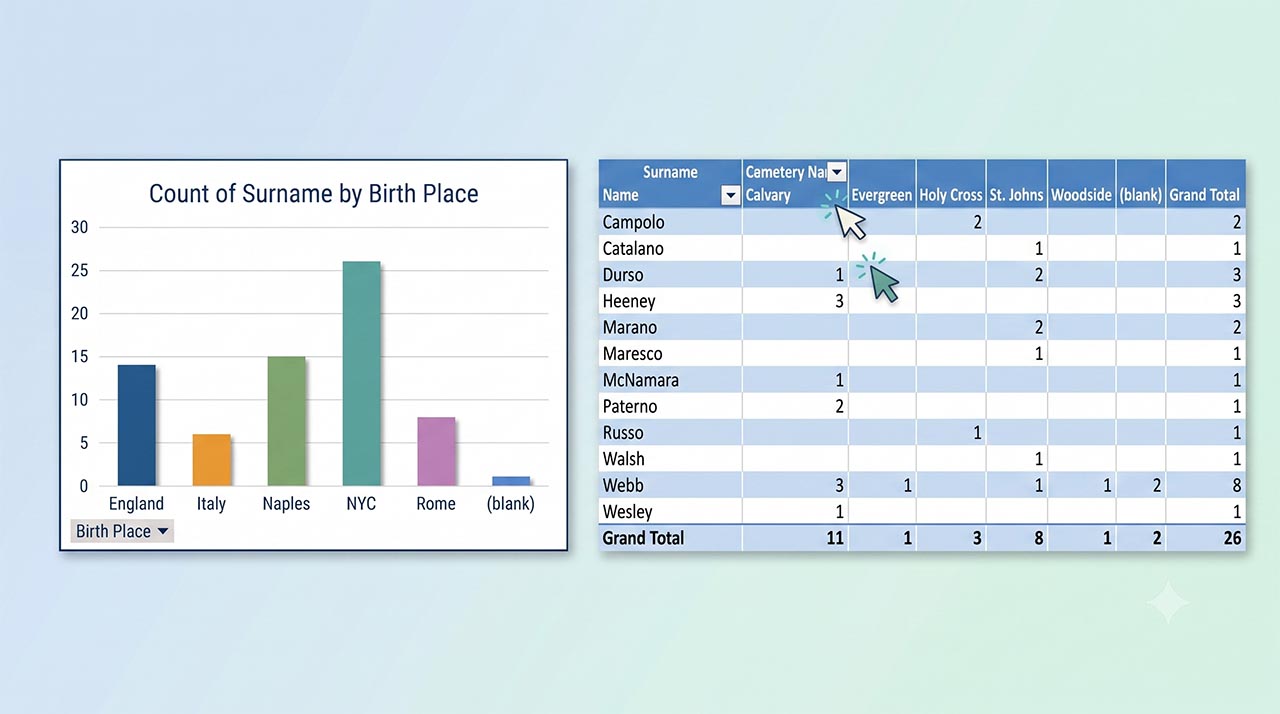
The objective of this webinar is to give viewers concrete examples of how tables and graphs can be used in family history reports and presentations.
Wed, September 25 2019: 0:00 UTC
1:33:42
Spreadsheets 401 : Excel-lent Inspiration
Take a trip with spreadsheets to the lands of your ancestors. Learn how spreadsheets can help as you learn to read foreign language newspapers. Use spreadsheets as a translation tool for your ancestors' vital and religious records. Create a spreadsheet to track your ancestors and those great ethnic or locality…
Wed, February 27 2019: 0:00 UTC
Advanced
1:01:37
Spreadsheets 301 – un-Excel-ed Tips and Tricks (BONUS webinar for subscribers)
Learn new ways to make data entry faster and easier and a few things that will make your spreadsheets more attractive. See how quickly Magic Fill will help you complete a list and watch Mary turn a spreadsheet "on it's ear to filp rows and columns. Learn how to "add"…
Thu, August 27 2015: 0:00 UTC
1:07:59
Spreadsheets 201 – Excel-lent Examples (BONUS webinar for subscribers)
Spreadsheets can help you analyze your genealogy data and keep track of your research. In this webinar, Mary Roddy teaches how to use this powerful tool to gain perspective and further your genealogy research. You'll also learn how to quickly take search results from Familysearch and…
Thu, April 16 2015: 0:00 UTC
1:13:25
Spreadsheets 101 – Excel-lence in Genealogy (BONUS webinar for subscribers)
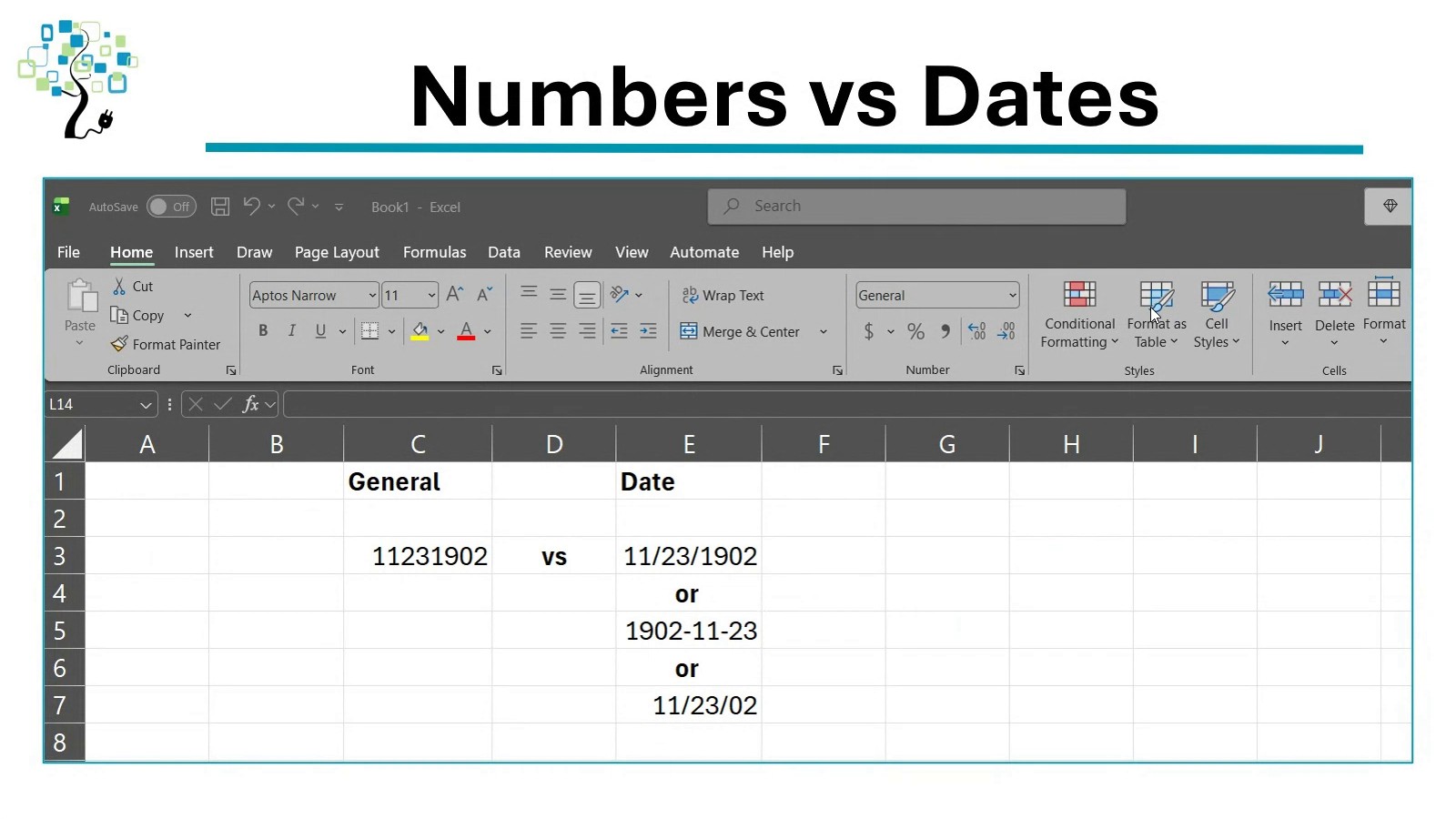
Are you afraid of spreadsheets because you don't know how or where to start? Or are you comfortable with spreadsheets but know there's a trick or two still to learn? In this webinar, Mary Kircher Roddy will get beginners up to speed, and share with experienced users tricks she's learned…
Tue, February 24 2015: 0:00 UTC

Upcoming Live Webinars

View all (179)
Wed, January 7 2026: 16:30 UTC
Genealogy Meets the Internet Archive and AI: A Comprehensive Review
Wed, January 7 2026: 16:30 UTC
Learn to harness the Internet Archive’s free digital library—a treasure trove of digitized family histories, city directories, census and church records—to enrich your genealogy research. Learn how to build complex prompts to build an index of surnames on a 400 page genealogy book from 1898. Learn how to extract a list of migration routes from the same book, organized by surname, then in generation order, and placed in an Excel file. With the help of AI, you can get the most out of Internet Archive.
Wed, January 7 2026: 16:30 UTC
Wed, January 7 2026: 17:45 UTC
AI as Partner, Not Replacement: Human-Led Research Planning in the Sally Keaton Case
Wed, January 7 2026: 17:45 UTC
This lecture explores how modern AI tools can assist genealogical research planning through the case of Sally Keaton, where the objective was to identify her children using limited historical records and DNA evidence. The presentation demonstrates how to structure effective research plans with AI assistance, covering essential elements including clear objectives, summaries of known facts, working hypotheses, identified sources, and prioritized strategies. Using Sally Keaton’s case as the central example, the lecture showcases practical AI tools, such as side-by-side editors: Canvas (ChatGPT and Gemini) and Artifacts (Claude); also advanced capabilities including reasoning models and organizational tools like ChatGPT’s Projects, Claude’s Projects, Perplexity’s Spaces, and Gemini Gems. While AI can create research plans on its own, human-AI collaboration produces better results. When researchers guide and refine AI-generated strategies instead of using fully automated planning, they achieve more accurate results.
Wed, January 7 2026: 17:45 UTC
Wed, January 7 2026: 19:00 UTC
Unraveling Family History with AI: Leveraging AI to Trace an Ancestor’s Journey, with Chat GPT (Free Version)
Wed, January 7 2026: 19:00 UTC
Explore how AI technology, exemplified by ChatGPT, can revolutionize your family history, by embarking on a journey through an ancestor’s life.
Wed, January 7 2026: 19:00 UTC
Wed, January 7 2026: 20:30 UTC
From Problem to Solution: A Case Study Approach to Using AI in Genealogy
Wed, January 7 2026: 20:30 UTC
Artificial intelligence is changing the way genealogists work—but how do you move beyond tips and tricks to apply AI in a sound, methodical way? In this session, Andrew Redfern demonstrates how a case study approach provides the answer. Using real examples, he walks through the stages of tackling a genealogical problem with AI, showing how tools can assist with transcription, analysis, correlation of evidence, and presentation of findings. Rather than treating AI as a shortcut, Andrew highlights how to integrate it into the established genealogical research cycle—problem definition, source gathering, analysis, and conclusion. Attendees will see how AI can clarify complex evidence, save time on repetitive tasks, and support storytelling, while still requiring human expertise and critical thinking. By the end of the session, participants will have a practical framework they can adapt to their own research problems, ensuring that AI becomes a trusted partner in genealogical methodology.
Wed, January 7 2026: 20:30 UTC
Tue, January 13 2026: 14:00 UTC
Spanish
La fotografía de un desconocido: ¿punto de partida para una genealogía?
Tue, January 13 2026: 14:00 UTC
En la actualidad, cuando casi cualquier cosa pasa por la IA, el descubrimiento de una fotografía hecha a finales del siglo XIX o principios del siglo XX, no solo nos traslada a otro momento de la historia en el que el contexto era totalmente diferente, sino que nos abre las posibilidades de estudio de una persona y de una familia. Pero, además, ¿qué nos aporta una fotografía de un desconocido? ¿cuánto podemos averiguar de él y de su entorno? Una fotografía es un documento de memoria colectiva y, como tal, aporta una fuente de información sobre estructura familiar, estilo de vida y valores sociales de la época.
José Antonio González Marrero
En la actualidad, cuando casi cualquier cosa pasa por la IA, el descubrimiento de una fotografía hecha a finales del siglo XIX o principios del siglo XX, no solo nos traslada a otro momento de la historia en el que el contexto era totalmente diferente, sino que nos abre las posibilidades de estudio de una persona y de una familia. Pero, además, ¿qué nos aporta una fotografía de un desconocido? ¿cuánto podemos averiguar de él y de su entorno? Una fotografía es un documento de memoria colectiva y, como tal, aporta una fuente de información sobre estructura familiar, estilo de vida y valores sociales de la época.
Tue, January 13 2026: 14:00 UTC
Tue, January 13 2026: 19:00 UTC
Using MyHeritage in Your Genealogical DNA Testing Plan
Tue, January 13 2026: 19:00 UTC
We often need other family members to take a DNA test for us to help us solve our genealogical problems. We’ll discuss ways MyHeritage can help us find, test, and collaborate with our DNA cousins.
Tue, January 13 2026: 19:00 UTC