29
of
179 Upcoming Live Webinars Clear filter
Wed, January 7 2026: 16:30 UTC
Genealogy Meets the Internet Archive and AI: A Comprehensive Review
Wed, January 7 2026: 16:30 UTC
Learn to harness the Internet Archive’s free digital library—a treasure trove of digitized family histories, city directories, census and church records—to enrich your genealogy research. Learn how to build complex prompts to build an index of surnames on a 400 page genealogy book from 1898. Learn how to extract a list of migration routes from the same book, organized by surname, then in generation order, and placed in an Excel file. With the help of AI, you can get the most out of Internet Archive.
Wed, January 7 2026: 16:30 UTC
Wed, January 7 2026: 17:45 UTC
AI as Partner, Not Replacement: Human-Led Research Planning in the Sally Keaton Case
Wed, January 7 2026: 17:45 UTC
This lecture explores how modern AI tools can assist genealogical research planning through the case of Sally Keaton, where the objective was to identify her children using limited historical records and DNA evidence. The presentation demonstrates how to structure effective research plans with AI assistance, covering essential elements including clear objectives, summaries of known facts, working hypotheses, identified sources, and prioritized strategies. Using Sally Keaton’s case as the central example, the lecture showcases practical AI tools, such as side-by-side editors: Canvas (ChatGPT and Gemini) and Artifacts (Claude); also advanced capabilities including reasoning models and organizational tools like ChatGPT’s Projects, Claude’s Projects, Perplexity’s Spaces, and Gemini Gems. While AI can create research plans on its own, human-AI collaboration produces better results. When researchers guide and refine AI-generated strategies instead of using fully automated planning, they achieve more accurate results.
Wed, January 7 2026: 17:45 UTC
Wed, January 7 2026: 19:00 UTC
Unraveling Family History with AI: Leveraging AI to Trace an Ancestor’s Journey, with Chat GPT (Free Version)
Wed, January 7 2026: 19:00 UTC
Explore how AI technology, exemplified by ChatGPT, can revolutionize your family history, by embarking on a journey through an ancestor’s life.
Wed, January 7 2026: 19:00 UTC
Wed, January 7 2026: 20:30 UTC
From Problem to Solution: A Case Study Approach to Using AI in Genealogy
Wed, January 7 2026: 20:30 UTC
Artificial intelligence is changing the way genealogists work—but how do you move beyond tips and tricks to apply AI in a sound, methodical way? In this session, Andrew Redfern demonstrates how a case study approach provides the answer. Using real examples, he walks through the stages of tackling a genealogical problem with AI, showing how tools can assist with transcription, analysis, correlation of evidence, and presentation of findings. Rather than treating AI as a shortcut, Andrew highlights how to integrate it into the established genealogical research cycle—problem definition, source gathering, analysis, and conclusion. Attendees will see how AI can clarify complex evidence, save time on repetitive tasks, and support storytelling, while still requiring human expertise and critical thinking. By the end of the session, participants will have a practical framework they can adapt to their own research problems, ensuring that AI becomes a trusted partner in genealogical methodology.
Wed, January 7 2026: 20:30 UTC
Thu, January 15 2026: 1:00 UTC
Foundations in AI for Family History 1 of 5: What Is AI and Why It Matters to Genealogists
Thu, January 15 2026: 1:00 UTC
Learn the principles, tools, and responsible practices for using AI in your genealogical research.
Thu, January 15 2026: 1:00 UTC
Foundations in AI for Family History 2 of 5: Prompt Power—Getting Better Answers from AI
Thu, January 22 2026: 1:00 UTC
Learn the principles, tools, and responsible practices for using AI in your genealogical research.
Thu, January 22 2026: 1:00 UTC
Wed, January 28 2026: 19:00 UTC
Make Easy Video Stories Your Family Will Cherish
Wed, January 28 2026: 19:00 UTC
Turn genealogical facts into captivating videos. This session will empower family historians who have only modest tech skills to create short, shareable videos that resonate with all ages. Using Animoto, Canva, iMovie, or Camtasia, learn to blend photos, music, and narration. The result will be magic! Discover how to digitize artifacts, and source public-domain images from places like the New York Public Library’s scanned books. Use AI transcription tools for. Attendees will leave excited to produce a 2–3-minute video story. No video editing skills are needed. This session will draw upon real examples created with the simplest of tools.
Wed, January 28 2026: 19:00 UTC
Foundations in AI for Family History 3 of 5: Using AI Responsibly: Principles and Ethics
Thu, January 29 2026: 1:00 UTC
Learn the principles, tools, and responsible practices for using AI in your genealogical research.
Thu, January 29 2026: 1:00 UTC
Foundations in AI for Family History 4 of 5: Smart Tools—AI Helpers for Genealogy Tasks
Thu, February 5 2026: 1:00 UTC
Learn the principles, tools, and responsible practices for using AI in your genealogical research.
Thu, February 5 2026: 1:00 UTC
Foundations in AI for Family History 5 of 5: Building Your AI Workflow and Digital Crew
Thu, February 26 2026: 1:00 UTC
Learn the principles, tools, and responsible practices for using AI in your genealogical research.
Thu, February 26 2026: 1:00 UTC
Thu, March 12 2026: 0:00 UTC
From Research to Data with AI 1 of 5: From Records to Raw Data—Extracting with AI
Thu, March 12 2026: 0:00 UTC
Use AI to extract, clean, organise, and analyse your family history research. Intermediate level, focused on workflows and data handling; ideal for users managing large research projects; activities include table-building, clustering, and data cleaning.
Thu, March 12 2026: 0:00 UTC
From Research to Data with AI 2 of 5: Cleaning Up—Fixing, Formatting, and Validating Data
Thu, March 26 2026: 0:00 UTC
Use AI to extract, clean, organise, and analyse your family history research. Intermediate level, focused on workflows and data handling; ideal for users managing large research projects; activities include table-building, clustering, and data cleaning.
Thu, March 26 2026: 0:00 UTC

Featured Webinars

View all (2,612)
Advanced
1:44:06
1.6K views
CC
The Best Uses of AI for Genealogists
Learn how to use artificial intelligence to help find important family information, understand old documents, and craft compelling family stories to support your family history research. This webinar will introduce you to the best uses of AI in genealogy today and give a peek behind the curtain of what genealogists can look forward to from AI advancements in 2026.
Fri, December 19 2025: 19:00 UTC
10:24
290 views
CC
Working With GEDCOM Files Using AI
Gedcom files are useful for transferring family tree data but they aren’t easy to read or work with on their own. In this TechZone, we’ll explain how you can use AI to easily extract information from a gedcom file and create word documents or spreadsheet.
Fri, December 5 2025: 12:00 UTC
58:01
299 views
French
Construisez, enrichissez et partagez votre arbre sur Filae.com
Créer et importer des arbres sur Filae est gratuit. Ce webinaire vous montre comment enrichir votre généalogie en ajoutant individus, événements, notes et documents. Nous explorerons aussi les fonctionnalités comme la détection d’incohérences pour une généalogie fiable, les suggestions d’archives pour enrichir votre arbre de documents originaux, le suivi des recherches pour guider votre enquête, sans oublier les invitations pour partager le fruit de vos recherches avec vos proches.
Tue, December 2 2025: 14:00 UTC
1:18:46
831 views
CC
Organize Digital and Digitized Photos & Documents Using AI
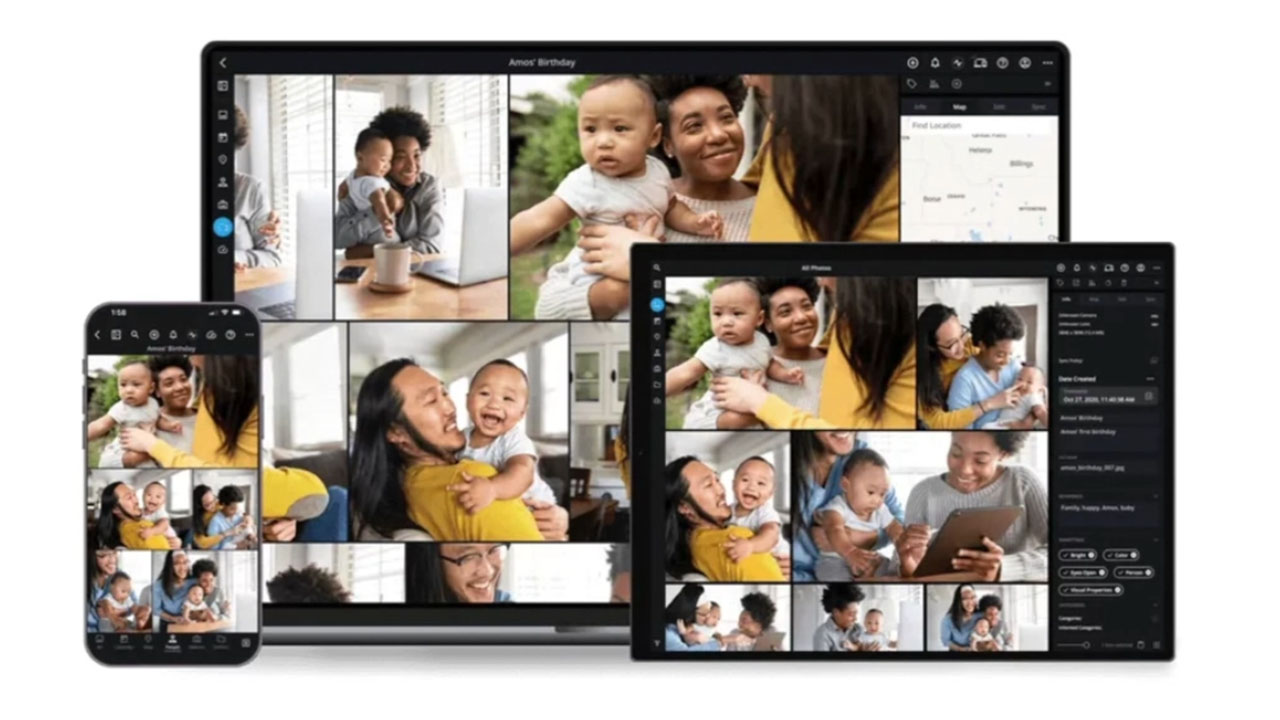
Excire Photo 2024 is a new program that lets you automatically add keywords and your own custom ones; search for one or more images by free text, keyword(s), groups or individual people; identified faces; GPS locations; event; main colour in an image; by camera model, camera lens, lens focal length used, shutter speed used, and more. All of this metadata is written directly to your files or to XMP sidecar files, so the information stays with your images, not trapped in a proprietary database. This feature rich program is available for Windows and MacOS, even on M1 and later processor chips. Learn how this software can relieve you of much time and effort in organizing your digital images.
Fri, October 24 2025: 18:00 UTC
1:01:43
1.0K views
French
Filae : la maison des archives originales françaises
Filae vous ouvre les archives françaises en vous donnant un accès direct aux documents originaux grâce à l’indexation nominative : état civil, recensements, tables de successions, bulletin des lois… Ce webinaire explore nos collections et nos outils de recherche. Apprenez à mener des enquêtes efficaces pour reconstituer les familles et bâtir un arbre généalogique fiable, où chaque événement est prouvé par sa source.
Tue, October 7 2025: 14:00 UTC
1:16:40
498 views
CC
Disclosing Use of AI for Writing Assistance in Genealogy
When is it okay to use artificial intelligence tools for writing assistance? If it’s okay to use AI, how and when should we disclose the use of AI tools? Learn how various applications of generative AI — from grammar assistance to generating new text — may need to be approached differently. We will go over specific methods for disclosing and citing AI tools, such as mentioning the use of generative AI in the limitations section of a report and citing the specific AI tool in a reference note citation.
Fri, September 26 2025: 18:00 UTC
1:13:05
547 views
CC
AI Video Creation for Genealogy
Do you have genealogy-related PowerPoint presentations full of interesting material that could benefit other researchers, except your presentations are languishing in a file on your computer? For whatever reason, do you no longer wish to share your research knowledge or material in front of a physical or digitally-linked audience? Artificial Intelligence (AI) can help you share your knowledge in a much different way. In today’s dynamic digital landscape, visual content remains a dominant force. As genealogy professionals, we are always exploring new ways to captivate, educate, and motivate our audience. Enter PowerPoint to video converters — these revolutionary tools empower us to transform our static presentations into engaging videos. It’s time to give our PowerPoint presentations the upgrade they deserve. In today’s fast-paced digital era, transforming your PowerPoint presentations into dynamic videos can elevate your content’s appeal and broaden its reach across multiple platforms. This presentation will show you how to move forward with AI to create and distribute video content.
Fri, August 22 2025: 18:00 UTC
19:11
519 views
CC
Five Reasons to Build a Genealogy Website
A genealogy website can be anything you wish: a blog, cousin bait, encyclopedia, family tree, newsletter, or photo album, or all of the above. In this webinar short, learn five great reasons to consider building your own, with examples from the popular WordPress platform.
Fri, August 1 2025: 12:00 UTC
Advanced
1:14:11
1.5K views
CC
10 Advanced Ways to Use AI in Family History
Building on our previous exploration of AI in genealogy, this webinar showcases more advanced techniques for harnessing AI’s power in family history. We’ll cover sophisticated methods for data analysis, pattern recognition, and predictive modelling, showing you how to take your family history research to the next level. You’ll also learn about cutting-edge AI tools and how to apply them to uncover hidden connections and insights within your family tree. Ideal for those who are already familiar with basic AI applications, this session will expand your toolkit with innovative approaches to family history research.
Fri, July 25 2025: 18:00 UTC