Webinars focused on genealogy skill-building and standards, presented by certified genealogists. All webinars are sponsored by the Board for Certification of Genealogists.
Lineage in Context: Creating a Compelling Kinship-Determination Project
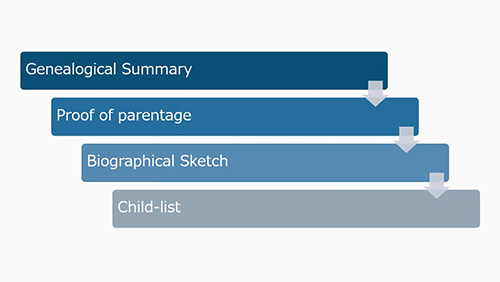
Turn your research into a meaningful family narrative that meets BCG certification requirements. This session will demonstrate how to write a structured narrative lineage that both proves kinship and details the history of each couple. Topics include selecting an appropriate family line, placing families in context, organizing and analyzing evidence, meeting BCG’s standards, and documenting biographical details.
Turn your research into a meaningful family narrative that meets BCG certification requirements. This session will demonstrate how to write a structured narrative lineage that both proves kinship and details the history of each couple. Topics include selecting an appropriate family line, placing families in context, organizing and analyzing evidence, meeting BCG’s standards, and documenting biographical details.
Beyond the First Clue: Unraveling a Genealogical Mystery with the GPS
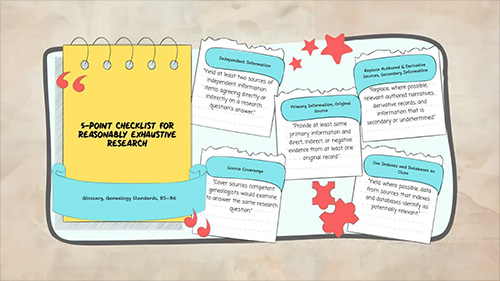
Applying the Genealogical Proof Standard uncovers Delany DeVine’s true birthplace, challenging initial evidence and showcasing reasonably exhaustive research, analysis, correlation, and resolution of conflicting evidence.
Applying the Genealogical Proof Standard uncovers Delany DeVine’s true birthplace, challenging initial evidence and showcasing reasonably exhaustive research, analysis, correlation, and resolution of conflicting evidence.
Incorporating social context in a Kinship-Determination Project isn’t just about weaving historical events and descriptions of daily life into a family narrative. Community and culture shape behavior and relationships. To understand and document our ancestors, we need to understand the society in which they lived. When we estimate a marriage date based the birth of a couple’s first child (or that the birth of a child implies a marriage), we base those assumptions on context. This lecture will explore social context and illustrate how to research and write about it within a Kinship-Determination Project.
Incorporating social context in a Kinship-Determination Project isn’t just about weaving historical events and descriptions of daily life into a family narrative. Community and culture shape behavior and relationships. To understand and document our ancestors, we need to understand the society in which they lived. When we estimate a marriage date based the birth of a couple’s first child (or that the birth of a child implies a marriage), we base those assumptions on context. This lecture will explore social context and illustrate how to research and write about it within a Kinship-Determination Project.
Using Homestead Records to Tell Your Ancestor’s Story
Imagine uncovering the stories hidden in your ancestors’ land entry papers from the Homestead Act of 1862 and later homestead laws. The material in these files will add richness to your family history. Join us as we discover potential homesteading ancestors, explore the journey of making a claim, understand the different homestead laws, and learn to access these records. Each document holds clues waiting to unfold the story of your family’s past.
Imagine uncovering the stories hidden in your ancestors’ land entry papers from the Homestead Act of 1862 and later homestead laws. The material in these files will add richness to your family history. Join us as we discover potential homesteading ancestors, explore the journey of making a claim, understand the different homestead laws, and learn to access these records. Each document holds clues waiting to unfold the story of your family’s past.
James C. Ward’s Eldorado: A Coast to Coast Identity Case
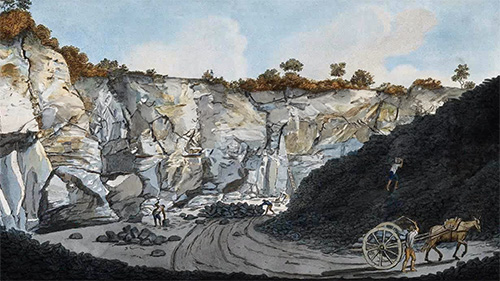
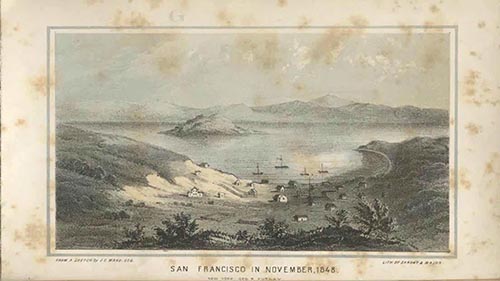
One James C. Ward was born in the 1820s and his life is documented in Massachusetts and New York. One James C. Ward served in the Mexican War and left sketches and a diary detailing his adventures in California in the 1840s. Could they be the same man? A case of identity solved through correlation.
One James C. Ward was born in the 1820s and his life is documented in Massachusetts and New York. One James C. Ward served in the Mexican War and left sketches and a diary detailing his adventures in California in the 1840s. Could they be the same man? A case of identity solved through correlation.
Mapping for Research Success (a 2025 Reisinger Lecture)
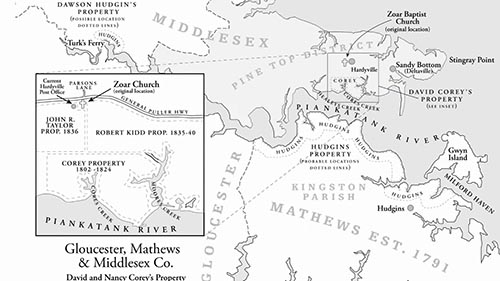
Many challenging research problems involve understanding where our ancestors lived, their land, neighbors, jurisdictions, and landmarks. While historical maps can sometimes be found for the geography of our research problem, they often don’t cover the timeframe or include specific data that our research has uncovered. Genealogists frequently need to edit or create maps to communicate their findings and conclusions. This presentation will focus on leveraging existing maps, using online tools to annotate and edit, and/or create new maps that can be utilized for individual analysis, as well as in research reports and articles. With over 40 years of experience as a professional graphic designer, the lecturer will illustrate techniques using free and paid tools that can be used to produce effective maps.
Many challenging research problems involve understanding where our ancestors lived, their land, neighbors, jurisdictions, and landmarks. While historical maps can sometimes be found for the geography of our research problem, they often don’t cover the timeframe or include specific data that our research has uncovered. Genealogists frequently need to edit or create maps to communicate their findings and conclusions. This presentation will focus on leveraging existing maps, using online tools to annotate and edit, and/or create new maps that can be utilized for individual analysis, as well as in research reports and articles. With over 40 years of experience as a professional graphic designer, the lecturer will illustrate techniques using free and paid tools that can be used to produce effective maps.
Assembling Indirect Evidence to Locate the Mother, Siblings, & Slaveowner of Freedman Arthur Braud (a 2025 Reisinger Lecture)
Research on formerly enslaved people is difficult by its very nature because enslaved people were classed as property prior to the Civil War and faced the challenges of marginalization in the segregated society that developed after the War. Crucial to uncovering information on enslaved people prior to emancipation is studying their lives as freedpeople after for clues as to who their families were and who their former owners might have been. As with any family, clues regarding identity, relationships, and ownership during slavery, are often uncovered as the result of applying the FAN principle and piecing together potential family groups.
Research on formerly enslaved people is difficult by its very nature because enslaved people were classed as property prior to the Civil War and faced the challenges of marginalization in the segregated society that developed after the War. Crucial to uncovering information on enslaved people prior to emancipation is studying their lives as freedpeople after for clues as to who their families were and who their former owners might have been. As with any family, clues regarding identity, relationships, and ownership during slavery, are often uncovered as the result of applying the FAN principle and piecing together potential family groups.
Cluster Research Using the FAN Principle (2025 Reisinger Lecture)
When records are scarce—or names are all too common—cluster research can be the key to unlocking your genealogical puzzles. By examining the people who surrounded your ancestor—the friends, associates, and neighbors—you can separate individuals with the same name, untangle multiple families in one place, and uncover biographical details you might otherwise miss. Join us to explore practical strategies and real-world examples that show how powerful the FAN principle can be.
When records are scarce—or names are all too common—cluster research can be the key to unlocking your genealogical puzzles. By examining the people who surrounded your ancestor—the friends, associates, and neighbors—you can separate individuals with the same name, untangle multiple families in one place, and uncover biographical details you might otherwise miss. Join us to explore practical strategies and real-world examples that show how powerful the FAN principle can be.
Resolving Conflict: A Key to Sound Genealogical Conclusions (a 2025 Reisinger Lecture)
What happens when all evidence cannot possibly be correct? The process of assembling evidence may reveal inconsistencies and the Genealogical Proof Standard emphasizes that resolving conflict is essential for credible conclusions. Through case examples, this lecture will help genealogists recognize conflicts and provide strategies to resolve them in order to build family stories that are authentic and accurate.
What happens when all evidence cannot possibly be correct? The process of assembling evidence may reveal inconsistencies and the Genealogical Proof Standard emphasizes that resolving conflict is essential for credible conclusions. Through case examples, this lecture will help genealogists recognize conflicts and provide strategies to resolve them in order to build family stories that are authentic and accurate.
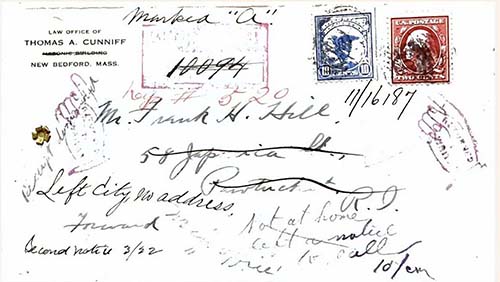
In 1906, Nellie Langevin married Frank Henry Hill in Penacook, New Hampshire. Frank vanished three years later, leaving Nellie to fend for herself. Despite her efforts to divorce him, Nellie died in 1914, still officially married. Who was Nellie’s elusive husband and what happened to him? This case study resolves conflicting direct, indirect, and negative evidence to uncover Frank’s identity and highlights the importance of including the FAN Club in reasonably exhaustive research.
In 1906, Nellie Langevin married Frank Henry Hill in Penacook, New Hampshire. Frank vanished three years later, leaving Nellie to fend for herself. Despite her efforts to divorce him, Nellie died in 1914, still officially married. Who was Nellie’s elusive husband and what happened to him? This case study resolves conflicting direct, indirect, and negative evidence to uncover Frank’s identity and highlights the importance of including the FAN Club in reasonably exhaustive research.
From Statutes to Stories: Finding the Law for Family History
The laws our ancestors lived by can tell us much about life in earlier times. Finding those laws, and the stories they tell, can be a daunting task, but—from colonial statutes to today, from the halls of Congress to the statehouses of 50 states—the choices legislators made about what laws were needed give a rich and deep context to family history.
The laws our ancestors lived by can tell us much about life in earlier times. Finding those laws, and the stories they tell, can be a daunting task, but—from colonial statutes to today, from the halls of Congress to the statehouses of 50 states—the choices legislators made about what laws were needed give a rich and deep context to family history.
Applying for BCG Certification: A Step-by-Step Review of the 2025 Application Guide
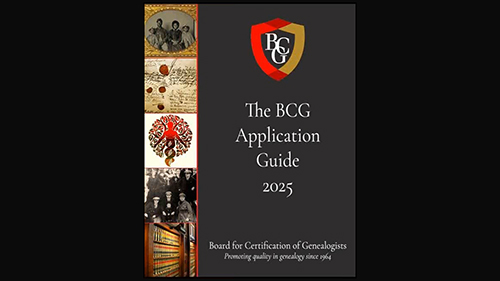
Thinking about becoming a Certified Genealogist? This presentation walks through the 2025 BCG Application Guide, focusing on the required portfolio elements, the rubrics used for evaluation, and common questions from applicants. Attendees will gain a realistic understanding of the process, timeline, and expectations involved in submitting an initial portfolio for BCG certification.
Thinking about becoming a Certified Genealogist? This presentation walks through the 2025 BCG Application Guide, focusing on the required portfolio elements, the rubrics used for evaluation, and common questions from applicants. Attendees will gain a realistic understanding of the process, timeline, and expectations involved in submitting an initial portfolio for BCG certification.
La plupart des généalogistes n’exploitent pas pleinement tous les indices disponibles dans les annuaires municipaux. Apprenez à aller au-delà d’une simple « recherche » de vos ancêtres et de leur famille. Comprenez comment les annuaires municipaux ont été créés, les secrets des différentes abréviations et comment utiliser l’approche F.A.N. Club pour obtenir le plus d’informations possible. Ce webinaire fait partie du séminaire de généalogie MyHeritage d’une journée, diffusé en direct depuis le siège de MyHeritage à Or Yehuda, en Israël.
Les sous-titres et la voix de cette vidéo ont été doublés en français à l’aide de l’IA.
La plupart des généalogistes n’exploitent pas pleinement tous les indices disponibles dans les annuaires municipaux. Apprenez à aller au-delà d’une simple « recherche » de vos ancêtres et de leur famille. Comprenez comment les annuaires municipaux ont été créés, les secrets des différentes abréviations et comment utiliser l’approche F.A.N. Club pour obtenir le plus d’informations possible. Ce webinaire fait partie du séminaire de généalogie MyHeritage d’une journée, diffusé en direct depuis le siège de MyHeritage à Or Yehuda, en Israël.
Les sous-titres et la voix de cette vidéo ont été doublés en français à l’aide de l’IA.
Northumberland and Durham, in the extreme north-east corner of England, are often united when discussing family history. Our ancestors moved easily back and forth across the River Tyne, to live and work, connected by the City of Newcastle-Upon-Tyne on the boundary. Discover the key resources and how to locate them in the various archives covering the two counties. Learn how to effectively use the catalogues and finding aids, see what is available online or what can only be accessed in archives or libraries. Also learn about what records are different and unique to these two counties and are really helpful in your research.
Northumberland and Durham, in the extreme north-east corner of England, are often united when discussing family history. Our ancestors moved easily back and forth across the River Tyne, to live and work, connected by the City of Newcastle-Upon-Tyne on the boundary. Discover the key resources and how to locate them in the various archives covering the two counties. Learn how to effectively use the catalogues and finding aids, see what is available online or what can only be accessed in archives or libraries. Also learn about what records are different and unique to these two counties and are really helpful in your research.
Paleografía, Abreviaturas y Fórmulas Comunes de los Archivos Parroquiales en América Latina
Tue, March 17 2026: 18:00 UTC
Los archivos parroquiales constituyen una de las fuentes genealógicas más ricas de América Latina, pero también una de las más desafiantes. Este webinar guiará a los asistentes en la lectura e interpretación de registros sacramentales—bautismos, matrimonios y entierros—desde la época colonial hasta el siglo XX. Se abordarán principios básicos de la paleografía, abreviaturas frecuentes, fórmulas eclesiásticas y variaciones regionales en la manera de registrar información. Se incluirán ejercicios prácticos de lectura de documentos originales, con énfasis en errores comunes y estrategias efectivas para descifrar textos antiguos.
Los archivos parroquiales constituyen una de las fuentes genealógicas más ricas de América Latina, pero también una de las más desafiantes. Este webinar guiará a los asistentes en la lectura e interpretación de registros sacramentales—bautismos, matrimonios y entierros—desde la época colonial hasta el siglo XX. Se abordarán principios básicos de la paleografía, abreviaturas frecuentes, fórmulas eclesiásticas y variaciones regionales en la manera de registrar información. Se incluirán ejercicios prácticos de lectura de documentos originales, con énfasis en errores comunes y estrategias efectivas para descifrar textos antiguos.
Patterns from the Past: Using Visuals to Showcase Correlation and Analysis
Wed, March 18 2026: 0:00 UTC
Visual enhancements can transform dense genealogical information into clear, accessible evidence. This session demonstrates how thoughtfully designed tables, diagrams, timelines, and maps can distill complex evidence and clarify analysis. Drawing on real-world examples from research reports, kinship determinations, and case studies, we’ll explore how visuals can emphasize evidence, reveal patterns, and show relationships that words alone might obscure. You’ll learn how to pair the right type of visual to your specific goal—whether demonstrating patterns, evaluating source reliability, or placing an ancestor in the right place at the right time. Attendees will leave with practical strategies for letting visuals do some of the analytical heavy-lifting in their next project.
Visual enhancements can transform dense genealogical information into clear, accessible evidence. This session demonstrates how thoughtfully designed tables, diagrams, timelines, and maps can distill complex evidence and clarify analysis. Drawing on real-world examples from research reports, kinship determinations, and case studies, we’ll explore how visuals can emphasize evidence, reveal patterns, and show relationships that words alone might obscure. You’ll learn how to pair the right type of visual to your specific goal—whether demonstrating patterns, evaluating source reliability, or placing an ancestor in the right place at the right time. Attendees will leave with practical strategies for letting visuals do some of the analytical heavy-lifting in their next project.
Advanced Topics in DNA 2 of 5: Digging Deep into the Science of Autosomal DNA
Wed, March 18 2026: 18:00 UTC
Digging Deep into the Science of Autosomal DNA – Delve into advanced autosomal DNA topics including recombination, imputation, pile-ups, the AncestryDNA TIMBER algorithm, and more. Understanding the underlying science of DNA allows us to push the envelope of what autosomal DNA can do!
Digging Deep into the Science of Autosomal DNA – Delve into advanced autosomal DNA topics including recombination, imputation, pile-ups, the AncestryDNA TIMBER algorithm, and more. Understanding the underlying science of DNA allows us to push the envelope of what autosomal DNA can do!
Pourquoi faire un test ADN pour la recherche généalogique ?
Thu, March 19 2026: 14:00 UTC
Les tests ADN en généalogie constituent un nouvel outil important pour nos recherches. Cette session d’introduction détaillera les types de tests ADN disponibles et les résultats auxquels un participant peut s’attendre, des estimations ethniques aux correspondances ADN, ainsi que la manière dont nous pouvons les utiliser pour retrouver des parents et découvrir des ancêtres inconnus.
Les sous-titres et la voix de cette vidéo ont été doublés en français à l’aide de l’IA.
Les tests ADN en généalogie constituent un nouvel outil important pour nos recherches. Cette session d’introduction détaillera les types de tests ADN disponibles et les résultats auxquels un participant peut s’attendre, des estimations ethniques aux correspondances ADN, ainsi que la manière dont nous pouvons les utiliser pour retrouver des parents et découvrir des ancêtres inconnus.
Les sous-titres et la voix de cette vidéo ont été doublés en français à l’aide de l’IA.
By registering, you are submitting your information to Legacy Family Tree Webinars and agreeing to let us use it to contact you.
Thank you for registering!
You should receive a confirmation email with a link to the webinar soon.
You’ll also receive a reminder both the day before and one hour before the webinar begins. Didn’t receive a confirmation email?
You successfully registered for %s.
You should receive a confirmation email with a link to the webinar soon.
You’ll also receive a reminder both the day before and one hour before the webinar begins. Didn’t receive a confirmation email?