

Registration opens for 2026 webinar series on December 29.

Registration opens for 2026 webinar series on December 29.

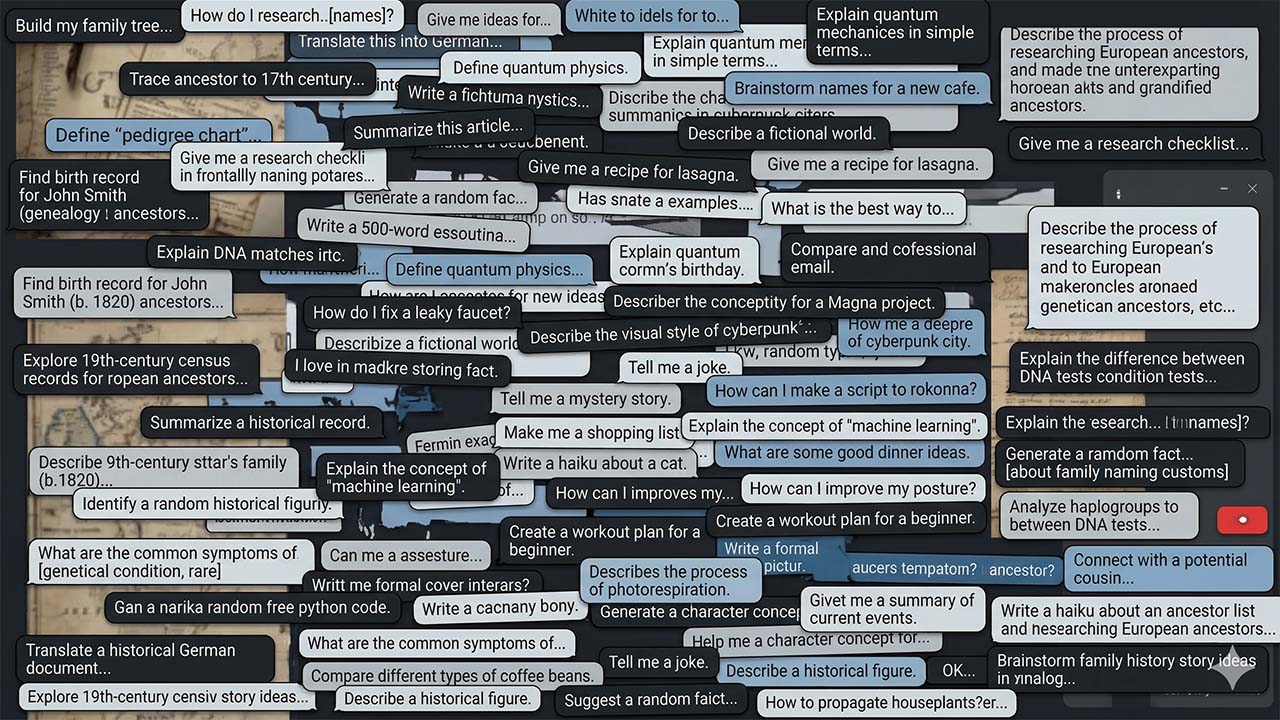
Foundations in AI for Family History 2 of 5: Prompt Power—Getting Better Answers from AI

Andrew Redfern

Learn the principles, tools, and responsible practices for using AI in your genealogical research.

Thu, January 22 2026: 1:00 UTC

About the speakers

About the speakers

Andrew Redfern is an enthusiastic family historian and accomplished speaker, having delivered presentations both in his home country of Australia and internationally over many years. His innovative work with Artificial Intelligence has been sought
Learn more...
Fiona Brooker is a professional genealogist (Memories In Time) who has been actively researching her family history for over 35 years, inspired by two marriage certificates and a collection of family letters written from New Zealand back to her im
Learn more...

Related Webinars

Wed, January 7 2026: 20:30 UTC
From Problem to Solution: A Case Study Approach to Using AI in Genealogy
Wed, January 7 2026: 20:30 UTC
Artificial intelligence is changing the way genealogists work—but how do you move beyond tips and tricks to apply AI in a sound, methodical way? In this session, Andrew Redfern demonstrates how a case study approach provides the answer. Using real examples, he walks through the stages of tackling a genealogical problem with AI, showing how tools can assist with transcription, analysis, correlation of evidence, and presentation of findings. Rather than treating AI as a shortcut, Andrew highlights how to integrate it into the established genealogical research cycle—problem definition, source gathering, analysis, and conclusion. Attendees will see how AI can clarify complex evidence, save time on repetitive tasks, and support storytelling, while still requiring human expertise and critical thinking. By the end of the session, participants will have a practical framework they can adapt to their own research problems, ensuring that AI becomes a trusted partner in genealogical methodology.
Wed, January 7 2026: 20:30 UTC
Thu, January 15 2026: 1:00 UTC
Foundations in AI for Family History 1 of 5: What Is AI and Why It Matters to Genealogists
Thu, January 15 2026: 1:00 UTC
Learn the principles, tools, and responsible practices for using AI in your genealogical research.
Thu, January 15 2026: 1:00 UTC
Foundations in AI for Family History 3 of 5: Using AI Responsibly: Principles and Ethics
Thu, January 29 2026: 1:00 UTC
Learn the principles, tools, and responsible practices for using AI in your genealogical research.
Thu, January 29 2026: 1:00 UTC
Foundations in AI for Family History 4 of 5: Smart Tools—AI Helpers for Genealogy Tasks
Thu, February 5 2026: 1:00 UTC
Learn the principles, tools, and responsible practices for using AI in your genealogical research.
Thu, February 5 2026: 1:00 UTC
Foundations in AI for Family History 5 of 5: Building Your AI Workflow and Digital Crew
Thu, February 26 2026: 1:00 UTC
Learn the principles, tools, and responsible practices for using AI in your genealogical research.
Thu, February 26 2026: 1:00 UTC
Thu, March 12 2026: 0:00 UTC
From Research to Data with AI 1 of 5: From Records to Raw Data—Extracting with AI
Thu, March 12 2026: 0:00 UTC
Use AI to extract, clean, organise, and analyse your family history research. Intermediate level, focused on workflows and data handling; ideal for users managing large research projects; activities include table-building, clustering, and data cleaning.
Thu, March 12 2026: 0:00 UTC
From Research to Data with AI 2 of 5: Cleaning Up—Fixing, Formatting, and Validating Data
Thu, March 26 2026: 0:00 UTC
Use AI to extract, clean, organise, and analyse your family history research. Intermediate level, focused on workflows and data handling; ideal for users managing large research projects; activities include table-building, clustering, and data cleaning.
Thu, March 26 2026: 0:00 UTC
From Research to Data with AI 3 of 5: Organising Information—Tables, Tags, and Templates
Thu, April 9 2026: 0:00 UTC
Use AI to extract, clean, organise, and analyse your family history research. Intermediate level, focused on workflows and data handling; ideal for users managing large research projects; activities include table-building, clustering, and data cleaning.
Thu, April 9 2026: 0:00 UTC
From Research to Data with AI 4 of 5: Seeing Patterns—Summaries, Timelines, and Clusters
Thu, April 16 2026: 0:00 UTC
Use AI to extract, clean, organise, and analyse your family history research. Intermediate level, focused on workflows and data handling; ideal for users managing large research projects; activities include table-building, clustering, and data cleaning.
Thu, April 16 2026: 0:00 UTC