



Turn your research into a meaningful family narrative that meets BCG certification requirements. This session will demonstrate how to write a structured narrative lineage that both proves kinship and details the history of each couple. Topics include selecting an appropriate family line, placing families in context, organizing and analyzing evidence, meeting BCG’s standards, and documenting biographical details.
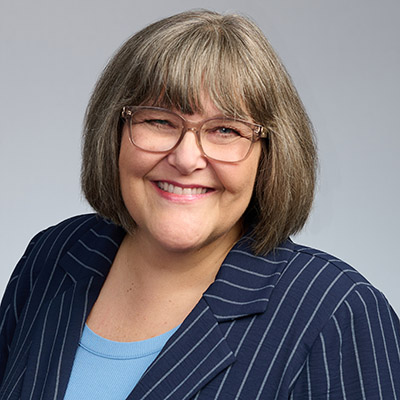
This webinar provides a comprehensive guide to crafting a Kinship-Determination Project (KDP), a foundational component of the Board for Certification of Genealogists (BCG) application and a powerful tool for family history storytelling. Led by BCG President Angela Packer McGhie, the session demystifies the process of creating a descending narrative lineage that connects three generations of a family. By emphasizing the integration of historical context with rigorous evidence analysis, the presentation illustrates how genealogists can transform raw data into a compelling, professional-grade narrative. Whether pursuing formal certification or simply aiming to preserve a family legacy with academic precision, researchers will find the methodology for meeting the Genealogical Proof Standard (GPS) indispensable for producing reliable and engaging results.
Structural Precision Through Narrative: The modern KDP requires a descending narrative lineage format, which replaces older pedigree or genealogy styles. This structure ensures that every relationship is not just stated, but meticulously documented and woven into a cohesive story that tracks a family’s progression through time.
Contextual Depth Beyond Vital Statistics: Success in a KDP relies on placing ancestors within their specific historical, social, and economic environments. By utilizing records like agricultural censuses, land entry files, and military records, researchers can move beyond “flat” data to recreate the world their ancestors inhabited, making the narrative relevant to broader history.
Rigorous Proof Through Correlation: A unique insight of the webinar is the emphasis on “showing your work” to evaluators. Genealogists must explicitly narrate the correlation and analysis of evidence—explaining how multiple documents align or how conflicting information is resolved—rather than performing these steps only in their minds.
To fully grasp the nuances of building a professional-grade lineage and to see detailed examples of successful proof arguments, viewing the full webinar is highly recommended. Witnessing the step-by-step breakdown of document analysis will provide the clarity needed to tackle complex genealogical puzzles with confidence. Genealogists are also encouraged to explore the additional resources and checklists included in the syllabus, which serve as an essential roadmap for navigating the standards and rubrics of a high-quality kinship project.










 Facebook
 X
X
 Syllabus


I am in the middle of my KDP and this really helped show where I may have holes to fill.
I am not planning to get certified, but I like Angie’s suggestion to use the KDP format to write about ancestors even without going for certification. I may well consider doing that in the future, especially for the lines that had never been documented before I started doing my own research.
Angela is a master at writing family narratives. I appreciate her willingness to share her wealth of knowledge and secrets to her success. I always learn so much from her. Thanks for another great webinar, Angela!
Interesting presentation, lots of great information and tips, well paced. Easy to follow information along side BCG requirements for KDPs.
I loved this one! It was clearly and fully presented with real examples. The explanations were precise and complete. It was engaging and inspired me to get back to writing about my family.
Angela has given me confidence that I can do the KDP. This webinar has demistified this for me.
Key takeaways: importance of and how to correlate information; create a style guide (understood that concept much betteer after seeing the example)
Extremely thorough overview of the Kinship Determination Project. How to create such a document, and how to use it, whether for certification or just for one’s family.