Filters
0 webinars selected
Select all
Cancel
8
of
2,624 Webinars Clear filters
Sort by
Sort by
1:04:42
Researching Mormon Women
Mormon women in Utah have a rich history that includes suffrage, important work outside of the home, and of course polygamy. In this presentation learn ways to find out more about your Mormon ancestress aside from information about her in familiar sources like the census or vital records.
Tue, January 3 2017: 0:00 UTC
1:09:07
Utah Newspapers and Digitized Books
In this webinar we look at the printed word. Newspapers provide us with the details of everyday life that is hard to find anywhere else. Digitized books span the realm of local history and biography which helps to tell the story of places and people.
Tue, January 3 2017: 0:00 UTC
58:09
Utah's Melting Pot
The story of Utah is the story of its diverse ethnic population. Rich records exist to trace the diverse population of Utah. Learn more about collections documenting the lives of the Chinese, Japanese, African Americans, and Native Americans.
Tue, January 3 2017: 0:00 UTC
42:59
Utah Going to the Courthouse
Not all Utah courthouse records are at the courthouse. And for most courthouses the researcher has to rely on paying for a search which may or may not result in the records they need. Knowing the structure of the Utah court system and how to access records is important.
Tue, January 3 2017: 0:00 UTC
58:00
Counting Utah: Censuses, Directories, and Voter Records
One of the first things we do as family history researchers is to track our ancestor in the federal census. This provides us with a time and place for our family. But there are other records that can also provide that information. Aside from the federal census, it's important to…
Mon, August 22 2016: 0:00 UTC
47:43
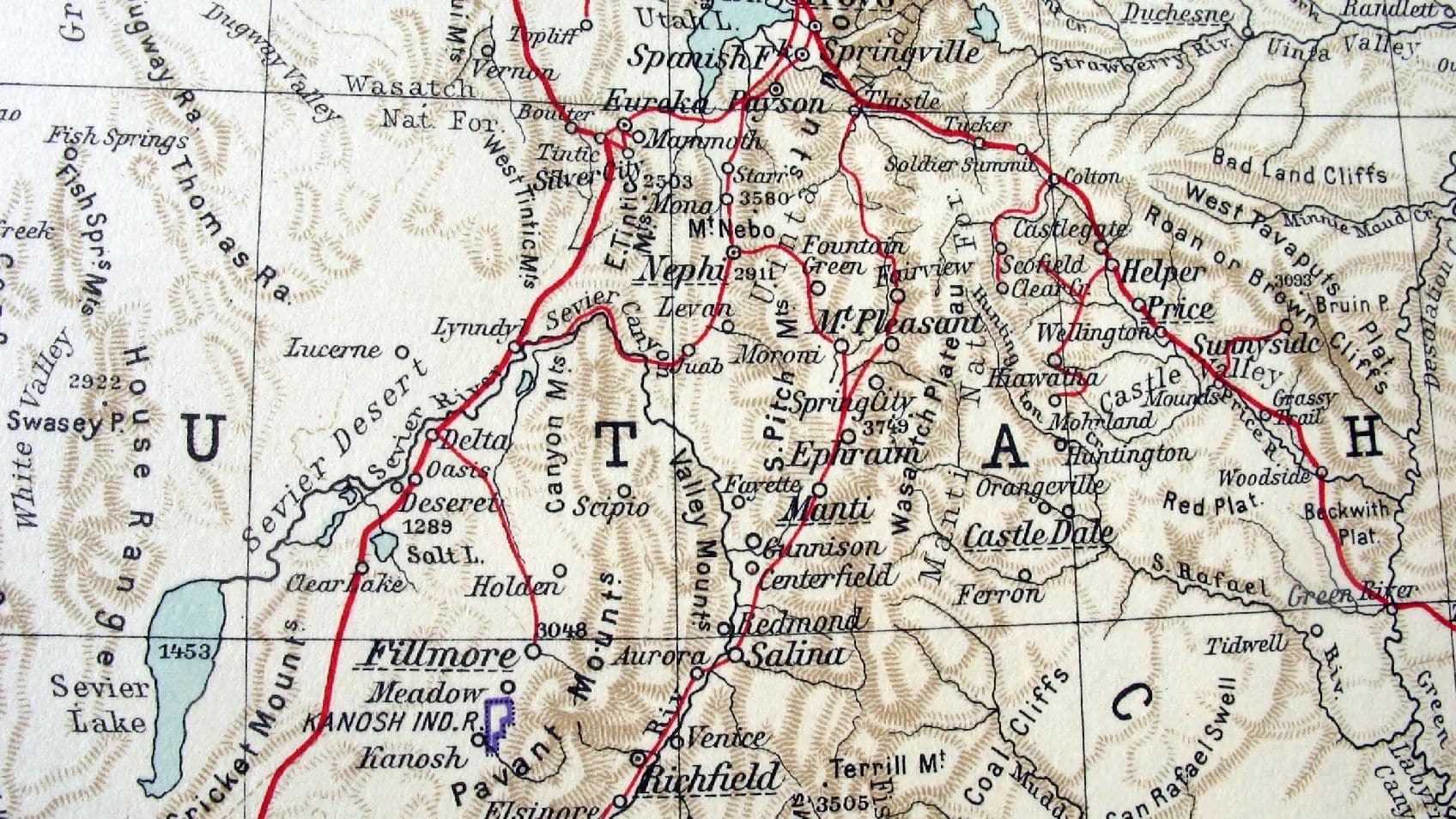
Utah: Land and Maps
Utah land has an interesting history that begins with Mexican ownership until 1847 and then the responsibility for land distribution was taken over by The Church of Jesus Christ of Latter-day Saints. It wasn't until 1855 that the federal land survey began in Utah. Understanding where the records are depends…
Mon, August 22 2016: 0:00 UTC
59:29
To Live and Die in Utah: Researching Vital Records
Birth, marriage, death, and a final resting place. These are all important events in documenting an ancestor's life. Utah officially started recording births and deaths in 1905 but some counties, and even cities, started the process much earlier. Utah is unique in regards to its marriage license history. That knowledge…
Thu, May 26 2016: 0:00 UTC
1:00:35
Researching in Utah: Libraries, Archives and Online
Have Utah ancestors? Where do you start looking? Trying to figure out what is available can be intimidating and time consuming. In this webinar we look at what you need to know to start your Utah research. We’ll explore repositories for research starting with archives, libraries, and museums and then…
Thu, May 26 2016: 0:00 UTC

Upcoming Live Webinars

View all (177)
Wed, January 28 2026: 1:00 UTC
Sorting DNA Matches with MyHeritage’s Theory of Family Relativity
Wed, January 28 2026: 1:00 UTC
This webinar looks at 43 Theory of Relativity matches for my mother’s DNA on MyHeritage. With a detailed paper trail, Shauna is looking for some unexplained ethnicity that is in both MyHeritage and FamilyTree DNA. What is the explanation for her Welsh and Germanic ancestry passed down on her mother’s side? Join Shauna and see if she can solve the puzzle, or is that, dig up yet another family skeleton?
Wed, January 28 2026: 1:00 UTC
Wed, January 28 2026: 19:00 UTC
Make Easy Video Stories Your Family Will Cherish
Wed, January 28 2026: 19:00 UTC
Turn genealogical facts into captivating videos. This session will empower family historians who have only modest tech skills to create short, shareable videos that resonate with all ages. Using Animoto, Canva, iMovie, or Camtasia, learn to blend photos, music, and narration. The result will be magic! Discover how to digitize artifacts, and source public-domain images from places like the New York Public Library’s scanned books. Use AI transcription tools for. Attendees will leave excited to produce a 2–3-minute video story. No video editing skills are needed. This session will draw upon real examples created with the simplest of tools.
Wed, January 28 2026: 19:00 UTC
Foundations in AI for Family History 3 of 5: Using AI Responsibly: Principles and Ethics
Thu, January 29 2026: 1:00 UTC
Learn the principles, tools, and responsible practices for using AI in your genealogical research.
Thu, January 29 2026: 1:00 UTC
Wed, February 4 2026: 1:00 UTC
English Context – History, Sources and Repositories
Wed, February 4 2026: 1:00 UTC
An introductory overview on English History and its effect on sources and repositories. Understand where to look for records and how to access.
Wed, February 4 2026: 1:00 UTC
Wed, February 4 2026: 16:30 UTC
Advanced Census Research: Understanding Census Enumerators and Their Instructions
Wed, February 4 2026: 16:30 UTC
The census is one of our basic research tools, but basic doesn’t equal simple. Often a census record can raise as many questions as it answers, and some of those questions may seem unanswerable. Learn how an understanding of who the enumerators were, what their instructions prescribed, and some of the many ways they deviated from the instructions can answer many of the questions raised by census research.
Wed, February 4 2026: 16:30 UTC
Wed, February 4 2026: 17:45 UTC
The Many Faces of the Census: Beyond the Population Schedule – Agricultural, Mortality, and Industry Records
Wed, February 4 2026: 17:45 UTC
Most researchers stop at the population schedule, but census records also include valuable schedules that document farms, businesses, deaths, and community life. This session explores agricultural, mortality, and industry schedules, showing how they can be used to add depth to family history.
Wed, February 4 2026: 17:45 UTC