Watch webinars that focus on specific record categories including adoption, vital records, cemetery records, census records, city directories, immigration records, newspapers and more for locations around the world.
This database of the Commonwealth War Graves Commission (CWGC) contains WWI and WWII military burials world-wide. Not all burials in CWGC cemeteries are military. Burials include civilians, diplomats, medical personnel, and volunteer aid workers, including women. Most CWGC cemeteries have burials of the unknown as well as Monuments listing the Missing. Some military burials in civilian cemeteries are in this database. Photos of headstones and lists of missing in several CWGC cemeteries in Italy are included. Advises on best utilization of CWGC search engines with different approaches. Information on identification of unknown burials, research possibilities, and CWGC outreach programs are available on the website.
This database of the Commonwealth War Graves Commission (CWGC) contains WWI and WWII military burials world-wide. Not all burials in CWGC cemeteries are military. Burials include civilians, diplomats, medical personnel, and volunteer aid workers, including women. Most CWGC cemeteries have burials of the unknown as well as Monuments listing the Missing. Some military burials in civilian cemeteries are in this database. Photos of headstones and lists of missing in several CWGC cemeteries in Italy are included. Advises on best utilization of CWGC search engines with different approaches. Information on identification of unknown burials, research possibilities, and CWGC outreach programs are available on the website.
Spirit of St. Louis: Military & Civilian Records at the National Personnel Records Center
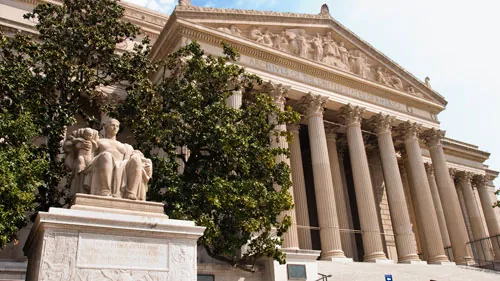
The National Records Personnel Center in St. Louis has many records pertinent to your soldier’s service. OMPFs, Official Military Personnel Files, monthly regimental rolls, hospital records, military court-martials and graves registration service files all offer clues into your veteran’s military experience. NPRC also houses civilian and government employment files as well. Was your grandfather in the Civilian Conservation Corps? Was your mother Postmaster? These records are available as well! Tina will describe the types of information to be found in these records and how you can access them in person.
The National Records Personnel Center in St. Louis has many records pertinent to your soldier’s service. OMPFs, Official Military Personnel Files, monthly regimental rolls, hospital records, military court-martials and graves registration service files all offer clues into your veteran’s military experience. NPRC also houses civilian and government employment files as well. Was your grandfather in the Civilian Conservation Corps? Was your mother Postmaster? These records are available as well! Tina will describe the types of information to be found in these records and how you can access them in person.
Participation in the local militia units was an important part in the life of your ancestors. The militia provided for the common defense, and brought families together in times of crisis. Numerous armed conflicts beginning with the Pequot War of 1636 to Lord Dunmore’s War of 1774 on the eve of the Revolutionary War will be discussed. Records examined will include muster rolls, militia lists, pay records, histories, manuscripts and other related materials.
Participation in the local militia units was an important part in the life of your ancestors. The militia provided for the common defense, and brought families together in times of crisis. Numerous armed conflicts beginning with the Pequot War of 1636 to Lord Dunmore’s War of 1774 on the eve of the Revolutionary War will be discussed. Records examined will include muster rolls, militia lists, pay records, histories, manuscripts and other related materials.
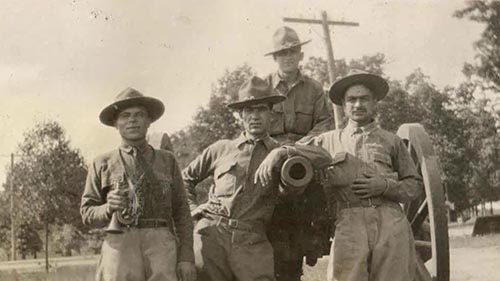
Private Gandolfo Scarnici: Case Study of a Veteran of World War I
Using primary and secondary sources this case study examines the military service of Private Gandolfo Scarnici who served in the 55th United States Infantry enlisting in 1917 then serving overseas in France with the American Expeditionary Forces from 1918-1919 during World War I.
Using primary and secondary sources this case study examines the military service of Private Gandolfo Scarnici who served in the 55th United States Infantry enlisting in 1917 then serving overseas in France with the American Expeditionary Forces from 1918-1919 during World War I.
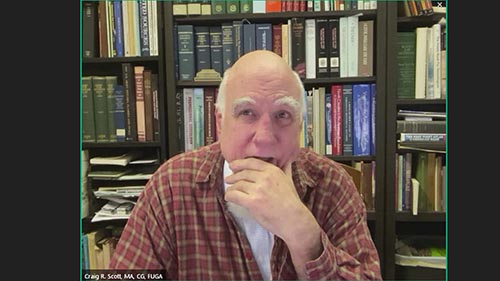
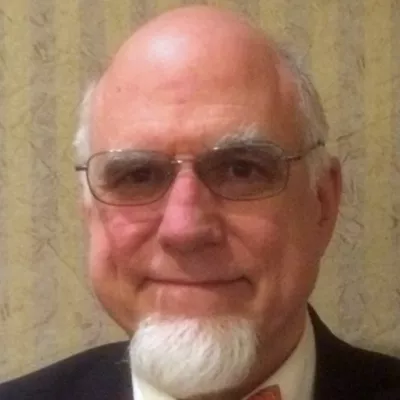
Take the opportunity to ask professional genealogist and publisher, Craig R. Scott, CG, FUGA a question about the U.S. Revolutionary War. See if his genealogical and historical knowledge about the United States and military research can help you solve that brick wall problem you can’t seem to get your hands around.
Take the opportunity to ask professional genealogist and publisher, Craig R. Scott, CG, FUGA a question about the U.S. Revolutionary War. See if his genealogical and historical knowledge about the United States and military research can help you solve that brick wall problem you can’t seem to get your hands around.
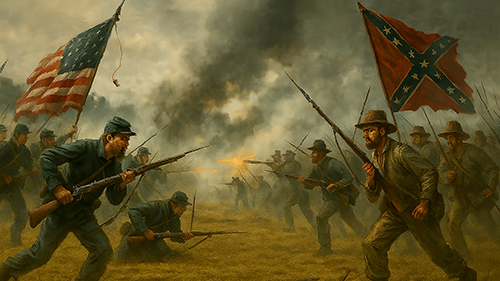
Civil War Records: What is a Reasonably Exhaustive Search?
To correlate evidence, you must have evidence to correlate. Typical researchers stop too soon in their evidence collection, believing they have found all there is to find about a soldier. There is more to military research than the compiled military service record or the pension application file. A reasonably exhaustive search is not limited to the two or three typical record sources.
To correlate evidence, you must have evidence to correlate. Typical researchers stop too soon in their evidence collection, believing they have found all there is to find about a soldier. There is more to military research than the compiled military service record or the pension application file. A reasonably exhaustive search is not limited to the two or three typical record sources.
Forgotten Records: Pension Ledgers and the Payments they Represent
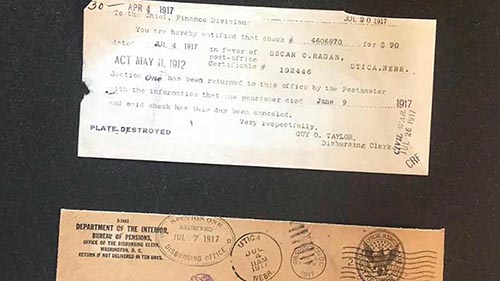
Few people take the time to look at the pension payment process and the records that are created. Records may contain information about movement, kin, and primary sources for dates of death.
Few people take the time to look at the pension payment process and the records that are created. Records may contain information about movement, kin, and primary sources for dates of death.
From Despair to Cargoes of Hope: WWII’s Displaced Persons
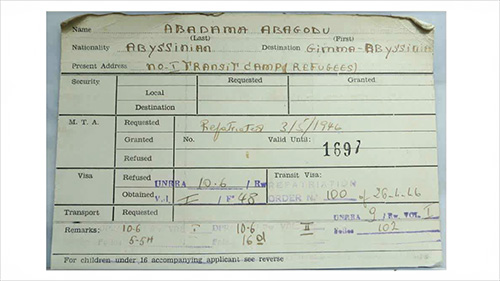
Many immigrants entered the US under the Displaced Persons Act. Based on specific criteria, eligible displaced persons (DPs) could be admitted to the US if they would not become a public charge and have safe and sanitary housing and employment without displacing some other person. The displaced person or refugee was the concern of the International Refugee Organization. The US created the Displaced Persons Commission to oversee the act’s enactment. Is your ancestor named in the record sets created? The presentation will discuss the History of the Act and the records created as a result of the Act.
Many immigrants entered the US under the Displaced Persons Act. Based on specific criteria, eligible displaced persons (DPs) could be admitted to the US if they would not become a public charge and have safe and sanitary housing and employment without displacing some other person. The displaced person or refugee was the concern of the International Refugee Organization. The US created the Displaced Persons Commission to oversee the act’s enactment. Is your ancestor named in the record sets created? The presentation will discuss the History of the Act and the records created as a result of the Act.
Buried in the Federal Records Center: Uncovering XC Pension Files
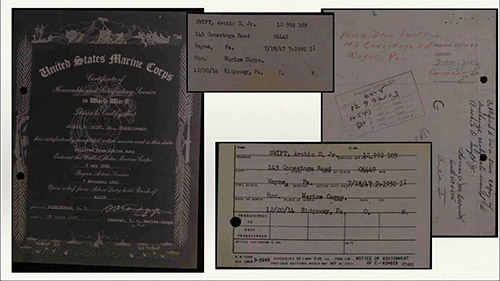
This talk will discuss how to obtain deceased 20th century veterans’ claims files, of which 1.1 million boxes are languishing in warehouses around the US.
This talk will discuss how to obtain deceased 20th century veterans’ claims files, of which 1.1 million boxes are languishing in warehouses around the US.
Finding Your Ancestors at the National SAR Genealogical Research Library
The National Society of the Sons of the American Revolution has been collecting research material since its beginning in 1889. Not many people know that their national headquarters and award winning genealogical research library is located in Downtown Louisville Kentucky. Join us on a tour of the research facility and take a deep dive into the rare and expansive collection that awaits national researchers of all skill levels and timeline needs.
The National Society of the Sons of the American Revolution has been collecting research material since its beginning in 1889. Not many people know that their national headquarters and award winning genealogical research library is located in Downtown Louisville Kentucky. Join us on a tour of the research facility and take a deep dive into the rare and expansive collection that awaits national researchers of all skill levels and timeline needs.
Following the Civil War, when nearly 200,000 African American men served, the U.S. Army established 4 African American infantry (later modified to 2) and 2 cavalry regiments in 1868. They initially served in the West but fought in the Spanish American War and the two World Wars in segregated units. It was not until 1948 that Executive Order 9981 integrated the military. What was life like for these soldiers? Where do you find service and pension records?
Following the Civil War, when nearly 200,000 African American men served, the U.S. Army established 4 African American infantry (later modified to 2) and 2 cavalry regiments in 1868. They initially served in the West but fought in the Spanish American War and the two World Wars in segregated units. It was not until 1948 that Executive Order 9981 integrated the military. What was life like for these soldiers? Where do you find service and pension records?
MyHeritage está a la vanguardia de la innovación en genealogía y constantemente introduce nuevas y emocionantes funciones para ayudar a los usuarios a llevar su investigación al siguiente nivel. En esta sesión, Daniel ofrecerá una explicación detallada de las últimas y mejores novedades de MyHeritage y le mostrará cómo sacar el máximo partido a estas funciones. Además, le dará un vistazo entre bastidores sobre cómo se desarrollaron.
MyHeritage está a la vanguardia de la innovación en genealogía y constantemente introduce nuevas y emocionantes funciones para ayudar a los usuarios a llevar su investigación al siguiente nivel. En esta sesión, Daniel ofrecerá una explicación detallada de las últimas y mejores novedades de MyHeritage y le mostrará cómo sacar el máximo partido a estas funciones. Además, le dará un vistazo entre bastidores sobre cómo se desarrollaron.
Le Système d’Organisation de Généalogie à Six Dossiers
Thu, March 5 2026: 14:00 UTC
Les sous-titres et la voix de cette vidéo ont été doublés en français à l’aide de l’IA.
Perdu dans une mer de fichiers numériques, de photos de famille et de documents papier ? Vous ne trouvez pas les dossiers que vous savez avoir ? Vous numérisez des photos et des dossiers plus d’une fois ? Ce système basé sur les archives vous aide à organiser TOUS vos travaux de recherche généalogique et vos dossiers en seulement six dossiers. Pas besoin de codes couleur, de systèmes de numérotation ou d’autres schémas compliqués avec des idées d’un généalogiste et archiviste professionnel.
Les sous-titres et la voix de cette vidéo ont été doublés en français à l’aide de l’IA.
Perdu dans une mer de fichiers numériques, de photos de famille et de documents papier ? Vous ne trouvez pas les dossiers que vous savez avoir ? Vous numérisez des photos et des dossiers plus d’une fois ? Ce système basé sur les archives vous aide à organiser TOUS vos travaux de recherche généalogique et vos dossiers en seulement six dossiers. Pas besoin de codes couleur, de systèmes de numérotation ou d’autres schémas compliqués avec des idées d’un généalogiste et archiviste professionnel.
Diccionario geográfico de España para genealogistas: cómo interpretar lugares antiguos en tus investigaciones familiares
Tue, March 10 2026: 14:00 UTC
Aprende a usar un diccionario geográfico de España para tus estudios genealógicos. Descubre cómo identificar pueblos desaparecidos, cambios de nombres, y divisiones históricas que afectan tu árbol familiar. Ideal para genealogistas y aficionados a la historia familiar.
Aprende a usar un diccionario geográfico de España para tus estudios genealógicos. Descubre cómo identificar pueblos desaparecidos, cambios de nombres, y divisiones históricas que afectan tu árbol familiar. Ideal para genealogistas y aficionados a la historia familiar.
Leveraging Freedom of Information Laws to Procure Novel Records
Wed, March 11 2026: 18:00 UTC
This lecture will explain Freedom of Information Laws, and what genealogists can do with them. A variety of jurisdictions and case studies will be discussed.
This lecture will explain Freedom of Information Laws, and what genealogists can do with them. A variety of jurisdictions and case studies will be discussed.
From Research to Data with AI 1 of 5: From Records to Raw Data—Extracting with AI
Thu, March 12 2026: 0:00 UTC
Use AI to extract, clean, organise, and analyse your family history research. Intermediate level, focused on workflows and data handling; ideal for users managing large research projects; activities include table-building, clustering, and data cleaning.
Use AI to extract, clean, organise, and analyse your family history research. Intermediate level, focused on workflows and data handling; ideal for users managing large research projects; activities include table-building, clustering, and data cleaning.
La plupart des généalogistes n’exploitent pas pleinement tous les indices disponibles dans les annuaires municipaux. Apprenez à aller au-delà d’une simple « recherche » de vos ancêtres et de leur famille. Comprenez comment les annuaires municipaux ont été créés, les secrets des différentes abréviations et comment utiliser l’approche F.A.N. Club pour obtenir le plus d’informations possible. Ce webinaire fait partie du séminaire de généalogie MyHeritage d’une journée, diffusé en direct depuis le siège de MyHeritage à Or Yehuda, en Israël.
Les sous-titres et la voix de cette vidéo ont été doublés en français à l’aide de l’IA.
La plupart des généalogistes n’exploitent pas pleinement tous les indices disponibles dans les annuaires municipaux. Apprenez à aller au-delà d’une simple « recherche » de vos ancêtres et de leur famille. Comprenez comment les annuaires municipaux ont été créés, les secrets des différentes abréviations et comment utiliser l’approche F.A.N. Club pour obtenir le plus d’informations possible. Ce webinaire fait partie du séminaire de généalogie MyHeritage d’une journée, diffusé en direct depuis le siège de MyHeritage à Or Yehuda, en Israël.
Les sous-titres et la voix de cette vidéo ont été doublés en français à l’aide de l’IA.
By registering, you are submitting your information to Legacy Family Tree Webinars and agreeing to let us use it to contact you.
Thank you for registering!
You should receive a confirmation email with a link to the webinar soon.
You’ll also receive a reminder both the day before and one hour before the webinar begins. Didn’t receive a confirmation email?
You successfully registered for %s.
You should receive a confirmation email with a link to the webinar soon.
You’ll also receive a reminder both the day before and one hour before the webinar begins. Didn’t receive a confirmation email?