



Most researchers stop at the population schedule, but census records also include valuable schedules that document farms, businesses, deaths, and community life. This session explores agricultural, mortality, and industry schedules, showing how they can be used to add depth to family history.
While the standard population schedule provides the “who” and “where” of family history, it often misses the “how” and “why” of our ancestors’ daily lives. In her webinar, “Beyond the Population Schedule,” Cheri Hudson Passey guides researchers into the rich, specialized worlds of non-population schedules, including agricultural, mortality, industry, and social statistics records. These federal and state-level records were designed to measure the nation’s productivity, health, and social infrastructure rather than just headcount. By stepping beyond the familiar territory of names and ages, genealogists can uncover detailed stories of economic mobility, farm production, community health patterns, and even forgotten businesses. This presentation emphasizes that these records provide the essential context—the “many faces”—needed to transform a dry pedigree chart into a vibrant family narrative.
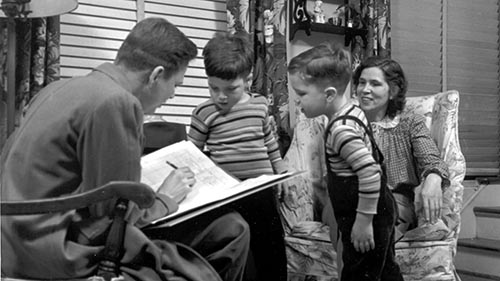
Revealing Economic and Social Realities: Non-population schedules provide deep contextual data that population schedules lack, such as the specific crops grown on a farm, the number of employees in an ancestor’s sawmill, or the average wages paid to local laborers. For instance, correlating 1860 and 1870 agricultural data can reveal the stark impact of the Civil War on a family’s wealth and labor practices.
Filling Vital Record Gaps: Mortality schedules (1850–1885) act as a bridge for periods and places where formal death records were not consistently kept, often revealing children who died between census years and providing specific causes of death. These records can even include detailed “remarks” from enumerators that explain local tragedies or social conditions.
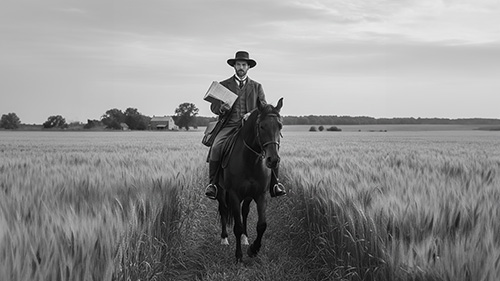
Navigating Specialized and Rare Schedules: Beyond common records, researchers should look for the 1880 “DDD” (Defective, Dependent, and Delinquent) schedules for health history, the 1890 Veterans Schedule to locate Union soldiers and widows, and rare 1935 Business Schedules for ancestors involved in early 20th-century industries like radio or trucking.
To fully understand the scope of these specialized records and how to locate them, viewing the complete webinar is highly recommended. Witnessing the side-by-side correlations of real-life family data illustrates exactly how these records can break through research brick walls and clarify vague occupations. We encourage you to explore the five-page syllabus included with this presentation, which features essential links to NARA resources, state-specific archives, and detailed guides for interpreting the often-complex language of historical schedules. Mastering these “hidden” records will allow you to see your ancestor’s community—and their place within it—more clearly than ever before.









 Facebook
 X
X
 Syllabus


This webinar gives so much new information and the nudge I need to investigate non-population schedules to expand what I know about family members. Excellent presentation!
I had no idea some of these census schedules existed. Can’t wait to look for them.
The best way I can describe the information in this wonderful presentation is like a horse having blinders on and then having them removed so it can see the whole view instead of just what’s directly ahead. There’s just SO much more out there that I’ve considered looking into. Gaining greater CONTEXT into the lives of our ancestors: these non-population schedules are great tools for doing just that!
Extremely informative, specifically when considering optional means of determining which records might exist beyond what we think of as “normal” records.
I like the examples and the variety. I need to do some checking in my places.
This was a great explanation of the different schedules. The mortality schedules are now on my to do list to look for the missing children of my 3x ggrandmother .
Fantastic presentation about the “other” schedules. Learned about some new places to check out. Easy to follow and excellent speaker
An interesting presentation giving new places to search for ancestors and their communities.