60
of
2,660 Webinars
for
“irish” Clear search Clear search
Sort by
Sort by
1:15:47
1.2K views
CC
Free
Early British and Irish Census Project
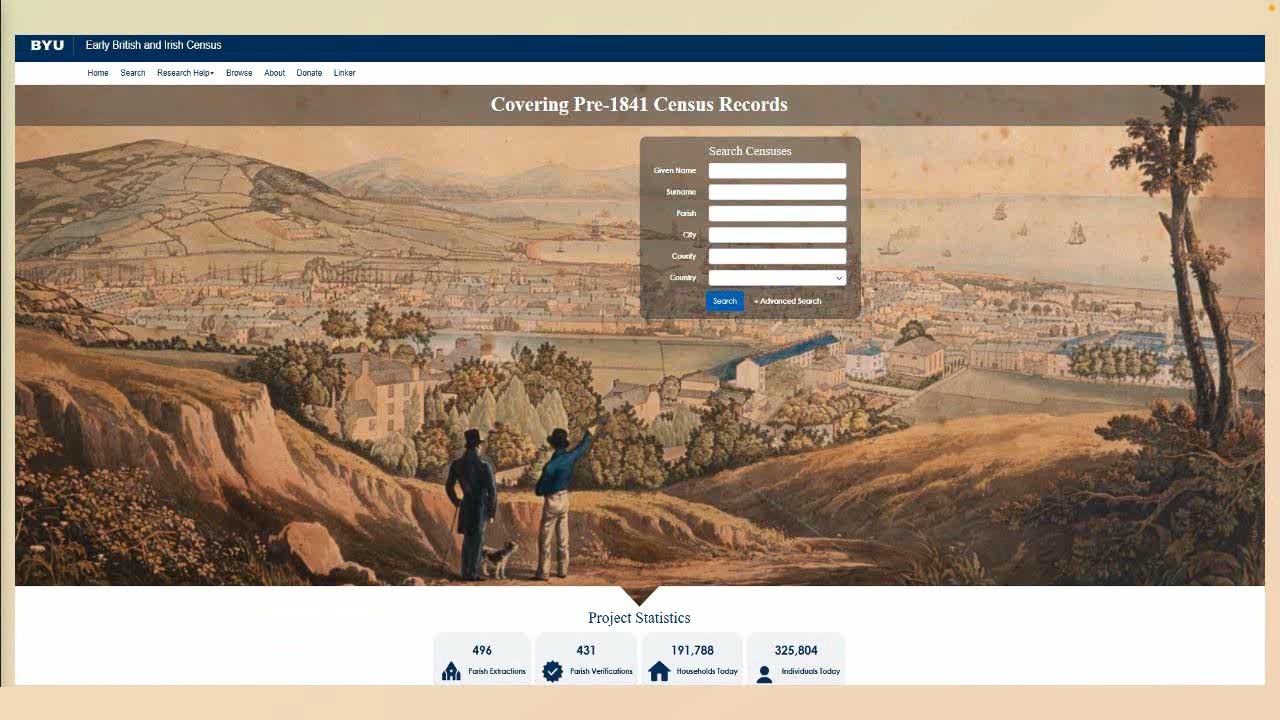
Most British and Irish pre-1841 census records have only statistical information. However, approximately 1400 returns have named individuals. The Early British and Irish Census Project (EBIC) brings all the information from those returns into one searchable, free-to-the-public database (ebc.byu.edu, will soon be ebic.byu.edu). The database covers the period before civil registration and the more comprehensive censuses. It helps researchers find early nineteenth-century and late eighteenth-century people who can be difficult to trace due to increased mobility and increased religious nonconformity.
Wed, October 22 2025: 18:00 UTC
50:14
864 views
CC
From The Ashes: The 1922 Irish Public Record Office Fire and Irish Genealogy
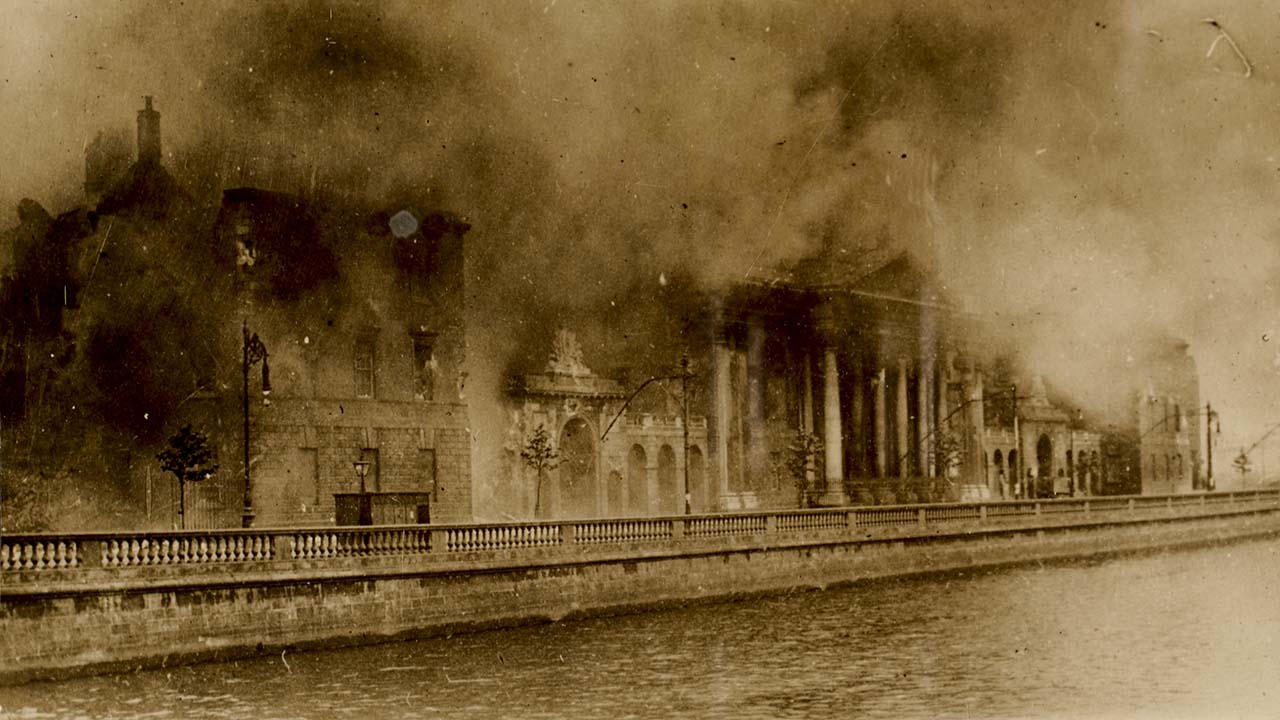
The destruction of the Public Records Office in June 1922 at the outset of the Irish Civil War has cast a long shadow over Irish genealogical research. Anyone who has sought their Irish ancestors has likely encountered frustration at the gaps in available records caused by this disaster. But how much do we really know about the events that caused the fire and were all our records really lost? This talk will explore the background to the Public Record Office fire and address some of the myths that have grown up around it. It will also examine how recent advances in conservation techniques and modern technology are allowing the recovery of some records previously believed lost, with a particular focus on the recent Virtual Record Treasury of Ireland Project.
Wed, October 1 2025: 9:00 UTC
50:50
400 views
CC
Removing the Rebels: Peter Robinson’s settlement of Irish immigrants to Upper Canada
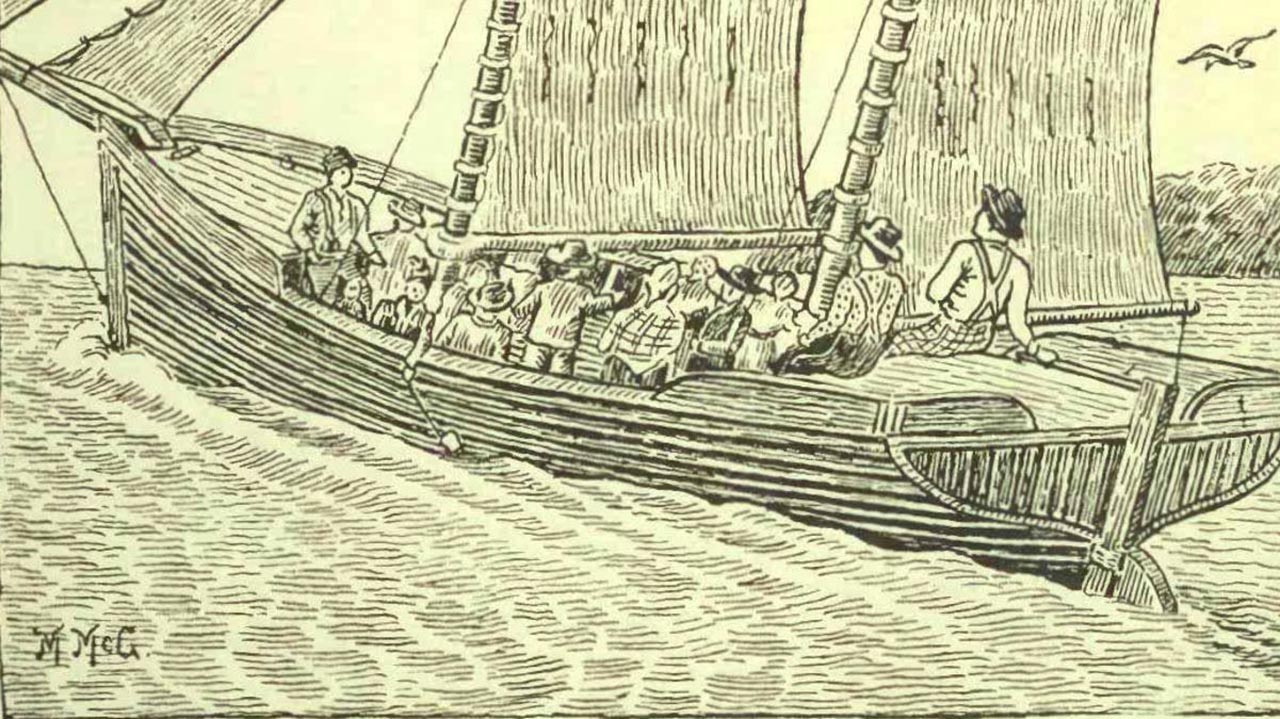
The South of Ireland was in dire straits at the end of the 18th century and on several occasions was on the verge of civil war. The Whiteboys developed as a secret oath-bound society among the poor. Their operations were chiefly in the counties of Waterford, Cork, Limerick, and Tipperary and were not directed against the government, but rather against local landlords. No amount of legislation seemed to tame the anger which had led to many “disturbances”. As a means of removing some of the rebels, offering them a new life and free land in Upper Canada, and hopefully settling the anger back home in Ireland, the government decide to pay for families to be resettled at the expense of the government. Peter Robinson, brother of John Beverley Robinson, was tasked with finding and settling the emigrants. In this presentation we will look at the history and politics that led to what has become known as the Peter Robinson’s Settlement Scheme. We will also take an in-depth look at the various resources available for researching your Peter Robinson Settler ancestors.
Fri, September 26 2025: 16:00 UTC
58:26
388 views
CC
Why you want Irish Quaker ancestors
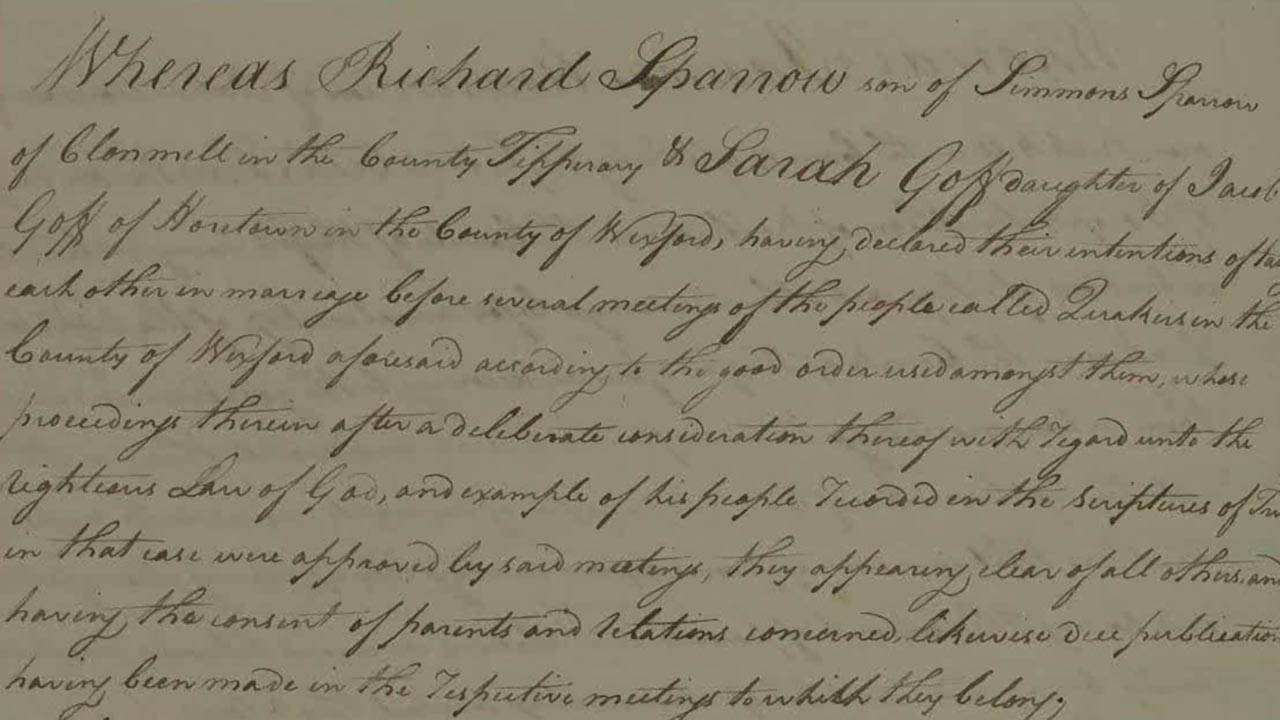
The Irish Quaker community is today very small but at the turn of the 19th century, they were a large, active mobile community in Ireland, with strong links to Pennsylvania, which was founded by William Penn, an English Quaker. They also kept amazingly detailed records in both the personal and business spheres. This lecture traces the history and impact of Irish Quakers and showcases their records while considering what a largescale DNA project might uncover for this endogamous and distinct community within Ireland.
Wed, August 6 2025: 9:00 UTC
1:07:52
1.3K views
CC
Free
Discovering Your Irish Roots: Uncover Hidden Stories and Sources with MyHeritage
Are your ancestors from the Emerald Isle? Whether your Irish roots are well-known or just a whisper in your family tree, this exciting webinar will show you how to trace them using MyHeritage’s rich and ever-growing collection of Irish records. Join Lorna Moloney, genealogy expert, for a deep dive into newly updated databases, rare historical collections, and clever research tips tailored for Ireland. From birth and marriage records to immigration files, land, directories and newspaper archives, you’ll learn how to unearth family stories you never knew existed. Whether you’re a genealogy beginner or a seasoned sleuth, this session is packed with lively insights, real examples, and expert guidance to bring your Irish heritage to life.
Tue, July 8 2025: 18:00 UTC
1:23:34
1.2K views
CC
Irish Ancestors – 5 More Essential Websites You Need to Know About
Following on from the ‘Irish Ancestors – Top 5 Websites You Need To Know About’ webinar delivered in January 2024, this talk examines five more key websites. These websites, most of which are free to access, hold a wealth of information that can help to build your family tree and build a picture of their lives. We will examine the type of records held on each site and will include search hints and tips to get the most out of your research on the following websites: The National Archives, Griffith’s Valuation, The Registry of Deeds, Roots Ireland, The British Newspaper Archive.
Wed, July 2 2025: 9:00 UTC
54:29
1.1K views
CC
Irish Landed Estates
Prior to the 20th century, the vast majority of Irish people lived in rural areas, leasing land and property from the landowners who owned large estates, some of which were thousands of acres in size. These estates, often managed by land agents, generated large amounts of records, a number of which are particularly useful for expanding the knowledge of your ancestors. If you have exhausted the civil registration and church records, these records could be very useful in providing further information about earlier generations who lived on an estate and where exactly they lived through records such as rentals, leases and estate maps. Other valuable documents within estate records include military muster rolls, correspondence, land agent notebooks, wage books, account books and emigration records, all of which have the potential to provide information about your ancestors. Following the Great Famine, many landlords fell into financial difficulty and the government established the Encumbered Estates Court which allowed for the sale of their estates. The records generated include information about tenants and their leases that often contain really valuable information to expand your family tree.
Fri, September 27 2024: 16:45 UTC
1:06:56
959 views
CC
Getting Out of the Archives and Into the Pubs to Trace Your Irish Ancestry
This webinar demonstrates how Eliza Watson traced her Coffey ancestry line back eight generations from southwest Wisconsin to Ireland in 1705. An amazing feat due to the lack of Irish historical records. Her success was thanks to a newfound Irish Daly relation, extensive cemetery research, and a local historian. The webinar provides creative ways to break down an Irish research brick wall.
Wed, May 1 2024: 2:00 UTC
1:23:17
3.6K views
CC
Using DNA To Identify Irish Ancestral Locations
For many of us who have Irish ancestry, the major question is ‘but where in Ireland?’ Like millions of other descendants of Irish emigrants, Michelle Leonard has Irish ancestors who left Ireland in the 1840s-60s and on nearly all documents she can find for them their birthplaces were given simply as ‘Ireland’. In many cases traditional research is not able to narrow down exactly where in Ireland our ancestors lived and trying to trace them across the seas is often a ‘needle in a haystack’ endeavour. In this personal case study, Michelle will outline how she managed to identify exact locations in Ireland for her Irish lines using the power of DNA testing and will provide strategies and top tips that could help you do the same.
Wed, March 6 2024: 19:00 UTC
1:28:45
2.7K views
CC
Irish ancestors – Top 5 websites you need to know about
This webinar is a romp through the top 5 websites where you will find information on your Irish ancestors. Best of all most of them are free! This is ideal if you are at the start of your Irish ancestral research and will give you a good grounding before delving into the more obscure record sets.
Fri, January 5 2024: 19:00 UTC
50:19
1.2K views
CC
Unearthing the treasures in the Irish Registry of Deeds
The Registry of Deeds based in Dublin has been in existence since 1704 and manages the legal registration of property. Less well known is that it is also a repository for genealogical treasures such as wills, property leases and marriage agreements. People named in these records include the principal parties and also wider family members and witnesses. It is also possible to find records by location. These records are available as microfilms on the Family Search website although they are not indexed there. This webinar will cover different methods of searching within and accessing these valuable records.
Fri, April 14 2023: 12:00 UTC
Advanced
1:27:48
2.2K views
CC
Hints & Tips for Solving Irish Cases of Unknown Parentage Using DNA
There are many examples of Unknown Parentage cases in Ireland – illegal adoptees, a foundling grandparent, or simply an Irish Brick Wall. This talk explores the approach to solving these cases, the challenges faced with Irish records, and some hints & tips to overcome them using DNA.
Wed, February 8 2023: 19:00 UTC

Upcoming Live Webinars

View all (223)
Tue, March 10 2026: 14:00 UTC
Spanish
Diccionario geográfico de España para genealogistas: cómo interpretar lugares antiguos en tus investigaciones familiares
Tue, March 10 2026: 14:00 UTC
Aprende a usar un diccionario geográfico de España para tus estudios genealógicos. Descubre cómo identificar pueblos desaparecidos, cambios de nombres, y divisiones históricas que afectan tu árbol familiar. Ideal para genealogistas y aficionados a la historia familiar.
Sonia Meza
Aprende a usar un diccionario geográfico de España para tus estudios genealógicos. Descubre cómo identificar pueblos desaparecidos, cambios de nombres, y divisiones históricas que afectan tu árbol familiar. Ideal para genealogistas y aficionados a la historia familiar.
Tue, March 10 2026: 14:00 UTC
Wed, March 11 2026: 18:00 UTC
Leveraging Freedom of Information Laws to Procure Novel Records
Wed, March 11 2026: 18:00 UTC
This lecture will explain Freedom of Information Laws, and what genealogists can do with them. A variety of jurisdictions and case studies will be discussed.
Wed, March 11 2026: 18:00 UTC
Thu, March 12 2026: 0:00 UTC
From Research to Data with AI 1 of 5: From Records to Raw Data—Extracting with AI
Thu, March 12 2026: 0:00 UTC
Use AI to extract, clean, organise, and analyse your family history research. Intermediate level, focused on workflows and data handling; ideal for users managing large research projects; activities include table-building, clustering, and data cleaning.
Thu, March 12 2026: 0:00 UTC
Thu, March 12 2026: 14:00 UTC
French
Annuaires urbains : aucune ville n’est trop petite, aucun indice n’est insignifiant
Thu, March 12 2026: 14:00 UTC
La plupart des généalogistes n’exploitent pas pleinement tous les indices disponibles dans les annuaires municipaux. Apprenez à aller au-delà d’une simple « recherche » de vos ancêtres et de leur famille. Comprenez comment les annuaires municipaux ont été créés, les secrets des différentes abréviations et comment utiliser l’approche F.A.N. Club pour obtenir le plus d’informations possible. Ce webinaire fait partie du séminaire de généalogie MyHeritage d’une journée, diffusé en direct depuis le siège de MyHeritage à Or Yehuda, en Israël. Les sous-titres et la voix de cette vidéo ont été doublés en français à l’aide de l’IA.
Thu, March 12 2026: 14:00 UTC
Fri, March 13 2026: 18:00 UTC
Researching in Northumberland & Durham
Fri, March 13 2026: 18:00 UTC
Northumberland and Durham, in the extreme north-east corner of England, are often united when discussing family history. Our ancestors moved easily back and forth across the River Tyne, to live and work, connected by the City of Newcastle-Upon-Tyne on the boundary. Discover the key resources and how to locate them in the various archives covering the two counties. Learn how to effectively use the catalogues and finding aids, see what is available online or what can only be accessed in archives or libraries. Also learn about what records are different and unique to these two counties and are really helpful in your research.
Fri, March 13 2026: 18:00 UTC
Tue, March 17 2026: 18:00 UTC
Spanish
Paleografía, Abreviaturas y Fórmulas Comunes de los Archivos Parroquiales en América Latina
Tue, March 17 2026: 18:00 UTC
Los archivos parroquiales constituyen una de las fuentes genealógicas más ricas de América Latina, pero también una de las más desafiantes. Este webinar guiará a los asistentes en la lectura e interpretación de registros sacramentales—bautismos, matrimonios y entierros—desde la época colonial hasta el siglo XX. Se abordarán principios básicos de la paleografía, abreviaturas frecuentes, fórmulas eclesiásticas y variaciones regionales en la manera de registrar información. Se incluirán ejercicios prácticos de lectura de documentos originales, con énfasis en errores comunes y estrategias efectivas para descifrar textos antiguos.
Tue, March 17 2026: 18:00 UTC