Where Does It Say That? Learning to Love Indirect Evidence
Chris Staats


Content


About this webinar
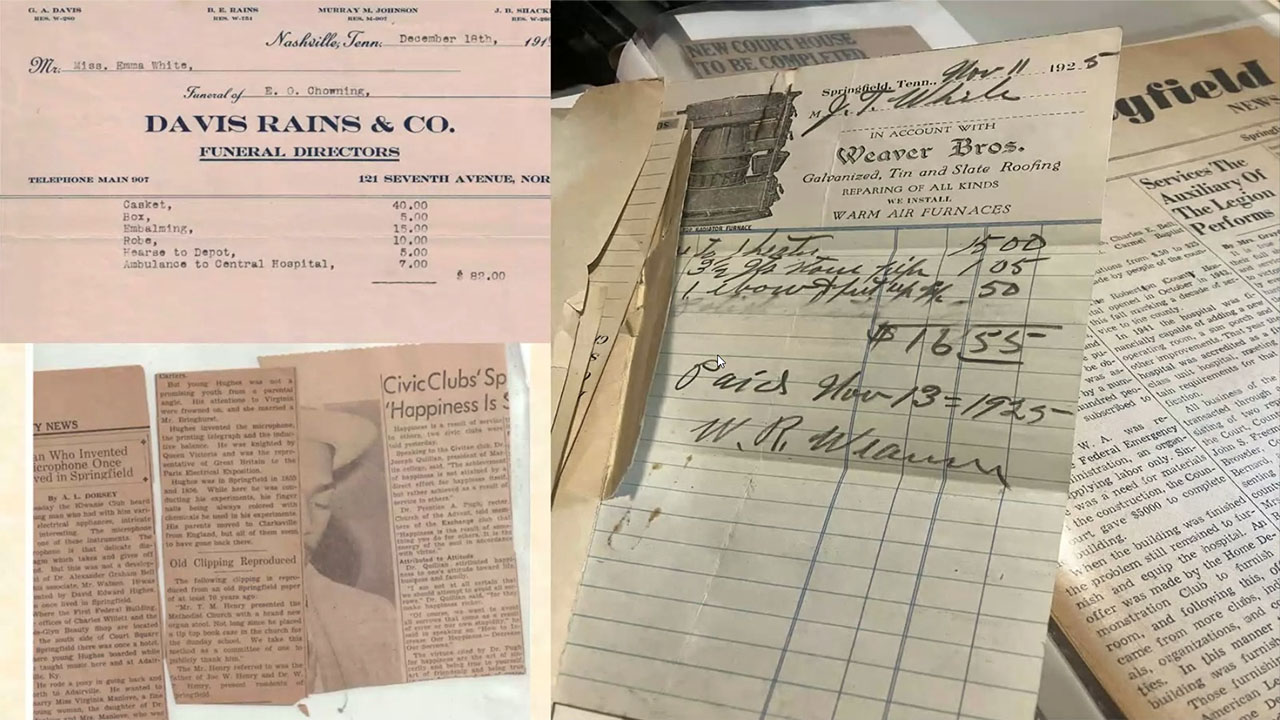
Direct evidence, the sort of evidence that completely answers a research question by itself, is often scarce. Without any documents telling us exactly what we want to know, how do we identify relationships that might not be stated explicitly, resolve conflicts between records, and arrive at sound genealogical conclusions? By collecting, analyzing, and correlating indirect evidence of course! The Henry McGinnis family of 19th century rural Pennsylvania provides a good example of using mostly indirect evidence to reconstruct a family which left precious little for descendants to work with.
About the speaker

Key points and insights
Resolving complex family history mysteries often requires moving beyond obvious direct statements to uncover hidden truths within historical documents. This informative webinar, hosted by Marian Pierre-Louis and presented by professional genealogist Chris States, focuses on the vital skill of identifying and analyzing indirect evidence. When direct records are missing, error-ridden, or explicitly misleading, family historians must look beneath the surface to evaluate what a record implies rather than just what it states up front. By systematically correlating scattered pieces of information, researchers can successfully build solid cases, break through brick walls, and establish highly accurate ancestral connections.
- The Classification and Context of Evidence: Whether information constitutes direct or indirect evidence depends entirely upon the specific research question being asked. Unlike direct evidence, which answers a question completely on its own, indirect evidence consists of relevant data points that must be carefully combined with other findings to reveal a logical conclusion. This multi-layered framework requires genealogists to distinguish clearly between the physical source container, the informant's level of primary or secondary information, and the final evidence derived.
- The Crucial Role of the Written Conclusion: Implementing the five-part Genealogical Proof Standard (GPS) requires conducting a reasonably exhaustive search, citing sources accurately, correlating data, and resolving conflicts. Genealogists frequently overlook the final step of the GPS: compiling a soundly reasoned, coherently written narrative conclusion. Writing out the logical proof argument is an invaluable exercise because it actively exposes hidden holes or deficiencies in current research that standard databases alone cannot reveal.
- Expanding Research Boundaries through the FAN Club: When ancestral progress stalls, focusing too narrowly on a single individual or surname can result in a research dead end. Genealogists should actively investigate an ancestor's "FAN club"—their friends, associates, and neighbors—as these individuals shared unique historical interactions. Because individuals often migrated and transacted business in groups, the records generated by these associates frequently contain vital indirect clues regarding one's own ancestor.
To observe these advanced methodologies in action, viewing the full webinar recording is highly recommended to study the detailed case reconstruction of the Henry McGinnis family. The complete presentation masterfully demonstrates how combining scattered, offline resources like guardianship files, bounty land acts, and local tax lists can systematically reveal entirely forgotten family members. Genealogists are warmly invited to download the accompanying four-page instructional syllabus available for subscribers. This excellent supplemental resource provides an essential guide to mastering source quality, analyzing historical handwriting variations, and implementing advanced evidence correlation techniques to elevate overall research proficiency.
Related webinars
 01:25:46
 00:59:41
 01:30:35
 01:01:33
 00:55:55