



Marriage dispensations provide a privileged window into social and family life in viceroyal Mexico. Dispensations, or special permissions to marry granted by Catholic bishops, reveal the obstacles that had to be resolved before ecclesiastical authorities in order to contract marriage. This webinar examines dispensations for consanguinity and for ultramarinos (foreign-born individuals). In areas with high levels of endogamy, marriage dispensations become essential resources to reconstruct family relationships, even extending beyond other church records.
Navigating the complexities of Mexican genealogy often leads researchers to the rich and detailed world of marriage dispensations. In this illuminating webinar, expert genealogist Nefi Arenas Salazar explores how these ecclesiastical permissions served as vital workarounds for couples facing canonical impediments in the Catholic Church. Whether the obstacle was a blood relationship, a spiritual bond, or a previous public engagement, the resulting documentation provides a depth of information rarely found in standard parish registers. For those facing “brick walls” in colonial research, these records offer a bridge across missing generations and a rare glimpse into the personal lives, movements, and social structures of Mexican ancestors.
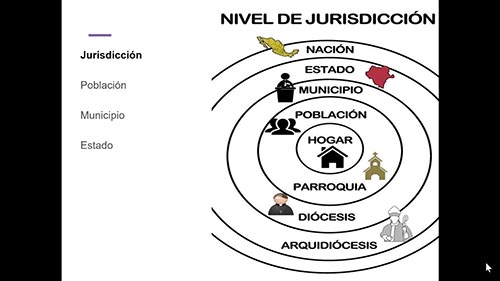
Diverse Jurisdictional Archives and Digital Access: Successfully locating dispensations requires an understanding of historical diocesan boundaries, such as the vast Bishopric of Durango or the powerful Diocese of Guadalajara. While some records are still housed in physical archives and accessed via PDF guides, massive collections for Jalisco, Michoacán, and Mexico City are now digitized. Innovative tools, including artificial intelligence full-text searching on FamilySearch and dedicated volunteer-led indexes like Guadalajara Dispensas and Valladolid Dispensas, have made these once-dense archives more accessible than ever before.
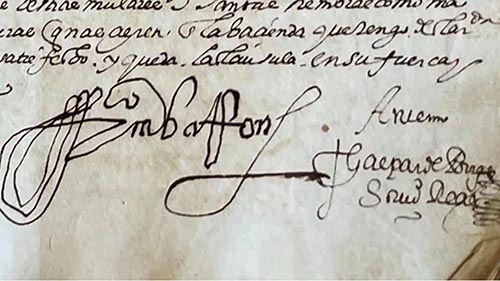
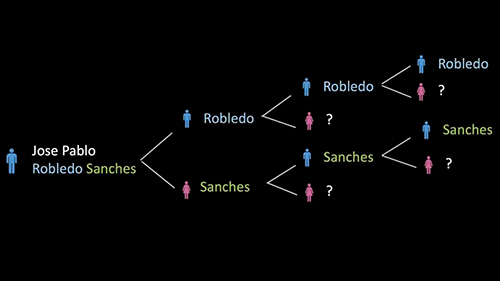
Multi-Generational Lineage Reconstruction: The most significant genealogical benefit is found in consanguinity dispensations, which often include “tree” diagrams or detailed testimonies mapping out multiple generations of a family to prove degrees of kinship. These records can connect common ancestors from the 1500s to their 18th or 19th-century descendants, often providing the only surviving evidence of lineage in regions where local parish books were lost to time or conflict.
Rich Social and Historical Narratives: Beyond names and dates, these documents reveal the vibrant social fabric of colonial Mexico. “Ultramarino” dispensations provide detailed travel itineraries for immigrants from Europe and Asia, while other records include accounts of frontier defense against indigenous raids or insights into community perceptions of endogamy and hereditary traits. These narratives allow researchers to move beyond a simple pedigree to build a comprehensive historical context for their family.
To fully harness the power of these records for your own research, viewing the complete webinar is highly recommended. Salazar’s presentation features fascinating case studies—ranging from the prominent Garza family of Northern Mexico to Portuguese immigrants in Mexico City—that demonstrate exactly how to interpret and apply this data. Genealogists are also encouraged to explore the accompanying syllabus, which serves as a curated roadmap featuring essential links to specialized blog indexes, archival search tools, and PDF guides. Diving into these resources is the next logical step for anyone ready to unlock the secrets hidden within Mexico’s historical archives.







 Facebook
 X
X
 Syllabus


I always enjoy webinars by Nefi. This one did not disappoint. I loved the story he shared about the couple that ran away together. I’m feeling inspired to look closer at my own family tree for marriage dispensations to see what clues I can glean from it. Thank you for a wonderful presentation.
It is informative and interesting to learn that marriage dispensation records contain a great deal of gossip, as well as valuable family medical history.
I do not have any family in Mexico that I know of…but I hope to use this info to help find ancestors in other countries in South America.
Very interesting webinar, I will be checking out others
I had no idea there were so many records or how to find them!
Great Presentation, Nefi is always a guarantee
Excellent information, examples, and explanations.
Everything worked perfectly