



Learn how to use artificial intelligence to help find important family information, understand old documents, and craft compelling family stories to support your family history research. This webinar will introduce you to the best uses of AI in genealogy today and give a peek behind the curtain of what genealogists can look forward to from AI advancements in 2026.
This webinar from the Legacy Family Tree Webinars AI series offers a practical, forward-looking tour of how artificial intelligence can support (and sometimes complicate) real genealogical work. Presented by Steve Little and Mark Thompson and hosted by Marian Pierre-Louis, the session reviews what AI already does reliably for family historians, highlights the capabilities that made 2025 a turning point, and previews how 2026 may reshape everyday research workflows. The discussion is especially relevant for genealogists who want to work faster and more creatively—without sacrificing standards of proof, source awareness, or ethical responsibility.
The “core four” uses still anchor success—now with bigger reach. Summarization, extraction, generation, and translation remain the most dependable strengths of AI, with repeated emphasis on a critical practice: verify everything. The webinar adds nuance by showing how today’s tools can handle larger volumes of text and more complex queries than even a year ago, making them more useful for long documents and multi-source projects.
Research workflows are shifting from copy-paste to context-aware tools. Internet-connected “deep research” features and source-grounded notebook tools are framed as a major leap: instead of relying on what a model “remembers,” AI can increasingly gather, synthesize, and present findings with links back to sources. The webinar also highlights a growing trend toward AI-assisted browsing—summarizing what is on-screen, comparing multiple tabs, and accelerating the early stages of investigation.
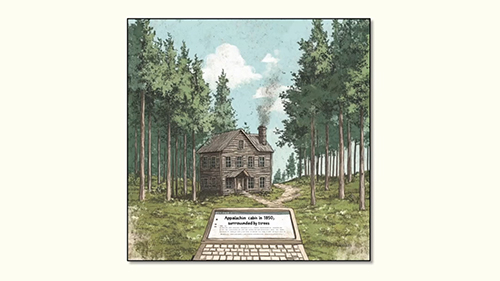
Images, handwriting, and structured data analysis are moving from novelty to utility—if used responsibly. High-quality image generation and restoration can bring narratives to life, but the speakers stress the risk of “polluting the timeline” with convincing visuals that might later be mistaken for originals. Improvements in text-in-image accuracy enable more usable pedigree charts, while better transcription/handwritten recognition and AI-written “helper programs” open doors for tackling large datasets (such as census-sized searches) in ways that were previously impractical.
Watching the full webinar is worthwhile for the demonstrations and the decision-making framework behind them—how to choose the right tool for the job, how to structure prompts and inputs, and where human judgment must remain in control. The complete session also helps set expectations for 2026: wider adoption, more AI embedded in everyday software, and powerful (but potentially risky) agent-like features that demand caution. To go further, explore the additional links, prompts, and community resources included in the syllabus—designed to help genealogists apply these ideas confidently and responsibly in their own research.











 Facebook
 X
X
 Syllabus



Super webinar. It’s one of the best I have seen on AI. Thank you!
AI has been around for years, whether it’s been a spelling app or something else. It’s just getting much better.
WRT handwritten text recognition, I’m waiting for the day when AI will recognize old script from, say, Italy or Germany. So far, the batting average has been pretty low. Basically, you have to be able to recognize the text yourself in order to catch AI’s erros.
AI can recognise handwritten texts of Germany of the 18th century but you must use a specialized AI: I use Transkribus to transcribe notary records of Luxembourg of the 17th and 18th century and it works like a charm. CER (character Error Rate) is lower than 3 % . And I ask Claude AI to translate them in English.
I have transcribed more than 20.000 pages of deeds and registers.
Very excited about your future!!!!!! Sandra Davis
One of the best webinars in FamilyTreeWebinars!!!
This webinar alone is worth the cost of Legacy Tree Webinars! Steve Little and Mark Thompson are great for sharing their time and expertise.
Best yet. Super clear, thought provoking and inspirational. I’ve played a lot with AI, but not much for genealogical research. I’ll be using it a lot more now.
5+ webinar! Having personally used AI to assist in writing my family’s involvement with the Salem Witch Hysteria I was particularly impressed with the information provided in this webinar for the expansion of tools available to assist in the project. The information provided was in a no-nonsense manner that was easily understood and can be quickly implemented in the performance of the tasks discussed. Great work!!!!!!!!
Thank you! A Little/Thompson program can be depended to give the latest information on AI and the best practices to use it.