




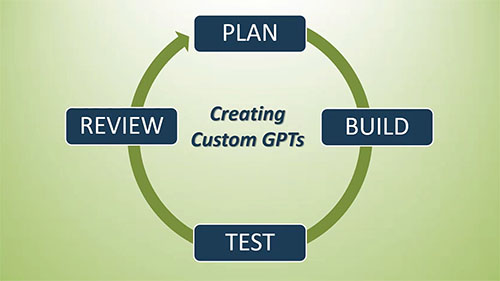
Artificial intelligence is changing the way genealogists work—but how do you move beyond tips and tricks to apply AI in a sound, methodical way? In this session, Andrew Redfern demonstrates how a case study approach provides the answer. Using real examples, he walks through the stages of tackling a genealogical problem with AI, showing how tools can assist with transcription, analysis, correlation of evidence, and presentation of findings. Rather than treating AI as a shortcut, Andrew highlights how to integrate it into the established genealogical research cycle—problem definition, source gathering, analysis, and conclusion. Attendees will see how AI can clarify complex evidence, save time on repetitive tasks, and support storytelling, while still requiring human expertise and critical thinking. By the end of the session, participants will have a practical framework they can adapt to their own research problems, ensuring that AI becomes a trusted partner in genealogical methodology.
Discount code: deepdive15 (valid at Familytreewebinars.com)
Valid through: January 13, 2026





 Facebook
 X
X
 Syllabus


.. that I’ve never thought of before. It knows so much about where records are kept. For example, I’m writing with the Gwent Archives in Monmouthshire, Wales about my fifth great grandmother Jane Thomas and her ownership of a beerhouse – my research question is – can I identify how she came to own this beerhouse (as a widow). Who did she buy it from? It wrote the email for me. Also do deepen my knowing of her family and her life’s experience.
It can product maps, talk with you about parishes at that specific point in time, and contextualise historically where x is to y and how long it might take your ancestor to walk there / map out a daily life.
You can use genetic genealogy / it can help you see patterns you may have missed. This includes chromosome mapping and GEDmatch work (get your DNA on GEDmatch if you haven’t, and test at Ancestry only).
It can help you analyse your Y or mtDNA or x-dna paths.
You are the critical thinker and the proof reader. It’s not without flaws. GL!
.. when you make rules for the Ancestry folder, these could be ‘lock in the spelling ‘A-N-G-E-L-I-N-A’ or in my case, Aberystruth was always heard at Aberystwyth. So I invented a rule that whenever it heard me speak, it knew it was ‘Aberystruth’ and never the other.
Tell is explicitly what you want. Sometimes it tries to be helpful, but it presupposes you don’t know anything – that’s why the ‘assemble’ stage is important. And before you start you can say ‘Please name this chat ‘John Kent’. Inside that chat you can actually branch out to descendants or siblings. Be careful to organise your chats or you will get lost and ChatGPT doesn’t remember where it puts things sometimes (or can’t read a PDF or image from a chat where you can’t remember where you put it).
Never forget your research question. ChatGPT might help you to formulate it if you don’t know where to start. Then your research question might evolve and change as you exhaust avenues. I like how it comes up with places.. tbc
Thanks for your presentation highlighting how AI can help genealogists not just go back, but deepen their knowledge of their ancestors by analyses and questioning.
As someone with ADD, AI has really changed my life in the way that I can ask someone to do the synthesis work that my brain knows through recognising patterns, but finds it hard to organise the data and put it coherently together.
As someone who has been using AI for genealogical and genetic genealogical purposes, I’d just like to offer a few pointers to people who have not used ChatGPT or similar AI mechanism.
First, you can speak your instructions. I find this less time-consuming than typing, and some of your older generation might appreciate this. On the computer you can always fix ‘misheard’ speech before sending.
Second, use the project file that you see on the left, call it ‘Ancestry’ and invent rules for it. Make a chat inside for each ancestor for organisation. TBC..
This was very helpful! Thank you!
The absolute most useful and best webinar of the session. I will be registering for more of Andrew’s AI webinars.
An excellent demonstration on the use of AI to assist with thinking and analysis while performing genealogical research.
Excellent session, thank you. I came along because I thought I need to know more about AI use in genealogy in general (as the leader of a local genie group), rather than it was a tool I was wanting to use for myself (which I had no intention of doing), and came away with ideas on how I can use it myself! Andrew is very good at explaining his topic.
Extraordinary! Hard to say more!