0 webinars selected
Select all
Cancel
Cancel
O Canada
English

3 Upcoming Live Webinars
Clear filter
Migration Pathways Between Canada and the United States You Haven’t Considered
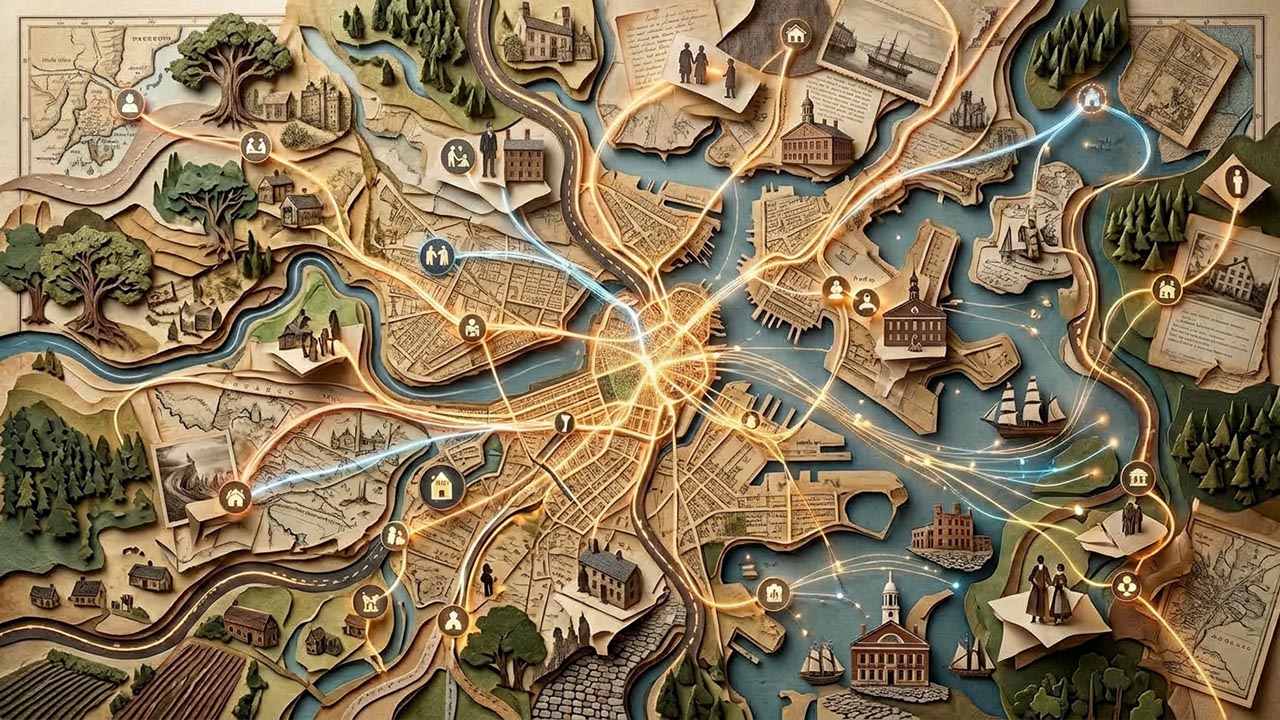
Migration between Canada and the United States was far more complex than a one-way journey north or south. Families crossed the border repeatedly, motivated by opportunities, community, and survival. This webinar explores four lesser-known migration pathways that genealogists often overlook.We begin with the New England Planters, who settled in Nova Scotia after the Acadian expulsion, with some later returning to New England or moving elsewhere in the Maritimes. Next, we trace Black migration, from Loyalists and Underground Railroad refugees to 20th-century workers commuting daily between Windsor and Detroit. The session then turns to industrial labourers who worked seasonally in lumber, mining, fishing, or in factories, leaving behind valuable records in both countries. Finally, we examine Depression-era relocations, when Prairie families sought survival in the U.S. Midwest and Americans looked north to Canadian farmland. Throughout, case studies illustrate research strategies and highlight the records that capture these movements. Attendees will learn how to: recognize overlooked migration patterns across the border; identify the key records generated by each pathway; utilize maps, timelines, and the FAN methodology to trace family histories; correlate records across Canada and the U.S. to prove identity; overcome challenges such as surname variations, missing records, and changes in boundaries.
—: —

Fleet Marriages: Tracing Clandestine Weddings in the UK
This presentation provides a brief history of marriage in the UK with a particular focus on Fleet marriages, that is those which were outside the normal rules of the Church prior to Lord Hardwicks Marriage Act 1753. The records can be found online but many may not be obvious. Understanding what they are can provide insight into our ancestors.
—: —

Famine Migration to Quebec: 1845 - 1865
Why did so many Irish migrate to Canada in the nineteenth century? For the most part, history tells us that they abandoned their homeland because of famine, political strife, epidemics, religious suppression, and evictions. Kinealy writes that between 1841 and 1852, Ireland’s population dropped by 1,649,330 people, with 1,289,133 of them migrating. Akenson states that between 1841 and 1851, 822,675 Irish emigrated to the United States, and 329,321 migrated to Canada. Irish Catholics had a considerable impact on the city of Quebec. Following the migration journey of the Doran family, from Summerslane, Kilkenny, this presentation is a discussion of what life might have been like in Quebec in the 1850s for Irish Catholic migrants. The Migration to Quebec is investigated with a study of the types of jobs they had, where they lived, and diseases within the community. Orphaned Irish children and the first ethnic church built for the Irish Catholics are also considered. Three of the Doran siblings lived out their lives in Quebec, while two continued their migration to Bangor, Maine.
—: —
Featured Webinars
View all (2,817)
 01:23:30
 01:08:13
 01:11:07
 01:00:23
 01:12:27

 01:05:55