Common-Sense Principles for Establishing Genetic Relationships
Patti Lee Hobbs, CG


Content

About this webinar
DNA evidence is a powerful tool in genealogical research. While genealogy standards provide important guidance, they are not rigid formulas. This presentation explores the foundational common-sense reasoning that supports sound conclusions about genetic relationships. Learn how to think critically and contextually about DNA evidence in order to meet genealogical standards with confidence.
About the speaker

Key points and insights
Establishing genetic relationships accurately requires moving beyond rigid statistical guidelines. In the Board for Certification of Genealogists webinar, "Common sense principles for Establishing genetic relationships," expert genealogist Patty Leigh Hobbs illuminates how knowledge, skill, and sound judgment must intersect to successfully integrate DNA evidence with documentary research. Navigating the nuances of genetic genealogy requires a holistic approach rather than a cookie-cutter methodology. This presentation explores how analyzing both Y-DNA and autosomal DNA under the lens of the Genealogical Proof Standard can help researchers bust through brick walls, evaluate unexpected anomalies, and build family trees that stand the test of time.
Key Takeaways
- Flexibility Over Rigid Rules: While testing company guidelines and statistical mutation rates are valuable, relying on them too rigidly can lead to false conclusions. Genetic distances and shared centimorgan counts can vary significantly due to the randomness of inheritance and specific mutations, meaning unexpected data should be evaluated alongside thorough documentary evidence rather than automatically discarded.
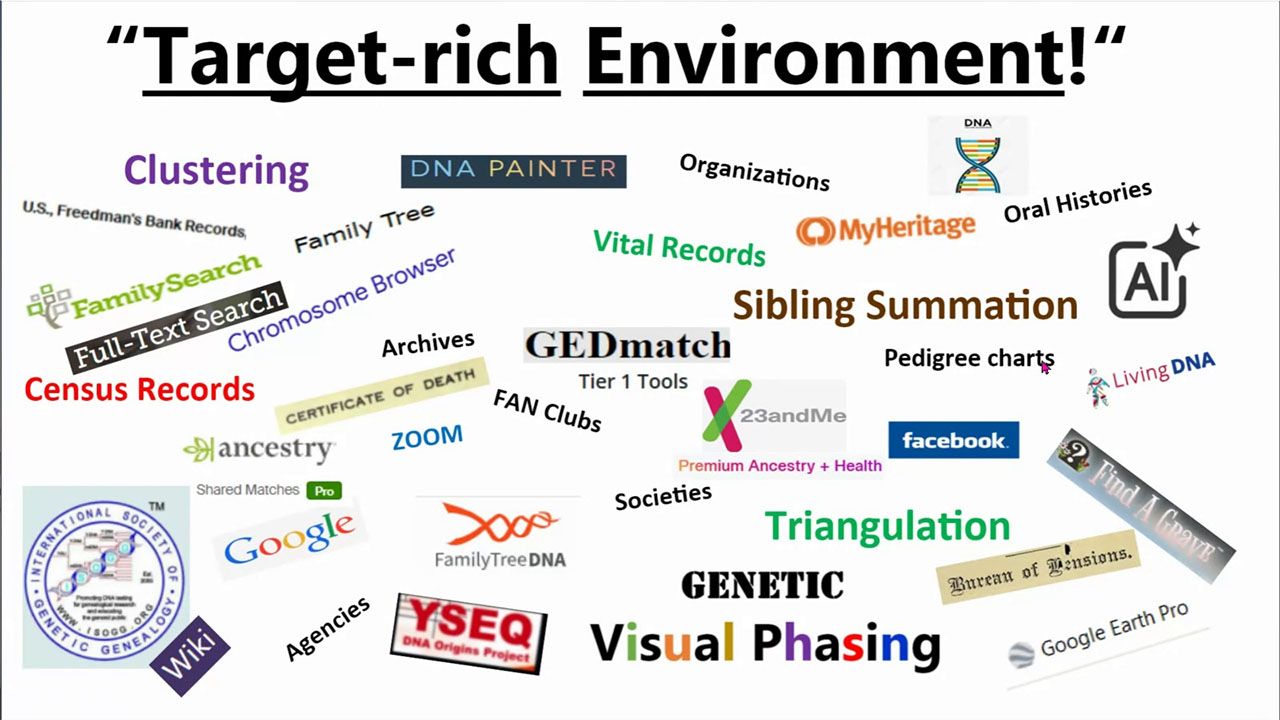
- The Power of Triangulation and Convergence: Utilizing multiple descendants from different ancestral branches significantly strengthens a genetic case. Relying on genetic family tree convergence and chromosome triangulation provides transparent, independent verification that helps mitigate incomplete pedigrees and effectively rules out alternative shared lines of ancestry.
- Predictive Limits of Shared DNA: Larger amounts of shared autosomal DNA are highly predictive for close relationships because there are fewer relationship possibilities. Conversely, smaller amounts of shared DNA (below roughly 60 centimorgans) are non-predictive on their own; they simply remain "consistent with" a hypothesized distant relationship within a larger matrix of matches.
To truly master these common-sense principles and elevate the quality of family history research, viewing the full webinar recording is highly recommended. The complete session provides a deeper look into fascinating real-world case studies, illustrating exactly how outliers—such as uneven grandparent-grandchild DNA distribution—manifest on a chromosomal level. Genealogists are also invited to explore the additional resources, tools, and reading recommendations included in the accompanying syllabus to further sharpen their analytical skills. Embracing these advanced methodologies will provide the tools needed to confidently transform complex genetic data into clear, soundly reasoned genealogical proof.
Related webinars
 01:28:25
 01:15:53
 00:51:43
 01:31:22
 01:04:46
 01:09:46

Comments (32)
Ms. Hobbs gave real life examples and that means a lot. Many of us researching way back (before 1850) are told certain situations are not possible given x or y. We need reminders to lead with and find evidence for the likelihoods but not discount the extremes just because they are the outliers. I really needed to hear that the atDNA 20 cM segments can be passed down for 10+ generations. That explains a ton in the project I'm working on right now!
Some of this went over my head, but that's just temporary as I'll watch it again, read the handout, read some of the materials referenced in the citations and increase my knowledge. And that's what I feel these webinars should do, so thank you for a great webinar.
Trying to understand the difference between Y-DNA and autosomalDNA can be confusing. I appreciate Patti's explanations.
Always good to expand your knowledge of DNA and genealogy.
The golden nugget from today’s webinar was “triangulation”! Thanks for a great presentation!
Very interesting webinar with lots of good information/
Great webinar, so much great information. I will be watching this one again
Patti is always an excellent speaker.