0 webinars selected
Select all
Cancel
Cancel
All Categories
English

32 Upcoming Live Webinars
Clear filter
Scottish Genealogy: Finding and Understanding Civil Registration Records
To follow on from my pre-1855 Scots research webinar, here I'll talk about what to expect when researching in the post-1855 civil registration records of Scotland, with detailed explanations about the contents of birth, marriage & death records. I'll also demonstrate how to search the ScotlandsPeople website for these records, and show you where else to find them.
—: —


From Data to Dialogue with AI 1 of 5: Turning Data into Stories
Turn structured research into stories, images, presentations, and shareable formats with AI. Advanced application of AI for publishing and presenting; includes image generation, storytelling prompts, visual outputs; activities include drafting, editing, and building presentations.
—: —

Fleet Marriages: Tracing Clandestine Weddings in the UK
This presentation provides a brief history of marriage in the UK with a particular focus on Fleet marriages, that is those which were outside the normal rules of the Church prior to Lord Hardwicks Marriage Act 1753. The records can be found online but many may not be obvious. Understanding what they are can provide insight into our ancestors.
—: —

¡Eureka! Confirmación del Lineaje Ancestral: DNA and Documents Prove a Mexican Ancestral Line (a 2026 Reisinger Lecture)
Karen will illustrate the genetic confirmation of a Mexican ancestral line that goes back four generations to a small town in Guanajuato, Mexico. Integration of evidence from DNA tests and original records meets the Genealogical Proof Standard. Lecture in English using Mexican records.
—: —
DNA in Action 5 of 6: Ruling Out Competing Hypotheses
Using logic is essential for reaching a defensible conclusion. This session explores how to use logical frameworks to systematically rule out candidates as a source for the shared DNA with a cousin. Karen will use case examples to show you how to avoid confirmation bias and gain confidence in your conclusion.
—: —
From Data to Dialogue with AI 2 of 5: Writing with AI—Biographies, Blogs, and Case Studies
Turn structured research into stories, images, presentations, and shareable formats with AI. Advanced application of AI for publishing and presenting; includes image generation, storytelling prompts, visual outputs; activities include drafting, editing, and building presentations.
—: —

Essential Skills for New Genealogists 5 of 12: Let Your Fingers Do the Walking—Local Directories of All Sorts
City directories, telephone books; trade directories and yearbooks (schools and community organizations); the resources’ use in placing a research target in their own time and place.
—: —


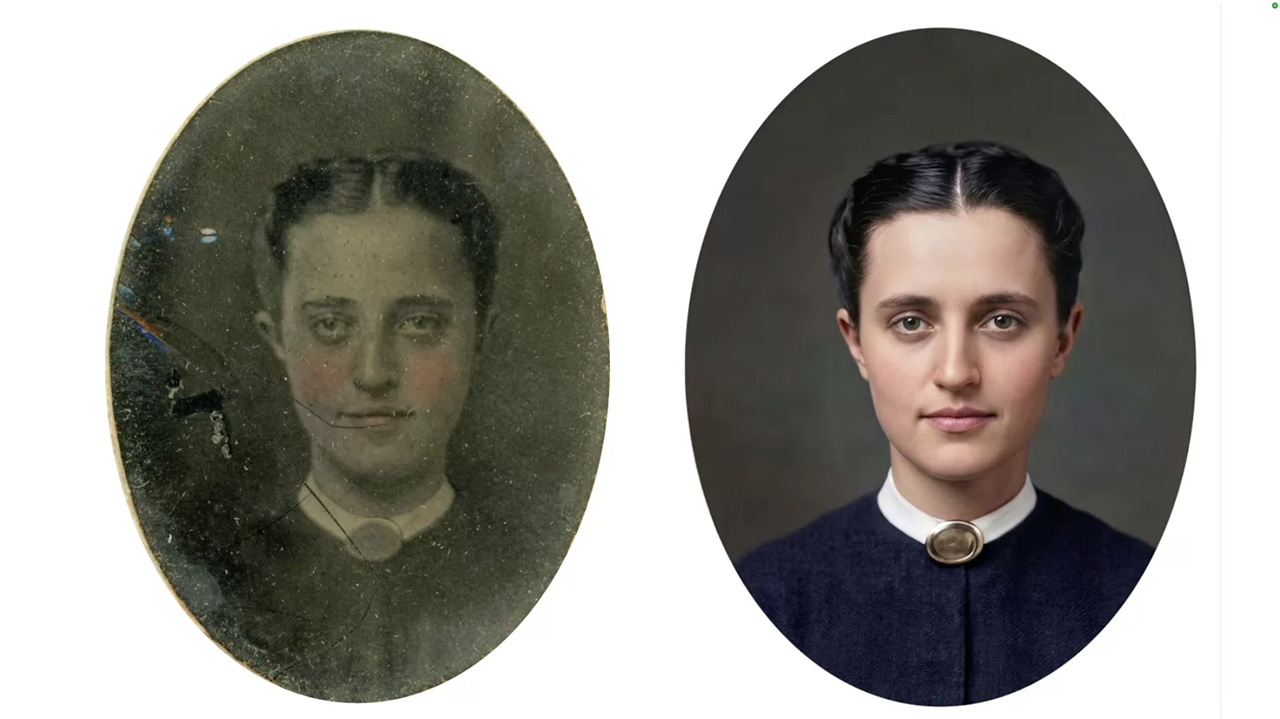
Essential Photo Tools for Every Genealogist’s Toolbox: MyHeritage Edition
Photos are invaluable in genealogy, and MyHeritage offers some of the best tools to preserve and enhance them. This webinar will introduce you to MyHeritage’s photo tools, including the Photo Enhancer, colorization, and Deep Nostalgia™. Learn how to restore old photos, bring your ancestors to life, and integrate these visuals into your family history research.
—: —

German Genealogy: Reconstructing Families Without Church Records
What do you do when church books are missing, damaged, or restricted? In this session, we’ll explore alternative sources that can help you reconstruct German families without parish records. You’ll learn how to use tax lists, land registers, local court files, mortgage books, emigration records, and village chronicles to piece together multi-generational family lines.
—: —
From Data to Dialogue with AI 3 of 5: Creating Visuals—Images, Charts, and Timelines
Turn structured research into stories, images, presentations, and shareable formats with AI. Advanced application of AI for publishing and presenting; includes image generation, storytelling prompts, visual outputs; activities include drafting, editing, and building presentations.
—: —

The Genealogy of Place: Reconstructing the History of a Street
Every street has a story — and every household adds a new chapter. This presentation demonstrates how to trace the history of one street across decades, uncovering the people, properties, and events that shaped its character. You’ll see how rate books, title deeds, maps, photographs, newspapers, and electoral rolls can be systematically layered to reconstruct an entire neighbourhood’s history.
\n
\nOur case study focuses on Harcourt Street in 1860s Brisbane — nicknamed Little Tipperary for its cluster of Irish migrant families. By following property ownership, mapping households, and analysing records in context, you’ll discover how to trace migration patterns, reveal family networks, and uncover community connections.
\n
\nWhile grounded in an Australian example, the step-by-step approach is globally adaptable —whether you’re researching rural lanes, suburban streets, or city blocks—anywhere records survive.
—: —

Uncovering Daniel Arnold's Parents Through Autosomal DNA, Probate Clues, and Geographic Proximity
Learn how the unknown parentage of Daniel Arnold, born 6 August 1806 in Saratoga County, New York, was solved by combining indirect documentary evidence and DNA evidence. While documentary clues suggested potential family connections, autosomal DNA analysis provided stronger confirmation by revealing genetic matches to descendants of probable siblings, with shared DNA amounts consistent with expected relationships. These findings were corroborated by indirect documentary evidence: a probate record from 1866 for Daniel's potential brother listed the same individuals as heirs, pointing to their common father. Geographic proximity provided crucial context: in 1820, the candidate father was the only Arnold family living in the same small community as Daniel's future wife's family, and his household included males of Daniel's age. This case study of a 19th-century New York family illustrates how modern genetic genealogy succeeds through the convergence of DNA matches and indirect documentary evidence to solve parentage mysteries.
—: —
Featured Webinars
View all (2,845)

 00:57:02
 00:59:13
 01:15:53
 00:55:55