One-stop shop for learning about DNA testing, whether you’re a beginner or an expert on DNA. Topics include Y-DNA, mt-DNA, Autosomal DNA, third-party tools, methodology, organization, and much more.
DNA in Action 1 of 6: Proving Your Pedigree with DNA
Wed, February 18 2026: 19:00 UTC
The series begins with sound genealogy methodology and principles and then explains their logical extensions when using autosomal DNA as a source of information to answer focused research questions. Karen will use a case example to prove the documented ancestors are consistent with the genetic evidence on a selected ancestral line. This lecture focuses on methodology and decision-making.
The series begins with sound genealogy methodology and principles and then explains their logical extensions when using autosomal DNA as a source of information to answer focused research questions. Karen will use a case example to prove the documented ancestors are consistent with the genetic evidence on a selected ancestral line. This lecture focuses on methodology and decision-making.
DNA in Action 2 of 6: Writing Proofs including DNA
Wed, April 15 2026: 18:00 UTC
Building on the methodology from the first session, this webinar focuses on how to write up your findings. You will learn the decision-making process for creating written proofs, generation-by-generation. The examples seamlessly blend evidence from documentary and genetic sources with reasoning to create a defensible conclusion that meets the Genealogical Proof Standard.
Building on the methodology from the first session, this webinar focuses on how to write up your findings. You will learn the decision-making process for creating written proofs, generation-by-generation. The examples seamlessly blend evidence from documentary and genetic sources with reasoning to create a defensible conclusion that meets the Genealogical Proof Standard.
DNA in Action 3 of 6: Generating Clues from DNA Networks
Wed, June 17 2026: 18:00 UTC
Karen will demonstrate how to convert previous documented conclusions into a more expansive base test taker group to generate clues that help to create an efficient research plan in documentary sources.
Karen will demonstrate how to convert previous documented conclusions into a more expansive base test taker group to generate clues that help to create an efficient research plan in documentary sources.
Genealogists often research Friends, Associates, and Neighbors (the FAN club) to help solve thorny genealogy problems. In this session, Karen applies that same strategy to DNA. You will learn how to reason from correlated clusters of DNA cousins to prove biological relationships.
Genealogists often research Friends, Associates, and Neighbors (the FAN club) to help solve thorny genealogy problems. In this session, Karen applies that same strategy to DNA. You will learn how to reason from correlated clusters of DNA cousins to prove biological relationships.
DNA in Action 5 of 6: Ruling Out Competing Hypotheses
Wed, October 21 2026: 18:00 UTC
Using logic is essential for reaching a defensible conclusion. This session explores how to use logical frameworks to systematically rule out candidates as a source for the shared DNA with a cousin. Karen will use case examples to show you how to avoid confirmation bias and gain confidence in your conclusion.
Using logic is essential for reaching a defensible conclusion. This session explores how to use logical frameworks to systematically rule out candidates as a source for the shared DNA with a cousin. Karen will use case examples to show you how to avoid confirmation bias and gain confidence in your conclusion.
DNA in Action 6 of 6: Writing About Complex Results
Wed, November 18 2026: 19:00 UTC
How do you organize and explain a difficult DNA case? Karen will walk you through the writing decisions behind a complex proof argument that was published in a scholarly journal. See how evidence is assembled to meet professional certification standards.
How do you organize and explain a difficult DNA case? Karen will walk you through the writing decisions behind a complex proof argument that was published in a scholarly journal. See how evidence is assembled to meet professional certification standards.
Sorting DNA Matches with MyHeritage’s Theory of Family Relativity
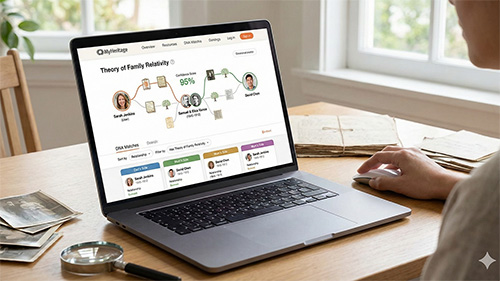
This webinar looks at 43 Theory of Relativity matches for my mother’s DNA on MyHeritage. With a detailed paper trail, Shauna is looking for some unexplained ethnicity that is in both MyHeritage and FamilyTree DNA. What is the explanation for her Welsh and Germanic ancestry passed down on her mother’s side? Join Shauna and see if she can solve the puzzle, or is that, dig up yet another family skeleton?
This webinar looks at 43 Theory of Relativity matches for my mother’s DNA on MyHeritage. With a detailed paper trail, Shauna is looking for some unexplained ethnicity that is in both MyHeritage and FamilyTree DNA. What is the explanation for her Welsh and Germanic ancestry passed down on her mother’s side? Join Shauna and see if she can solve the puzzle, or is that, dig up yet another family skeleton?
Advanced Topics in DNA 1 of 5: Advanced Y-DNA Evidence
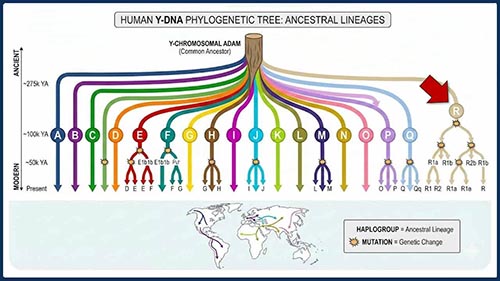
Y-DNA evidence is incredibly powerful. Learn the ins and outs, pros and cons, of advanced Y-DNA testing (the FTDNA Big Y700 test) and how to utilize Y-STR and Y-SNP test results for genealogical evidence.
Y-DNA evidence is incredibly powerful. Learn the ins and outs, pros and cons, of advanced Y-DNA testing (the FTDNA Big Y700 test) and how to utilize Y-STR and Y-SNP test results for genealogical evidence.
Using MyHeritage in Your Genealogical DNA Testing Plan
We often need other family members to take a DNA test for us to help us solve our genealogical problems. We’ll discuss ways MyHeritage can help us find, test, and collaborate with our DNA cousins.
We often need other family members to take a DNA test for us to help us solve our genealogical problems. We’ll discuss ways MyHeritage can help us find, test, and collaborate with our DNA cousins.
Scattered Leaves: Reconnecting family branches with DNA
When our families scattered across the globe, they often left close family behind. The family connections were lost over the subsequent generations. Now through family history research and DNA we are reconnecting with the branches of our family tree as shown in these case studies.
When our families scattered across the globe, they often left close family behind. The family connections were lost over the subsequent generations. Now through family history research and DNA we are reconnecting with the branches of our family tree as shown in these case studies.
Unlocking the X-Factor: Key Tips for Using X-DNA in Your Research
X-chromosome DNA is often one of the hidden gems of the genetic genealogy world especially when used in conjunction with autosomal DNA. This webinar will present an overview of the unique inheritance patterns of X-DNA and set out how and why X-DNA matching differs from atDNA matching. Michelle will guide you through the advantages of utilizing X-chromosome data and demonstrate how to use it to effectively narrow down and identify connections with your DNA matches. She will also cover which companies provide access to X-DNA data, include an array of tips on how to set yourself up to succeed with X-DNA and provide genuine case study examples that show what can be achieved when you harness this powerful type of DNA.
X-chromosome DNA is often one of the hidden gems of the genetic genealogy world especially when used in conjunction with autosomal DNA. This webinar will present an overview of the unique inheritance patterns of X-DNA and set out how and why X-DNA matching differs from atDNA matching. Michelle will guide you through the advantages of utilizing X-chromosome data and demonstrate how to use it to effectively narrow down and identify connections with your DNA matches. She will also cover which companies provide access to X-DNA data, include an array of tips on how to set yourself up to succeed with X-DNA and provide genuine case study examples that show what can be achieved when you harness this powerful type of DNA.
Whether testing ourselves or others, or disclosing results, informed consent to DNA testing is essential, requiring knowledge and understanding of the risks and a voluntary acceptance. Learn more about this key ingredient for ethical DNA testing.
Whether testing ourselves or others, or disclosing results, informed consent to DNA testing is essential, requiring knowledge and understanding of the risks and a voluntary acceptance. Learn more about this key ingredient for ethical DNA testing.
Your DNA matches hold powerful clues, but it’s easy to feel overwhelmed by the sheer volume. In this session, we will cover practical strategies to keep your research streamlined and productive. You’ll see how to use Ancestry and MyHeritage labels as powerful filters (not filing cabinets!), focus on the right matches, and apply simple tools like DNA Painter’s matrix to spot meaningful patterns. With a clear step-by-step framework as scaffolding, you’ll discover how to stay organized, reduce confusion, and make steady progress on your family history.
Your DNA matches hold powerful clues, but it’s easy to feel overwhelmed by the sheer volume. In this session, we will cover practical strategies to keep your research streamlined and productive. You’ll see how to use Ancestry and MyHeritage labels as powerful filters (not filing cabinets!), focus on the right matches, and apply simple tools like DNA Painter’s matrix to spot meaningful patterns. With a clear step-by-step framework as scaffolding, you’ll discover how to stay organized, reduce confusion, and make steady progress on your family history.
Foundations in DNA 5 of 5: Understanding Ethnicity Estimates
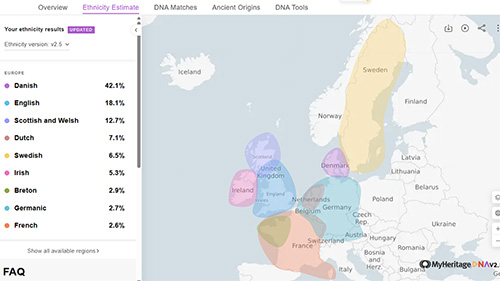
Ethnicity estimates can provide a fascinating glimpse into your ancestral origins, but understanding their scope and limitations is key. This session examines how testing companies generate ethnicity estimates, what they reveal, and how they can be used in genealogical research. Discover how to interpret these estimates in the context of your family history and integrate them with other tools for a more complete picture of your heritage.
Ethnicity estimates can provide a fascinating glimpse into your ancestral origins, but understanding their scope and limitations is key. This session examines how testing companies generate ethnicity estimates, what they reveal, and how they can be used in genealogical research. Discover how to interpret these estimates in the context of your family history and integrate them with other tools for a more complete picture of your heritage.
Genealogists who overlook or underutilize the MyHeritage DNA test miss out on many great tools. Using examples from his personal account, Richard will demonstrate these features and show how they can be used productively by genealogists, adoptees, and anyone curious about their family history or ethnic background.
Genealogists who overlook or underutilize the MyHeritage DNA test miss out on many great tools. Using examples from his personal account, Richard will demonstrate these features and show how they can be used productively by genealogists, adoptees, and anyone curious about their family history or ethnic background.
By registering, you are submitting your information to Legacy Family Tree Webinars and agreeing to let us use it to contact you.
Thank you for registering!
You should receive a confirmation email with a link to the webinar soon.
You’ll also receive a reminder both the day before and one hour before the webinar begins. Didn’t receive a confirmation email?
You successfully registered for %s.
You should receive a confirmation email with a link to the webinar soon.
You’ll also receive a reminder both the day before and one hour before the webinar begins. Didn’t receive a confirmation email?