One-stop shop for learning about DNA testing, whether you’re a beginner or an expert on DNA. Topics include Y-DNA, mt-DNA, Autosomal DNA, third-party tools, methodology, organization, and much more.
Advanced Topics in DNA 2 of 5: Digging Deep into the Science of Autosomal DNA
Wed, March 18 2026: 18:00 UTC
Digging Deep into the Science of Autosomal DNA – Delve into advanced autosomal DNA topics including recombination, imputation, pile-ups, the AncestryDNA TIMBER algorithm, and more. Understanding the underlying science of DNA allows us to push the envelope of what autosomal DNA can do!
Digging Deep into the Science of Autosomal DNA – Delve into advanced autosomal DNA topics including recombination, imputation, pile-ups, the AncestryDNA TIMBER algorithm, and more. Understanding the underlying science of DNA allows us to push the envelope of what autosomal DNA can do!
Pourquoi faire un test ADN pour la recherche généalogique ?
Thu, March 19 2026: 14:00 UTC
Les tests ADN en généalogie constituent un nouvel outil important pour nos recherches. Cette session d’introduction détaillera les types de tests ADN disponibles et les résultats auxquels un participant peut s’attendre, des estimations ethniques aux correspondances ADN, ainsi que la manière dont nous pouvons les utiliser pour retrouver des parents et découvrir des ancêtres inconnus.
Les sous-titres et la voix de cette vidéo ont été doublés en français à l’aide de l’IA.
Les tests ADN en généalogie constituent un nouvel outil important pour nos recherches. Cette session d’introduction détaillera les types de tests ADN disponibles et les résultats auxquels un participant peut s’attendre, des estimations ethniques aux correspondances ADN, ainsi que la manière dont nous pouvons les utiliser pour retrouver des parents et découvrir des ancêtres inconnus.
Les sous-titres et la voix de cette vidéo ont été doublés en français à l’aide de l’IA.
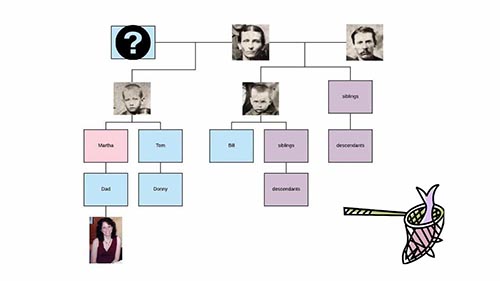
Untangling Family Networks: Solving Paternity with DNA and Records
Wed, April 1 2026: 15:30 UTC
This investigation utilizes Y-DNA and autosomal DNA evidence, combined with documentary research, to explore Glen Hugh Hopper’s paternal origins in early 20th-century Tennessee. Y-DNA established the Daniel surname for Glen’s father, but which of Marcus Daniel’s (1846-1926) sons could be Glen’s father? What documentary evidence, from census records to Civil War pension files, could provide the geographic and chronological context needed to evaluate each Daniel brother as a potential father candidate? How could BanyanDNA analysis help navigate the complex genetic relationships between the Daniel brothers when their families were so heavily intermarried?
This investigation utilizes Y-DNA and autosomal DNA evidence, combined with documentary research, to explore Glen Hugh Hopper’s paternal origins in early 20th-century Tennessee. Y-DNA established the Daniel surname for Glen’s father, but which of Marcus Daniel’s (1846-1926) sons could be Glen’s father? What documentary evidence, from census records to Civil War pension files, could provide the geographic and chronological context needed to evaluate each Daniel brother as a potential father candidate? How could BanyanDNA analysis help navigate the complex genetic relationships between the Daniel brothers when their families were so heavily intermarried?
PANEL: DNA Surprises and Family Identity: A Guide to Preparation, Processing, and Family Storytelling
Wed, April 1 2026: 18:00 UTC
DNA tests can unravel the past, but unexpected results have profound impacts on the living. Unexpected results upend individuals’ personal and cultural identities and reveal family secrets.
This panel discussion by Laura Hedgecock, Jenny Hawran and Sheridan Anderson, seeks to fill a current gap in genealogical education: how to compassionately support individuals navigating DNA surprises and those helping them through the journey.
Panelists offer guidance on preparing for the possibility of difficult results, navigating the discovery process, processing the disconnect from family narratives and traditions as well as deciding how, when, or whether to share their new story. For those helping someone else through testing and such discoveries, presenters provide a trauma-informed framework for communication, resources, and writing about their experiences.
These three panelists offer multi-faceted insight and competence to this topic: personal experience with NPE DNA results, therapy and family mediation background, competence with NPE advocacy and trauma-informed writing, and professional genealogy.
This recorded session will serve as an ongoing resource for the genealogy community, addressing a topic that affects thousands but is rarely discussed in educational settings.
DNA tests can unravel the past, but unexpected results have profound impacts on the living. Unexpected results upend individuals’ personal and cultural identities and reveal family secrets.
This panel discussion by Laura Hedgecock, Jenny Hawran and Sheridan Anderson, seeks to fill a current gap in genealogical education: how to compassionately support individuals navigating DNA surprises and those helping them through the journey.
Panelists offer guidance on preparing for the possibility of difficult results, navigating the discovery process, processing the disconnect from family narratives and traditions as well as deciding how, when, or whether to share their new story. For those helping someone else through testing and such discoveries, presenters provide a trauma-informed framework for communication, resources, and writing about their experiences.
These three panelists offer multi-faceted insight and competence to this topic: personal experience with NPE DNA results, therapy and family mediation background, competence with NPE advocacy and trauma-informed writing, and professional genealogy.
This recorded session will serve as an ongoing resource for the genealogy community, addressing a topic that affects thousands but is rarely discussed in educational settings.
DNA in Action 2 of 6: Writing Proofs including DNA
Wed, April 15 2026: 18:00 UTC
Building on the methodology from the first session, this webinar focuses on how to write up your findings. You will learn the decision-making process for creating written proofs, generation-by-generation. The examples seamlessly blend evidence from documentary and genetic sources with reasoning to create a defensible conclusion that meets the Genealogical Proof Standard.
Building on the methodology from the first session, this webinar focuses on how to write up your findings. You will learn the decision-making process for creating written proofs, generation-by-generation. The examples seamlessly blend evidence from documentary and genetic sources with reasoning to create a defensible conclusion that meets the Genealogical Proof Standard.
Para aprovechar al máximo las pruebas de genealogía genética, es fundamental la colaboración entre parientes. Ya sea para convencer a sus parientes de que se hagan pruebas de ADN o para comunicarse con sus primos genéticos, aprenda los consejos y trucos para colaborar con sus familiares y resolver sus preguntas genealógicas.
Para aprovechar al máximo las pruebas de genealogía genética, es fundamental la colaboración entre parientes. Ya sea para convencer a sus parientes de que se hagan pruebas de ADN o para comunicarse con sus primos genéticos, aprenda los consejos y trucos para colaborar con sus familiares y resolver sus preguntas genealógicas.
Common-Sense Principles for Establishing Genetic Relationships
Wed, May 20 2026: 0:00 UTC
DNA evidence is a powerful tool in genealogical research. While genealogy standards provide important guidance, they are not rigid formulas. This presentation explores the foundational common-sense reasoning that supports sound conclusions about genetic relationships. Learn how to think critically and contextually about DNA evidence in order to meet genealogical standards with confidence.
DNA evidence is a powerful tool in genealogical research. While genealogy standards provide important guidance, they are not rigid formulas. This presentation explores the foundational common-sense reasoning that supports sound conclusions about genetic relationships. Learn how to think critically and contextually about DNA evidence in order to meet genealogical standards with confidence.
Advanced Topics in DNA 3 of 5: Advanced Relationship Analysis
Wed, May 20 2026: 18:00 UTC
Learn techniques for advanced relationship analysis using shared cM amounts for two or more DNA test-takers. Includes an introduction to relationship analysis tools such as What are the Odds (WATO) and more. Take relationship analysis to the next level!
Learn techniques for advanced relationship analysis using shared cM amounts for two or more DNA test-takers. Includes an introduction to relationship analysis tools such as What are the Odds (WATO) and more. Take relationship analysis to the next level!
DNA in Action 3 of 6: Generating Clues from DNA Networks
Wed, June 17 2026: 18:00 UTC
Karen will demonstrate how to convert previous documented conclusions into a more expansive base test taker group to generate clues that help to create an efficient research plan in documentary sources.
Karen will demonstrate how to convert previous documented conclusions into a more expansive base test taker group to generate clues that help to create an efficient research plan in documentary sources.
Advanced Topics in DNA 4 of 5: Advanced Clustering and Organizing
Wed, July 15 2026: 18:00 UTC
Master shared matching, clustering, and organization of your many DNA matches! We will examine both manual clustering and clustering tools from several different sources. Help prune your results to find the hidden treasures!
Master shared matching, clustering, and organization of your many DNA matches! We will examine both manual clustering and clustering tools from several different sources. Help prune your results to find the hidden treasures!
Les généalogistes qui négligent ou sous-utilisent le test ADN MyHeritage passent à côté de nombreux outils très utiles. À l’aide d’exemples tirés de son expérience personnelle, Richard présentera ces fonctionnalités et montrera comment elles peuvent être utilisées de manière productive par les généalogistes, les personnes adoptées et toute personne curieuse de connaître son histoire familiale ou ses origines ethniques.
Les sous-titres et la voix de cette vidéo ont été doublés en français à l’aide de l’IA.
Les généalogistes qui négligent ou sous-utilisent le test ADN MyHeritage passent à côté de nombreux outils très utiles. À l’aide d’exemples tirés de son expérience personnelle, Richard présentera ces fonctionnalités et montrera comment elles peuvent être utilisées de manière productive par les généalogistes, les personnes adoptées et toute personne curieuse de connaître son histoire familiale ou ses origines ethniques.
Les sous-titres et la voix de cette vidéo ont été doublés en français à l’aide de l’IA.
DNA in Action 1 of 6: Proving Your Pedigree with DNA
The series begins with sound genealogy methodology and principles and then explains their logical extensions when using autosomal DNA as a source of information to answer focused research questions. Karen will use a case example to prove the documented ancestors are consistent with the genetic evidence on a selected ancestral line. This lecture focuses on methodology and decision-making.
The series begins with sound genealogy methodology and principles and then explains their logical extensions when using autosomal DNA as a source of information to answer focused research questions. Karen will use a case example to prove the documented ancestors are consistent with the genetic evidence on a selected ancestral line. This lecture focuses on methodology and decision-making.
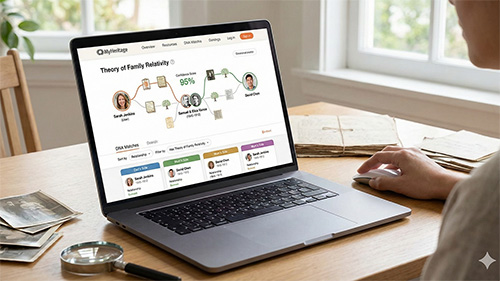
Sorting DNA Matches with MyHeritage’s Theory of Family Relativity
This webinar looks at 43 Theory of Relativity matches for my mother’s DNA on MyHeritage. With a detailed paper trail, Shauna is looking for some unexplained ethnicity that is in both MyHeritage and FamilyTree DNA. What is the explanation for her Welsh and Germanic ancestry passed down on her mother’s side? Join Shauna and see if she can solve the puzzle, or is that, dig up yet another family skeleton?
This webinar looks at 43 Theory of Relativity matches for my mother’s DNA on MyHeritage. With a detailed paper trail, Shauna is looking for some unexplained ethnicity that is in both MyHeritage and FamilyTree DNA. What is the explanation for her Welsh and Germanic ancestry passed down on her mother’s side? Join Shauna and see if she can solve the puzzle, or is that, dig up yet another family skeleton?
Advanced Topics in DNA 1 of 5: Advanced Y-DNA Evidence
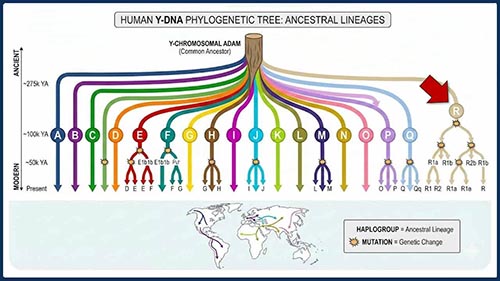
Y-DNA evidence is incredibly powerful. Learn the ins and outs, pros and cons, of advanced Y-DNA testing (the FTDNA Big Y700 test) and how to utilize Y-STR and Y-SNP test results for genealogical evidence.
Y-DNA evidence is incredibly powerful. Learn the ins and outs, pros and cons, of advanced Y-DNA testing (the FTDNA Big Y700 test) and how to utilize Y-STR and Y-SNP test results for genealogical evidence.
Using MyHeritage in Your Genealogical DNA Testing Plan
We often need other family members to take a DNA test for us to help us solve our genealogical problems. We’ll discuss ways MyHeritage can help us find, test, and collaborate with our DNA cousins.
We often need other family members to take a DNA test for us to help us solve our genealogical problems. We’ll discuss ways MyHeritage can help us find, test, and collaborate with our DNA cousins.
Scattered Leaves: Reconnecting family branches with DNA
When our families scattered across the globe, they often left close family behind. The family connections were lost over the subsequent generations. Now through family history research and DNA we are reconnecting with the branches of our family tree as shown in these case studies.
When our families scattered across the globe, they often left close family behind. The family connections were lost over the subsequent generations. Now through family history research and DNA we are reconnecting with the branches of our family tree as shown in these case studies.
Unlocking the X-Factor: Key Tips for Using X-DNA in Your Research
X-chromosome DNA is often one of the hidden gems of the genetic genealogy world especially when used in conjunction with autosomal DNA. This webinar will present an overview of the unique inheritance patterns of X-DNA and set out how and why X-DNA matching differs from atDNA matching. Michelle will guide you through the advantages of utilizing X-chromosome data and demonstrate how to use it to effectively narrow down and identify connections with your DNA matches. She will also cover which companies provide access to X-DNA data, include an array of tips on how to set yourself up to succeed with X-DNA and provide genuine case study examples that show what can be achieved when you harness this powerful type of DNA.
X-chromosome DNA is often one of the hidden gems of the genetic genealogy world especially when used in conjunction with autosomal DNA. This webinar will present an overview of the unique inheritance patterns of X-DNA and set out how and why X-DNA matching differs from atDNA matching. Michelle will guide you through the advantages of utilizing X-chromosome data and demonstrate how to use it to effectively narrow down and identify connections with your DNA matches. She will also cover which companies provide access to X-DNA data, include an array of tips on how to set yourself up to succeed with X-DNA and provide genuine case study examples that show what can be achieved when you harness this powerful type of DNA.
Whether testing ourselves or others, or disclosing results, informed consent to DNA testing is essential, requiring knowledge and understanding of the risks and a voluntary acceptance. Learn more about this key ingredient for ethical DNA testing.
Whether testing ourselves or others, or disclosing results, informed consent to DNA testing is essential, requiring knowledge and understanding of the risks and a voluntary acceptance. Learn more about this key ingredient for ethical DNA testing.
Your DNA matches hold powerful clues, but it’s easy to feel overwhelmed by the sheer volume. In this session, we will cover practical strategies to keep your research streamlined and productive. You’ll see how to use Ancestry and MyHeritage labels as powerful filters (not filing cabinets!), focus on the right matches, and apply simple tools like DNA Painter’s matrix to spot meaningful patterns. With a clear step-by-step framework as scaffolding, you’ll discover how to stay organized, reduce confusion, and make steady progress on your family history.
Your DNA matches hold powerful clues, but it’s easy to feel overwhelmed by the sheer volume. In this session, we will cover practical strategies to keep your research streamlined and productive. You’ll see how to use Ancestry and MyHeritage labels as powerful filters (not filing cabinets!), focus on the right matches, and apply simple tools like DNA Painter’s matrix to spot meaningful patterns. With a clear step-by-step framework as scaffolding, you’ll discover how to stay organized, reduce confusion, and make steady progress on your family history.
Foundations in DNA 5 of 5: Understanding Ethnicity Estimates
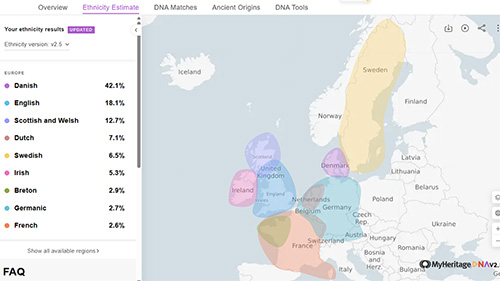
Ethnicity estimates can provide a fascinating glimpse into your ancestral origins, but understanding their scope and limitations is key. This session examines how testing companies generate ethnicity estimates, what they reveal, and how they can be used in genealogical research. Discover how to interpret these estimates in the context of your family history and integrate them with other tools for a more complete picture of your heritage.
Ethnicity estimates can provide a fascinating glimpse into your ancestral origins, but understanding their scope and limitations is key. This session examines how testing companies generate ethnicity estimates, what they reveal, and how they can be used in genealogical research. Discover how to interpret these estimates in the context of your family history and integrate them with other tools for a more complete picture of your heritage.
By registering, you are submitting your information to Legacy Family Tree Webinars and agreeing to let us use it to contact you.
Thank you for registering!
You should receive a confirmation email with a link to the webinar soon.
You’ll also receive a reminder both the day before and one hour before the webinar begins. Didn’t receive a confirmation email?
You successfully registered for %s.
You should receive a confirmation email with a link to the webinar soon.
You’ll also receive a reminder both the day before and one hour before the webinar begins. Didn’t receive a confirmation email?