Registration opens for 2026 webinar series on December 29.

Registration opens for 2026 webinar series on December 29.

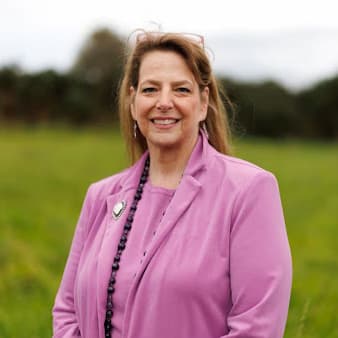
Mary-Alice Wildasin

Mary-Alice moved to Ireland from Florida, to further her education at the University of Limerick. In 2020, she graduated with an MA in History of the Family, writing her dissertation on her own family’s migration: The Dorans – from Summerslane, Kilkenny to Bangor, Maine 1820 – 1900: A Case Study in Step Migration. She went to UL with a unique background, having previously worked as a Political Consultant and a Real Estate Paralegal. Since 2010, she has been a professional genealogist specializing in Irish and New England research, having graduated from Boston University with a Graduate Certificate in Genealogical Research and Forensic Genealogy. Mary-Alice continues to research her family lines and is also working on her partner’s family tree, which can be traced to the same land where they live, back to the early 1800s. A very different path from her ancestors’. Mary-Alice currently lives in the west of Ireland with her partner.


Mary-Alice's Upcoming Live Webinars (1)

Fri, December 18 2026: 19:00 UTC
Famine Migration to Quebec: 1845 – 1865
Fri, December 18 2026: 19:00 UTC
Why did so many Irish migrate to Canada in the nineteenth century? For the most part, history tells us that they abandoned their homeland because of famine, political strife, epidemics, religious suppression, and evictions. Kinealy writes that between 1841 and 1852, Ireland’s population dropped by 1,649,330 people, with 1,289,133 of them migrating. Akenson states that between 1841 and 1851, 822,675 Irish emigrated to the United States, and 329,321 migrated to Canada. Irish Catholics had a considerable impact on the city of Quebec. Following the migration journey of the Doran family, from Summerslane, Kilkenny, this presentation is a discussion of what life might have been like in Quebec in the 1850s for Irish Catholic migrants. The Migration to Quebec is investigated with a study of the types of jobs they had, where they lived, and diseases within the community. Orphaned Irish children and the first ethnic church built for the Irish Catholics are also considered. Three of the Doran siblings lived out their lives in Quebec, while two continued their migration to Bangor, Maine.
Fri, December 18 2026: 19:00 UTC