Filters
0 webinars selected
Select all
Cancel
8
of
2,642 Webinars Clear filters
Sort by
Sort by
49:45
15 Top Tips for Colonial New England Research
Find your colonial ancestors in the communities of New England with these fifteen strategies that cut through 400 years of changing records. Learn expert practices for accessing New England’s information and building evidence of lives long forgotten. Your early New England roots can come to life with these less-obvious sources and methods.
Fri, April 4 2025: 12:00 UTC
1:28:41
1.7K views
CC
Researching the Great Migration of New England 1620-1640
This lecture details the resources available for researching your New England ancestors who arrived during the Great Migration from England from 1620-1640. Discussion of the scholarship and resources both published and online created by the Great Migration Study Project will be covered.
Wed, January 29 2025: 19:00 UTC
53:48
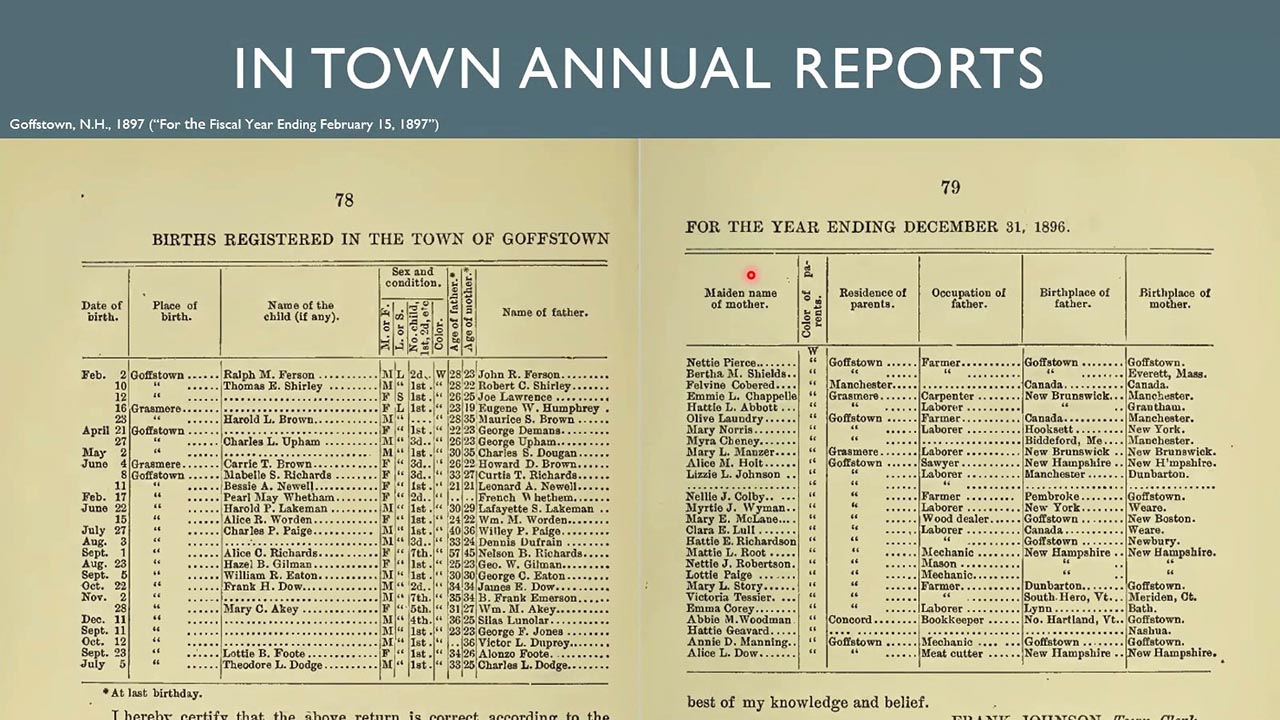
The Real Life of New England Vital Records
What are the secrets to finding New England vital records today? If you understand how they were made, and all the things that have happened to them since, you will bring new skills and insight to your vital records research. Also, let’s develop some strategies for those times when the record cannot be found.
Fri, September 20 2024: 14:15 UTC
55:35
779 views
CC
Hidden Treasure in New England Town Records
New England town records represent a unique resource for Family historians. Early settlers from England brought their traditions of town governance to the new world, including their ideas of legal matters and record keeping. The result is a treasure trove of documents that capture aspects of our ancestors’ lives as they went about their day-to-day business. These records are especially valuable for the 17th and 18th centuries as many other records may not have survived. This webinar covers not only vital record sources but also records from the Town Treasurer, Overseers of the Poor, and the Selectmen.
Ann Lawthers
New England town records represent a unique resource for Family historians. Early settlers from England brought their traditions of town governance to the new world, including their ideas of legal matters and record keeping. The result is a treasure trove of documents that capture aspects of our ancestors’ lives as they went about their day-to-day business. These records are especially valuable for the 17th and 18th centuries as many other records may not have survived. This webinar covers not only vital record sources but also records from the Town Treasurer, Overseers of the Poor, and the Selectmen.
Fri, September 22 2023: 15:30 UTC
1:30:48
1.6K views
CC
Researching in Colonial New England
Researching ancestors who lived in colonial New England can be challenging. This webinar begins by tracing settlement patterns, setting the stage for understanding key records and where to find them. For the 17th century, many unique published resources exist to help the family researcher. During the colonial years, several conflicts such as King Philip’s War and the Seven Years War affected settlement and thus the surviving records. The 18th century culminated in the Revolutionary War, but also saw the continued growth of settlement and ultimately resources for the family historian.
Ann Lawthers
Researching ancestors who lived in colonial New England can be challenging. This webinar begins by tracing settlement patterns, setting the stage for understanding key records and where to find them. For the 17th century, many unique published resources exist to help the family researcher. During the colonial years, several conflicts such as King Philip’s War and the Seven Years War affected settlement and thus the surviving records. The 18th century culminated in the Revolutionary War, but also saw the continued growth of settlement and ultimately resources for the family historian.
Thu, February 10 2022: 1:00 UTC
1:27:49
2.4K views
CC
A Terrible Malady: Disease and Epidemics in New England
Epidemics of smallpox, measles, yellow fever, diphtheria and other illnesses were common ailments in New England from colonial times up through the 19th century. Learn more about these diseases, why they were so greatly feared by your ancestors, and remedies they may have used.
Fri, March 22 2019: 0:00 UTC
52:43
1.1K views
Looking After the Poor: Finding Your Ancestors in New England Poverty Records
Come find out about “strangers taken in” records, “warning out” records and settlement law. Settlement law impacted all New Englanders whether rich or poor, transient or long-time resident. Discover what records were created as a result and why. You will be surprised at the level of detail you can find about your ancestors. Marian Pierre-Louis will take you into the depths of these rarely discussed New England records to reveal a wealth of information about your ancestors.
Wed, June 1 2016: 0:00 UTC
59:57
2.9K views
New England Deeds and Probate – A Powerful Combination (BONUS webinar for subscribers)
Did you know that all the members of a family may be named in an old deed? Have you ever tried to get a close-up view of what your ancestors wore and the tools they used from an estate inventory? Learn how to use the records in New England Registry…
Wed, May 13 2015: 0:00 UTC

Upcoming Live Webinars

View all (240)
Tue, February 10 2026: 12:00 UTC
French
Mieux naviguer dans son arbre MyHeritage : Vues, réglages et astuces d’affichage
Tue, February 10 2026: 12:00 UTC
Et si vous voyiez votre généalogie sous un nouvel angle ? Dans cette session avec Elisabeth Zetland, nous explorerons toutes les fonctionnalités de votre arbre généalogique. Découvrez toutes les astuces pour optimiser la structure visuelle de votre arbre. De la configuration des fiches individuelles au choix de la vue de votre arbre, apprenez à maîtriser les réglages de MyHeritage pour une gestion fluide et efficace de votre histoire familiale. Simplifiez la gestion de votre arbre pour y voir plus clair !
Tue, February 10 2026: 12:00 UTC
Tue, February 10 2026: 19:00 UTC
Discovering your Eastern European Ancestors on MyHeritage
Tue, February 10 2026: 19:00 UTC
If you have Eastern European ancestors, you are probably wondering how to begin your family history search. Come and learn about how MyHeritage can get you started in your family history challenge.
Tue, February 10 2026: 19:00 UTC
Wed, February 11 2026: 19:00 UTC
Searching for Sisters? Researching Catholic Nuns in the United States
Wed, February 11 2026: 19:00 UTC
Catholic nuns and sisters ran some of the U.S.’s earliest schools, orphanages, and hospitals; nursed on Civil War battlefields and during disease outbreaks; and served millions of Catholic immigrants and their families. Today, those nuns and sisters are mostly forgotten. Many changed their names and moved far from home, making it difficult for genealogists to recognize them in records. But those who can trace a woman into religious life may discover a rich trove of records about the sister and perhaps about her family. Sometimes records even survive for a religious order’s academy, hospital, or other ministry. Come see what you may be able to learn from the many archives of Catholic nuns and sisters from the author of the newly-published Searching for Sisters: Researching Catholic Nuns in the United States.
Wed, February 11 2026: 19:00 UTC
Thu, February 12 2026: 14:00 UTC
Spanish
Leyes de Indias: Leyes coloniales españolas y los registros que generaron
Thu, February 12 2026: 14:00 UTC
Desde la planificación urbanística hasta las relaciones con los nativos, «Las Leyes de Las Indias» gobernaron las colonias españolas de América del Norte y más allá, y crearon registros únicos para la investigación de cualquier persona con vínculos ancestrales con la América española. Los subtítulos y la voz de este vídeo se han doblado al español utilizando IA.
Thu, February 12 2026: 14:00 UTC
Fri, February 13 2026: 19:00 UTC
Breaking the 1870 Brick Wall: Comprehensive Strategies for Tracing Formerly Enslaved African American Ancestors
Fri, February 13 2026: 19:00 UTC
Overcoming the 1870 brick wall in African American genealogy is challenging, but possible. This session presents a clear, step-by-step roadmap for tracing formerly enslaved ancestors using the Genealogical Proof Method. Learn how to reconstruct the freedmen generation, identify potential enslavers, and mine enslaver records for hidden ancestral clues. We’ll explore records on Ancestry and FamilySearch, including census and vital records, Freedmen’s Bureau files, cohabitation records, and estate records. If you’re ready to move beyond 1870 and build a fuller picture of your family’s past, this webinar will equip you with the tools and confidence to begin.
Fri, February 13 2026: 19:00 UTC
Tue, February 17 2026: 14:00 UTC
Spanish
Documentación de cementerios con BillionGraves
Tue, February 17 2026: 14:00 UTC
Si las lápidas pudieran hablar, tendrían muchas historias que contar. Pero no pueden, por eso BillionGraves es la mejor alternativa. BillionGraves es la mayor base de datos del mundo sobre cementerios, conectada a un sistema GPS. Cuando se toman fotos con la aplicación BillionGraves en el teléfono, cada lápida se marca automáticamente con una posición GPS. A continuación, los datos son transcritos por voluntarios, transferidos a planos de cementerios y almacenados en los sitios web BillionGraves, FamilySearch y MyHeritage para millones de familias de todo el mundo y para las generaciones futuras. Los subtítulos y la voz de este vídeo se han doblado al español utilizando IA.
Tue, February 17 2026: 14:00 UTC