Citation Punctuation Quick Guide
Lisa Stokes, AG®

Content


About this webinar
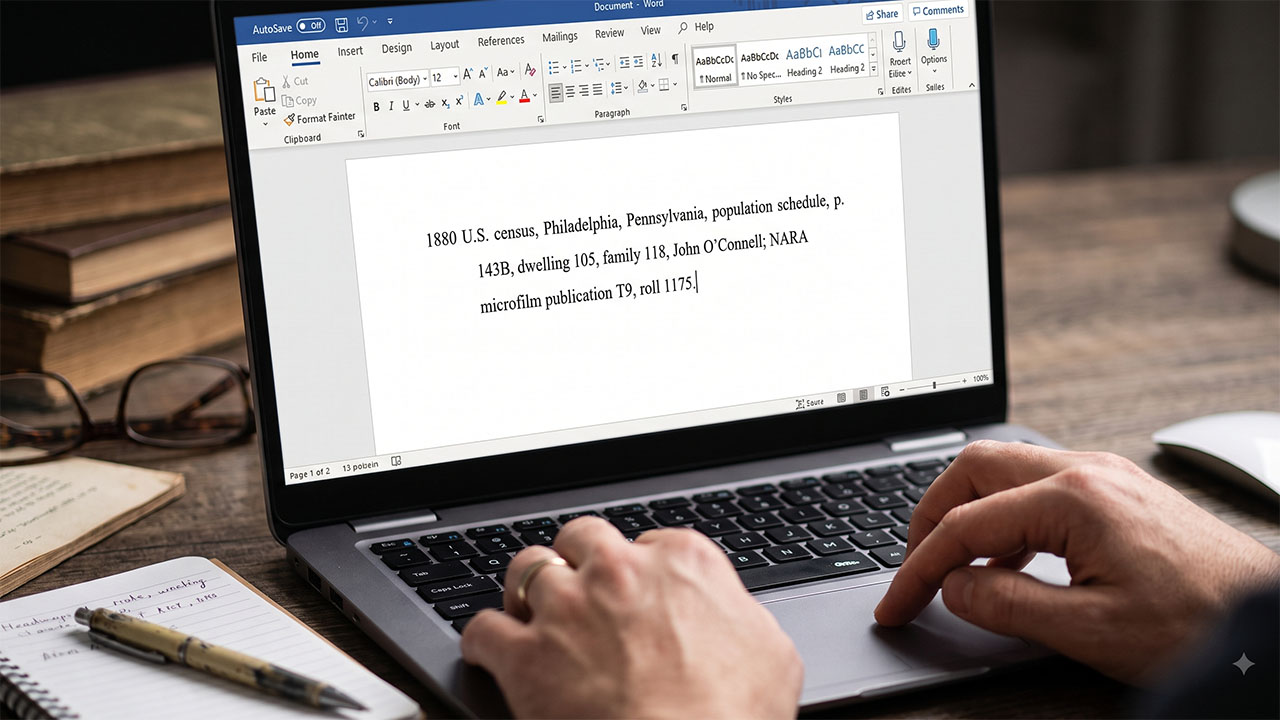
Struggling with citation punctuation? Not sure when to capitalize, or when to use italics, quotation marks, or parentheses? Others do too. In this focused session, you'll learn the essential rules for punctuation in genealogical citations and walk away with a handy Citation Punctuation Quick Guide for reference. We'll cover how to use brackets, semicolons, italics, and more—plus simple rules for capitalization to help you make quick, consistent decisions. Whether you're new to creating source citations or just need a refresher, this session will help you feel more confident and less frustrated.
About the speaker

Key points and insights
The webinar "Citation Punctuation Quick Guide," presented by Lisa Stokes, offers a vital roadmap for genealogists seeking to professionalize their research documentation. Proper punctuation is more than a grammatical formality; it serves as a specialized code that allows researchers to communicate the nature and location of their sources with precision. By mastering these nuances, genealogists can ensure their work is clear, credible, and easily navigable for future researchers. The session bridges the gap between raw data and formal scholarship by distilling complex standards from the Chicago Manual of Style and "Evidence Explained" into practical, actionable techniques.
- Structural Distinction Between Note Formats: A critical distinction exists between the "source citation" (footnote), which functions like a sentence to document specific facts, and the "source list entry" (bibliography), which is structured like a paragraph to describe a work in its entirety.
- The Nuance of Visual Styling: Italics and quotation marks serve as visual indicators of a source's status; italics are reserved for standalone published works like books, websites, and ships, while quotation marks identify specific parts of those works, such as journal articles or database titles.
- Precision Through Specialized Punctuation: Advanced punctuation tools—such as square brackets for adding clarifying editorial information, en dashes for date or page ranges, and the "chevron" (angle bracket) for showing digital waypoints—provide the necessary clarity to document complex genealogical evidence accurately.
Understanding these punctuation guidelines is essential for any researcher who wants their findings to stand the test of time. To fully grasp the subtle differences between headline and sentence style capitalization or to see live demonstrations of complex citations in action, viewing the full webinar is highly recommended. Mastering these details will transform a collection of names and dates into a rigorous, well-documented family history. Genealogists are also encouraged to explore the additional resources and specific formatting examples provided in the accompanying syllabus to refine their citation skills further.
Related webinars
 01:17:52
 00:14:25
 00:51:39
 00:51:39
 01:11:41
 00:10:27
 00:16:39

Comments (1)
Great webinar. It is wonderfully complete, yet concise. I will rely on your quick-guide handout & the webinar as references from now on. This will save time in checking on the small details in citations. You have wrapped it up very nicelyl!
I agree!!