7
of
2,606 Webinars Clear filters
Sort by
Sort by
6:04
1.3K views
CC
Make a timeline
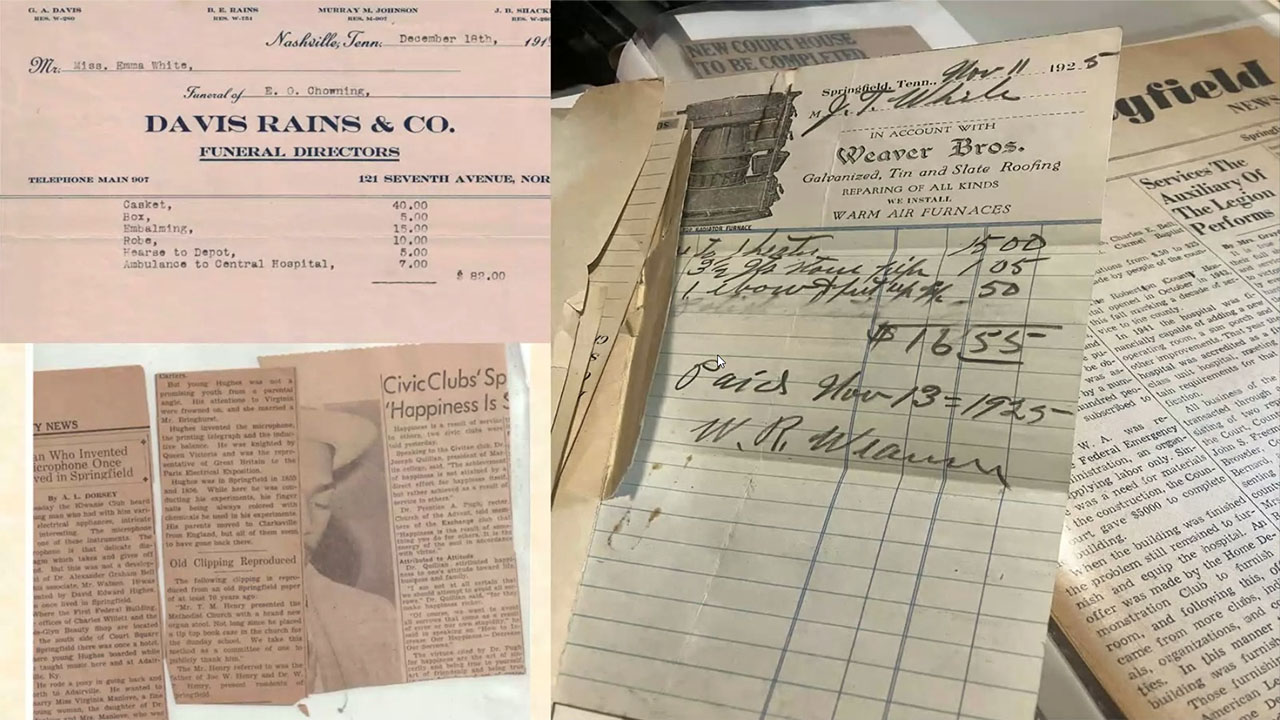
Some colonial or early American ancestors migrated across multiple states in their lifetime. With limited numbers of records, how do you document their birth, marriage, and death? This program will discuss how building a timeline can help you determine that you’re tracing the right ancestor and locate records such as a birth, marriage, or death. This was part of the webinar, Celebrating 2,000 webinars! Plus 10 tips you can use today.
Fri, July 14 2023: 0:00 UTC
52:24
2.1K views
CC
Simply using timelines will make a difference in your research!
This session will walk attendees through the steps of using a timeline and building a research plan at the same time.
Fri, April 8 2022: 14:00 UTC
57:13
868 views
CC
A Step Through Time(lines)
Timelines are a great tool for gathering together your research on an ancestor and their family. Learn tips and tricks on creating these and using them in your research and when you publish your family story.
Fri, September 17 2021: 0:00 UTC
1:12:48
7.2K views
CC
Using Timelines and Tables to Analyze Your Research
In-depth and difficult research tasks create large amounts of data to compare and analyze. Discover analysis methods using tables and timelines to solve problems.
Fri, February 22 2019: 0:00 UTC
54:02
Using Timelines for Correlation and Analysis
Timelines are one of many tools a genealogist can use to display evidence in the determination of proof arguments. This lecture explores the strategic aspect of the use of timelines and their relationship to the Genealogical Proof Standard, analysis and correlation. Timelines will be defined, their relationship to the GPS…
Fri, October 6 2017: 0:00 UTC
1:01:31
4.3K views
Solving Genealogy Problems with Timelines
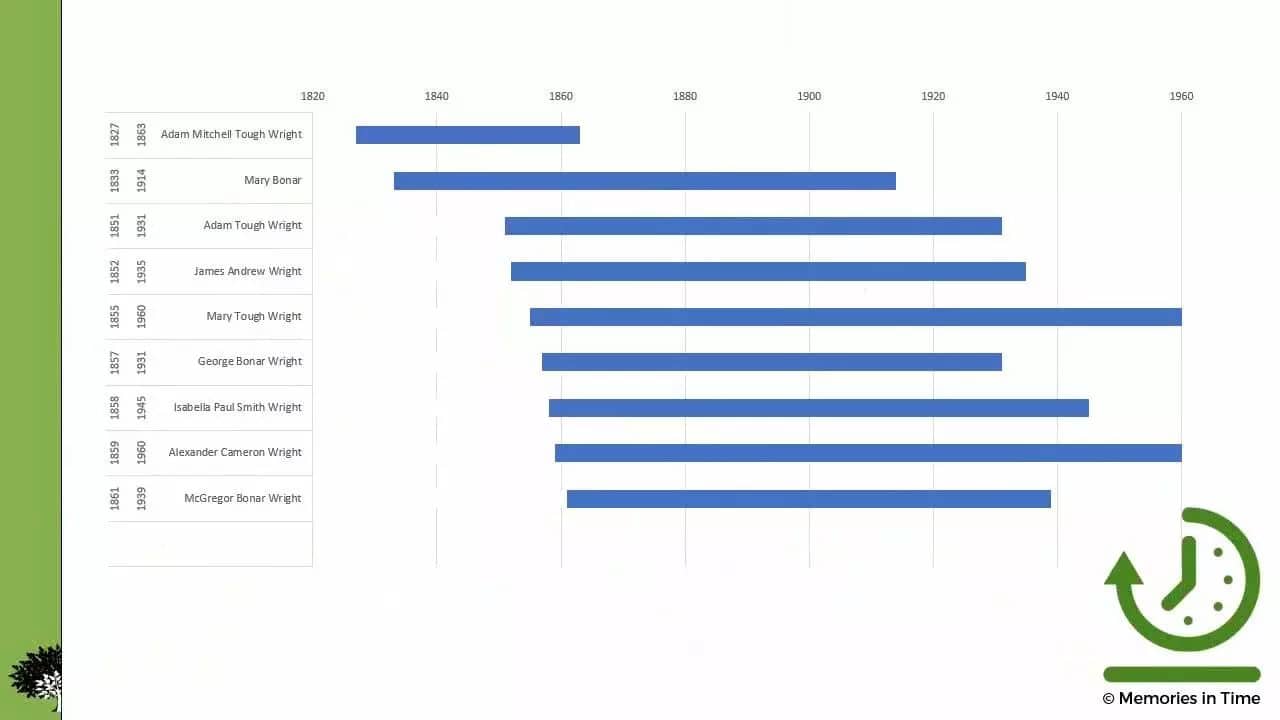
When you create a personal timeline of an ancestor's life, it is easy to see facts, relationships, and stories emerge that were never before apparent. This class discusses how to create a timeline and the many uses for them in genealogy research and analysis.
Thu, February 18 2016: 0:00 UTC
1:06:10
13.0K views
Free
Timelines and Chronologies – Secrets of Success
Join FamilyTreeWebinars.com's host and Legacy Family Tree developer, Geoff Rasmussen, as he presents "Timelines and Chronologies: Secrets of Success" to a live audience in Anchorage, Alaska. Geoff will teach: – Benefits of using a timeline in your genealogical research – What a good timeline includes – Methods of creating…
Sat, October 19 2013: 0:00 UTC

Upcoming Live Webinars

View all (6)
Fri, December 12 2025: 19:00 UTC
The Business of Enslavers: Acquiring Human Inventory
Fri, December 12 2025: 19:00 UTC
Investigate the methods and documentation in which enslavers acquired their commodities of African descent to enter the economic system of slavery.
LaDonna Garner
Investigate the methods and documentation in which enslavers acquired their commodities of African descent to enter the economic system of slavery.
Fri, December 12 2025: 19:00 UTC
Tue, December 16 2025: 14:00 UTC
French
Ancêtre militaire : de carrière ou appelé ? (XIXe-XXe siècles) – Explorer des parcours uniques
Tue, December 16 2025: 14:00 UTC
Les archives militaires sont une véritable mine d’or pour les recherches généalogiques et biographiques. Grâce à elles, chaque généalogiste peut redonner vie aux parcours de ses ancêtres, qu’ils aient été soldats de carrière ou appelés du service militaire. Si la numérisation massive des fiches matricules de la Première Guerre mondiale a largement facilité les recherches, elle ne doit pas occulter la richesse des autres périodes. Du XIXe au XXe siècle, chaque époque — en temps de paix comme en temps de guerre — offre des pistes passionnantes et complémentaires. Au Service historique de la Défense, aux Archives départementales, ou encore en ligne, les sources sont nombreuses. Il s’agit surtout de connaître les bonnes méthodes pour avancer avec succès. Ce webinaire vous guidera pas à pas pour découvrir, comprendre et exploiter pleinement ces ressources, afin de retracer des parcours militaires uniques et d’enrichir votre histoire familiale.
Tue, December 16 2025: 14:00 UTC
Wed, December 17 2025: 1:00 UTC
Social Context and the KDP
Wed, December 17 2025: 1:00 UTC
Incorporating social context in a Kinship-Determination Project isn’t just about weaving historical events and descriptions of daily life into a family narrative. Community and culture shape behavior and relationships. To understand and document our ancestors, we need to understand the society in which they lived. When we estimate a marriage date based the birth of a couple’s first child (or that the birth of a child implies a marriage), we base those assumptions on context. This lecture will explore social context and illustrate how to research and write about it within a Kinship-Determination Project.
Wed, December 17 2025: 1:00 UTC
Wed, December 17 2025: 19:00 UTC
A Dozen Names for Alcina: An Identity Case Study
Wed, December 17 2025: 19:00 UTC
Alcina Furkey’s birth name and her parents’ identities were unknown in 19C Vermont. Alcina had many forenames: Alcenia, Arsena, Christina, Elcena, Elena, Jane, Josephine, Julia, Lucy, and Reusta, and Rosanna. But none of them was her baptismal name. Reconstructing her birth family, together with a connection found in deeds and the clues in Catholic records, led to her real identity.
Wed, December 17 2025: 19:00 UTC
The Best Uses of AI for Genealogists
Fri, December 19 2025: 19:00 UTC
Learn how to use artificial intelligence to help find important family information, understand old documents, and craft compelling family stories to support your family history research. This webinar will introduce you to the best uses of AI in genealogy today and give a peek behind the curtain of what genealogists can look forward to from AI advancements in 2026.
Fri, December 19 2025: 19:00 UTC
Tue, January 13 2026: 14:00 UTC
Spanish
La fotografía de un desconocido: ¿punto de partida para una genealogía?
Tue, January 13 2026: 14:00 UTC
En la actualidad, cuando casi cualquier cosa pasa por la IA, el descubrimiento de una fotografía hecha a finales del siglo XIX o principios del siglo XX, no solo nos traslada a otro momento de la historia en el que el contexto era totalmente diferente, sino que nos abre las posibilidades de estudio de una persona y de una familia. Pero, además, ¿qué nos aporta una fotografía de un desconocido? ¿cuánto podemos averiguar de él y de su entorno? Una fotografía es un documento de memoria colectiva y, como tal, aporta una fuente de información sobre estructura familiar, estilo de vida y valores sociales de la época.
José Antonio González Marrero
En la actualidad, cuando casi cualquier cosa pasa por la IA, el descubrimiento de una fotografía hecha a finales del siglo XIX o principios del siglo XX, no solo nos traslada a otro momento de la historia en el que el contexto era totalmente diferente, sino que nos abre las posibilidades de estudio de una persona y de una familia. Pero, además, ¿qué nos aporta una fotografía de un desconocido? ¿cuánto podemos averiguar de él y de su entorno? Una fotografía es un documento de memoria colectiva y, como tal, aporta una fuente de información sobre estructura familiar, estilo de vida y valores sociales de la época.
Tue, January 13 2026: 14:00 UTC