39
of
2,612 Webinars Clear filters
Sort by
Sort by
35:21
519 views
CC
Analyze Your Findings
Analyze Your Findings discusses important ways to collect and analyze genealogical evidence in multiple ways, develop hypotheses, and document your conclusions. This webinar was first released 15 December 2020 on the Genealogy Guys Learn website.
Thu, July 24 2025: 12:00 UTC
31:27
454 views
CC
The Genealogist as C.S.I.
Genealogy involves detailed investigation of individuals and family units, not unlike the crime scene investigators seen on television series. We have to employ the same – and other – approaches to help solve problems and develop hypotheses/conclusions about an ancestor or family unit. The Genealogist as C.S.I. draws parallels for organized research, analysis, documentation, and solving problems. This webinar was first released 8 June 2020 on the Genealogy Guys Learn website.
Thu, April 24 2025: 12:00 UTC
1:18:36
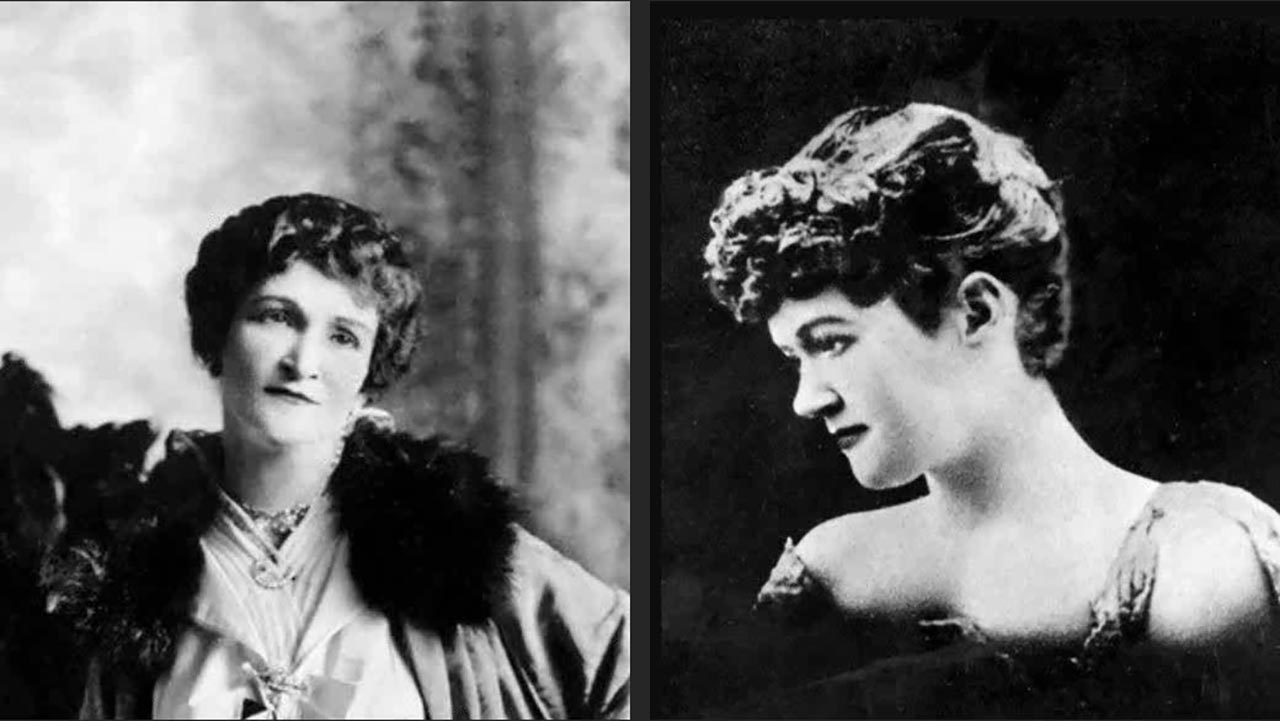
The Everleigh Sisters: A Case Study in Conflict Resolution
Minna and Ada Everleigh, Chicago’s most famous pair of sisters, fabricated many details of their lives in order to run their shady business. Learn to sort fact from fiction.
Wed, January 22 2025: 1:00 UTC
1:07:24
504 views
CC
Steamer Kate Explosion: Correlating Indirect Evidence to Identify and Correct an Error
What happens when the indirect evidence of a death occurring and a probate record don’t agree? The research begins in earnest! That’s what happened in the case of the death of Antoine/Anthony Lallament of Mobile, Alabama. Who is Antoine and what relationship is he to me? When did he actually die? Which record is correct? What would other available records reveal? How is the explosion of the Steamer Kate involved? We have more questions than answers. This case study provides the research methodology involved in solving this problem.
Wed, October 18 2023: 0:00 UTC
1:23:36
978 views
CC
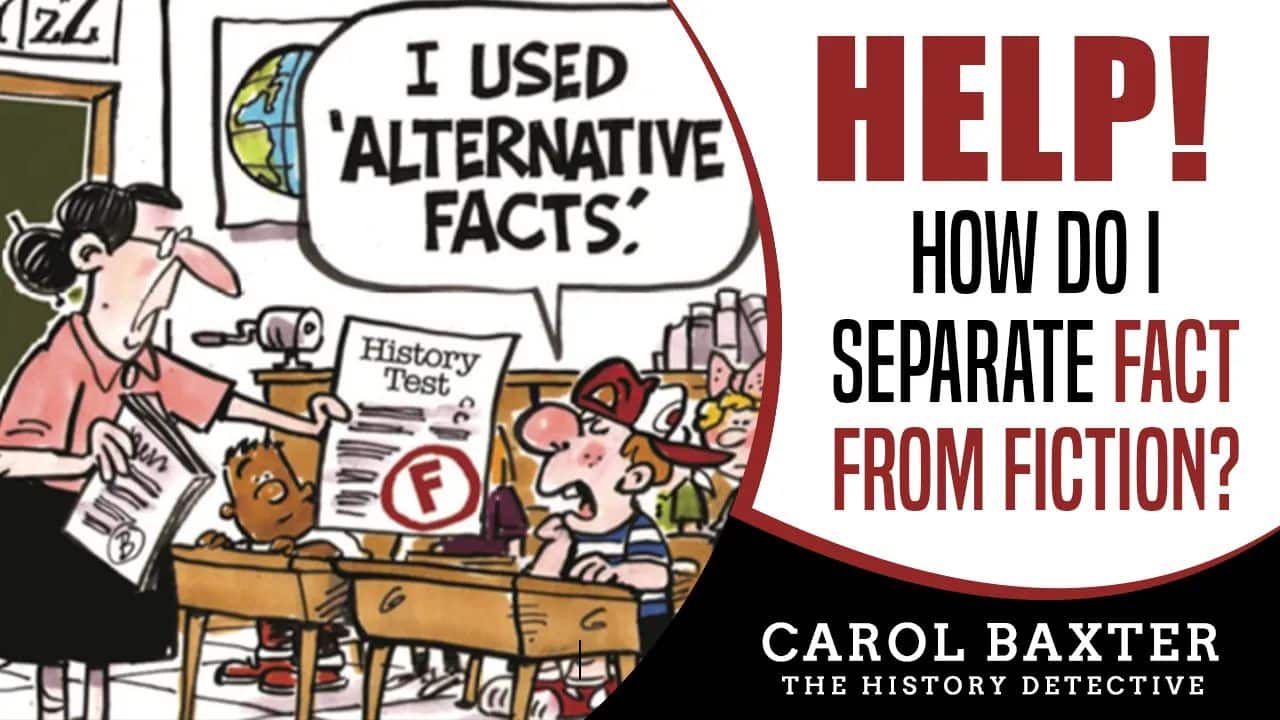
Help! How do I separate genealogical fact from fiction?
We sit at our computer searching for information about our ancestors and … click … we find something new and intriguing. But wait: it contradicts something else we’ve found. Clearly, both pieces of information can’t be true. So which is true and which isn’t? Or are both untrue? HELP! Until recently, most researchers developed their evidence-analysis skills by a process of trial-and-error. Unfortunately, many researchers have erred more than tried and seem to be the ones most prolific in publishing the results of their “research” on the internet. Yet these errors can prove disastrous, gobbling up our precious time and money as we search in the wrong place – or worse, as we pursue the wrong ancestral line. So how do we ensure that our conclusions are accurate? This seminar will show you how to evaluate our ancestral information – that is, how to weight each piece of information to determine its accuracy – using a clear, logical, easy-to-follow system. After learning these skills you’ll easily be able to determine which information is reliable and which is like a virus that can destroy all your hard work.
Thu, October 12 2023: 0:00 UTC
1:04:36
I Hate Conflict! Mediating Sources that Don’t Agree
Sooner or later, every family researcher comes across information that conflicts with what was found earlier – a date, a name, a place. How can the conflict be resolved, and if it cannot, what to do?
Wed, July 19 2023: 18:00 UTC
Advanced
1:21:34
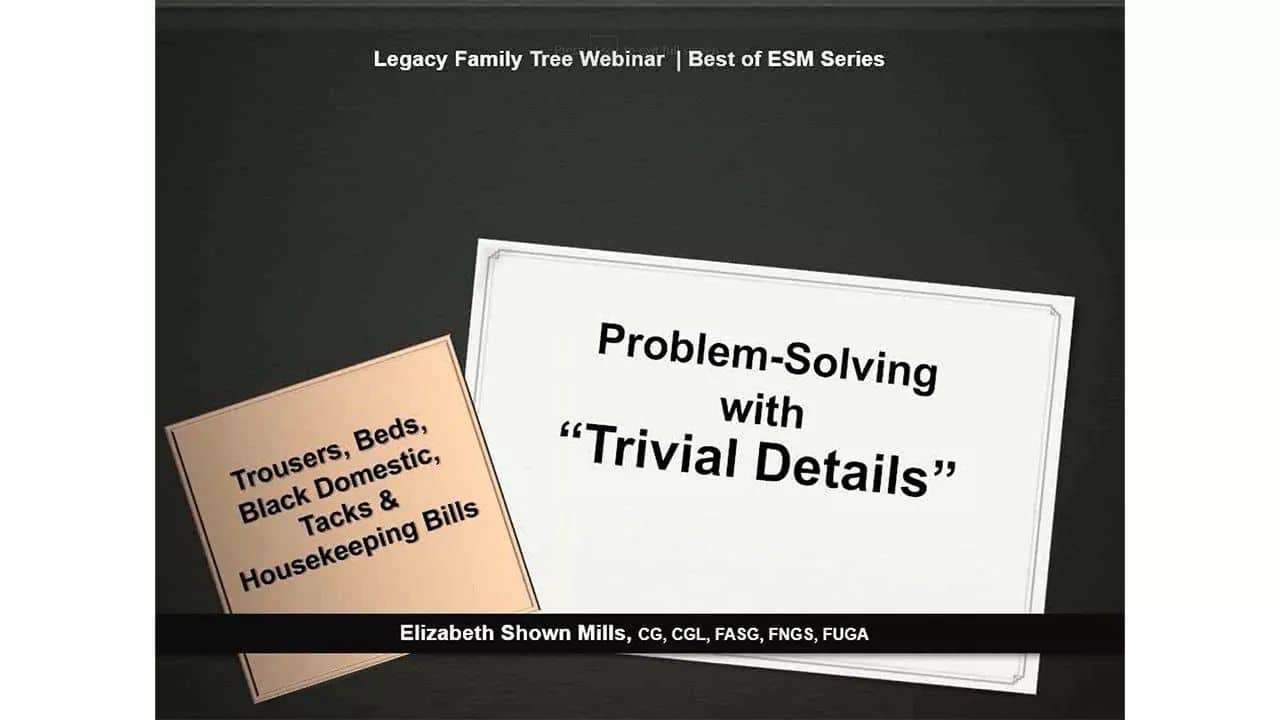
Trousers, Black Domestic, Tacks & Housekeeping Bills: Problem-Solving with “Trivial Details”
The records we use are filled with “trivia,” bits and pieces of information that seem to have no “genealogical” value—at least not until we become more innovative in our research and analysis. Each piece of trivia in every document is an opportunity waiting to be connected to something else. Our ability to resolve problems depends upon our ability to make those connections. This class explores eighteen types of records and the kind of hidden clues each offers to help us resolve problems of identity, kinship, and origin. *** This class requires an active webinar membership to attend. ***
Fri, January 27 2023: 19:00 UTC
1:17:43
1.8K views
CC
Right Place, Right Time, Right Person: Intersections of DNA and Document Evidence
While genetic evidence can aid in the resolution of research obstacles, at the end of the day, genetic genealogy is just genealogy and must be considered within the context of documentary evidence. Even so, the aims of documentary research to make sense of anomalies in genetic evidence often center around finding the right person in the right place at the right time to be an ancestor of a research subject. Learn how to creatively use documentary evidence to recognize and detect intersections of DNA and document evidence.
Wed, November 2 2022: 18:00 UTC
57:22
Indirect Evidence, A Case Study: The Parents of Elizabeth Wingate in Maryland (1795–1860)
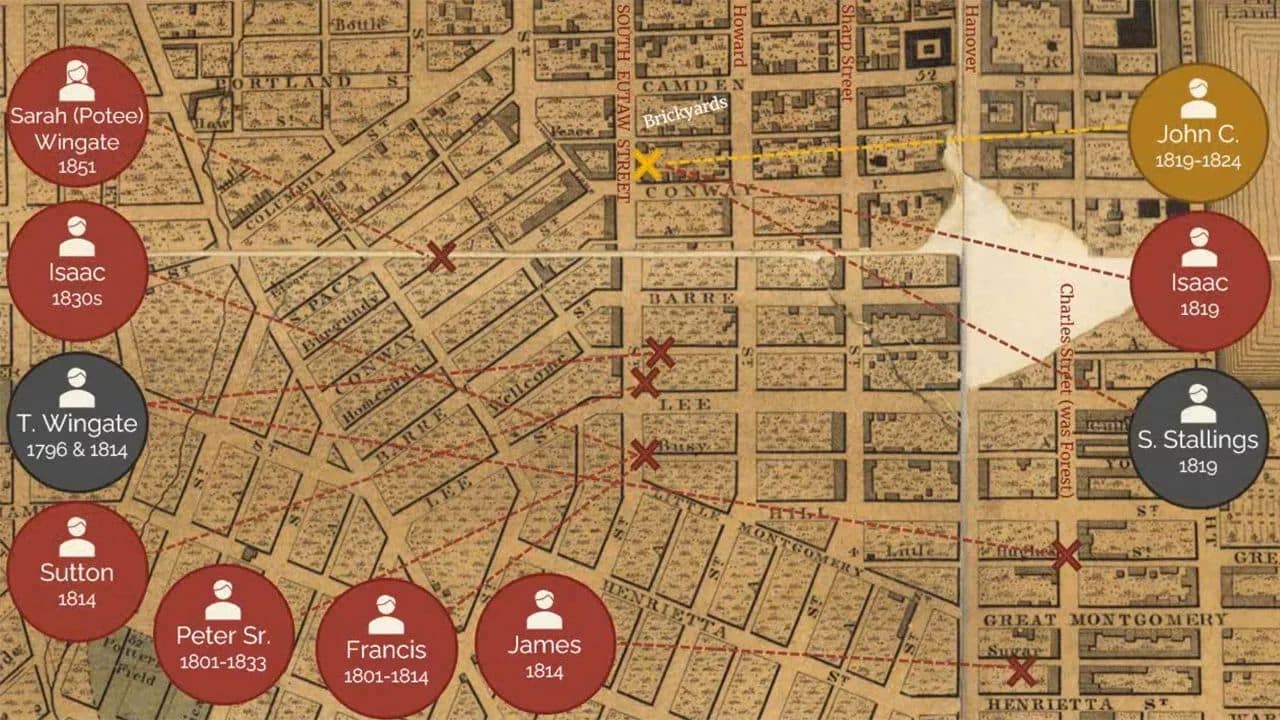
We all have lost Elizabeths in our tree. This lecture will discuss how the understanding and application of indirect evidence is such a valuable instrument in your methodology tool-kit. This case study will examine methods and sources that contributed to finding the parents of Elizabeth Wingate (1795-1860) of Baltimore, Maryland.
Fri, September 30 2022: 16:45 UTC
5:08
2.2K views
CC
How I survived a genealogy emergency
Don’t let this happen to you. Join Geoff Rasmussen for a quick look at how he overcame this genealogy emergency.
Thu, July 21 2022: 0:00 UTC
1:19:11
Negative Evidence: Making Something Out of Nothing
When is not finding a record nothing, and when does it signify something? Information that is not where you expect it to be may yield important evidence for your research question. Understanding the purpose of a source — who and what it records, and why — will help you determine if the missing person or event is negative evidence or merely a negative search. A series of examples demonstrate methodologies used to create something out of nothing.
Wed, June 22 2022: 0:00 UTC
6:08
1.5K views
CC
How I Debunked an Online Tree Hint
Hints in online trees can provide genealogical treasures, but if you’re not careful they can lead to genealogical regret. In this quick video, Geoff Rasmussen shows why hints should be explored, scrutinized and evaluated.
Fri, June 10 2022: 0:00 UTC

Upcoming Live Webinars

View all (179)
Wed, January 7 2026: 16:30 UTC
Genealogy Meets the Internet Archive and AI: A Comprehensive Review
Wed, January 7 2026: 16:30 UTC
Learn to harness the Internet Archive’s free digital library—a treasure trove of digitized family histories, city directories, census and church records—to enrich your genealogy research. Learn how to build complex prompts to build an index of surnames on a 400 page genealogy book from 1898. Learn how to extract a list of migration routes from the same book, organized by surname, then in generation order, and placed in an Excel file. With the help of AI, you can get the most out of Internet Archive.
Wed, January 7 2026: 16:30 UTC
Wed, January 7 2026: 17:45 UTC
AI as Partner, Not Replacement: Human-Led Research Planning in the Sally Keaton Case
Wed, January 7 2026: 17:45 UTC
This lecture explores how modern AI tools can assist genealogical research planning through the case of Sally Keaton, where the objective was to identify her children using limited historical records and DNA evidence. The presentation demonstrates how to structure effective research plans with AI assistance, covering essential elements including clear objectives, summaries of known facts, working hypotheses, identified sources, and prioritized strategies. Using Sally Keaton’s case as the central example, the lecture showcases practical AI tools, such as side-by-side editors: Canvas (ChatGPT and Gemini) and Artifacts (Claude); also advanced capabilities including reasoning models and organizational tools like ChatGPT’s Projects, Claude’s Projects, Perplexity’s Spaces, and Gemini Gems. While AI can create research plans on its own, human-AI collaboration produces better results. When researchers guide and refine AI-generated strategies instead of using fully automated planning, they achieve more accurate results.
Wed, January 7 2026: 17:45 UTC
Wed, January 7 2026: 19:00 UTC
Unraveling Family History with AI: Leveraging AI to Trace an Ancestor’s Journey, with Chat GPT (Free Version)
Wed, January 7 2026: 19:00 UTC
Explore how AI technology, exemplified by ChatGPT, can revolutionize your family history, by embarking on a journey through an ancestor’s life.
Wed, January 7 2026: 19:00 UTC
Wed, January 7 2026: 20:30 UTC
From Problem to Solution: A Case Study Approach to Using AI in Genealogy
Wed, January 7 2026: 20:30 UTC
Artificial intelligence is changing the way genealogists work—but how do you move beyond tips and tricks to apply AI in a sound, methodical way? In this session, Andrew Redfern demonstrates how a case study approach provides the answer. Using real examples, he walks through the stages of tackling a genealogical problem with AI, showing how tools can assist with transcription, analysis, correlation of evidence, and presentation of findings. Rather than treating AI as a shortcut, Andrew highlights how to integrate it into the established genealogical research cycle—problem definition, source gathering, analysis, and conclusion. Attendees will see how AI can clarify complex evidence, save time on repetitive tasks, and support storytelling, while still requiring human expertise and critical thinking. By the end of the session, participants will have a practical framework they can adapt to their own research problems, ensuring that AI becomes a trusted partner in genealogical methodology.
Wed, January 7 2026: 20:30 UTC
Tue, January 13 2026: 14:00 UTC
Spanish
La fotografía de un desconocido: ¿punto de partida para una genealogía?
Tue, January 13 2026: 14:00 UTC
En la actualidad, cuando casi cualquier cosa pasa por la IA, el descubrimiento de una fotografía hecha a finales del siglo XIX o principios del siglo XX, no solo nos traslada a otro momento de la historia en el que el contexto era totalmente diferente, sino que nos abre las posibilidades de estudio de una persona y de una familia. Pero, además, ¿qué nos aporta una fotografía de un desconocido? ¿cuánto podemos averiguar de él y de su entorno? Una fotografía es un documento de memoria colectiva y, como tal, aporta una fuente de información sobre estructura familiar, estilo de vida y valores sociales de la época.
José Antonio González Marrero
En la actualidad, cuando casi cualquier cosa pasa por la IA, el descubrimiento de una fotografía hecha a finales del siglo XIX o principios del siglo XX, no solo nos traslada a otro momento de la historia en el que el contexto era totalmente diferente, sino que nos abre las posibilidades de estudio de una persona y de una familia. Pero, además, ¿qué nos aporta una fotografía de un desconocido? ¿cuánto podemos averiguar de él y de su entorno? Una fotografía es un documento de memoria colectiva y, como tal, aporta una fuente de información sobre estructura familiar, estilo de vida y valores sociales de la época.
Tue, January 13 2026: 14:00 UTC
Tue, January 13 2026: 19:00 UTC
Using MyHeritage in Your Genealogical DNA Testing Plan
Tue, January 13 2026: 19:00 UTC
We often need other family members to take a DNA test for us to help us solve our genealogical problems. We’ll discuss ways MyHeritage can help us find, test, and collaborate with our DNA cousins.
Tue, January 13 2026: 19:00 UTC